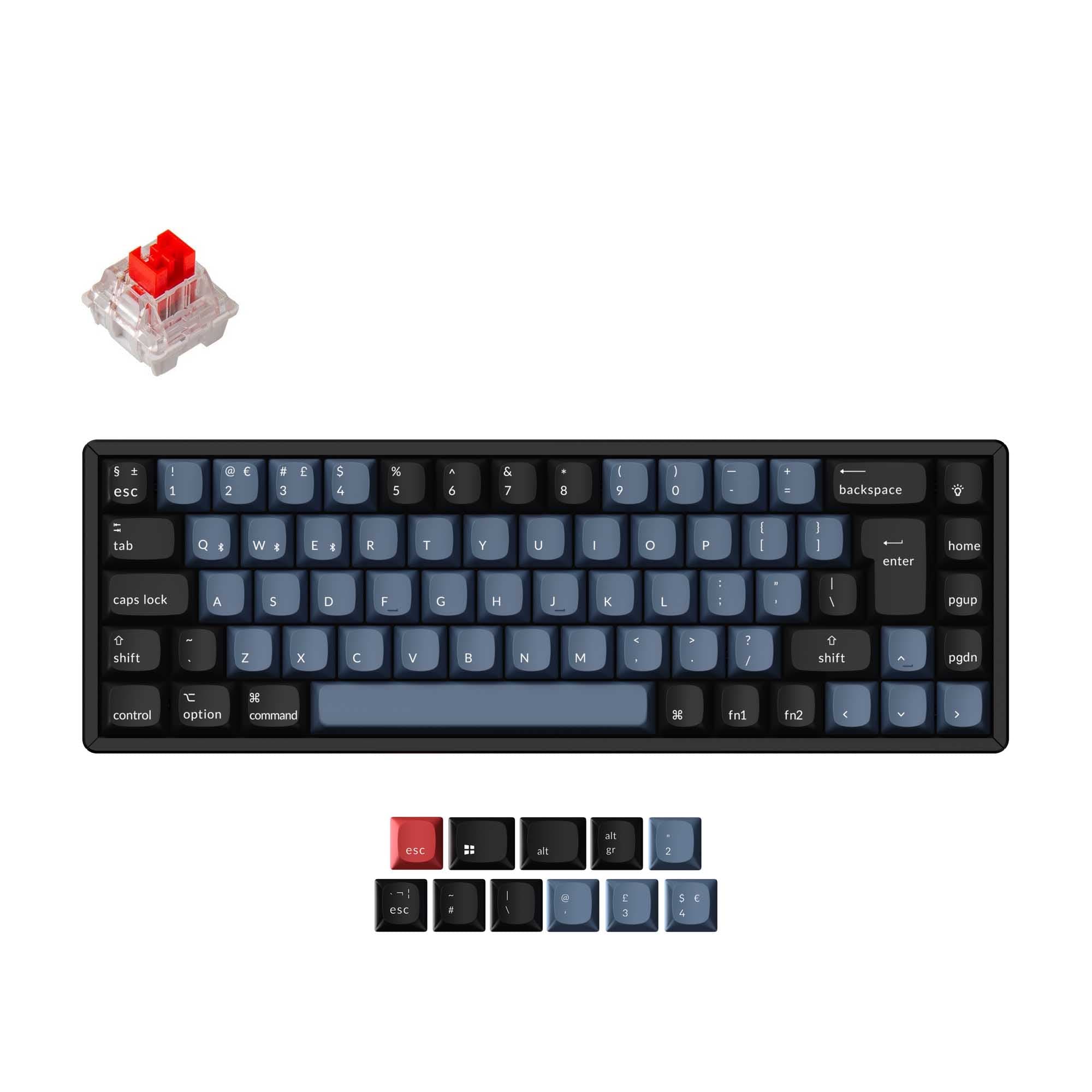
Ducky One 3 Mini vs One 3 SF
60% or 65%?
Choose the Ducky One 3 Mini for its more compact 60% layout and plastic plate, or the One 3 SF for its 65% layout, stated 1000 Hz polling rate, and Cherry-profile double-shot PBT keycaps.
Prices checked Nov 19, 2026. KeebFinder may earn a commission when you buy through these links, at no extra cost to you.


Which one should you get?
Get the
Ducky One 3 Mini
Build quality in the bottom 50% of 60% boards under $100.
If you want
- 60% layout for a more compact keyboard footprint.
- Plastic plate, a material detail not listed for the SF.
Rules this board out
- Compact layout only. No function row, dedicated arrow keys, or numpad.
Get the
Ducky One 3 SF
Build quality in the bottom 40% of 65% boards under $100.
If you want
- 65% layout for buyers who want a larger compact keyboard.
- Listed 1000 Hz polling rate.
- Cherry-profile double-shot PBT keycaps.
Rules this board out
- North-facing LEDs. Cherry-profile keycaps can hit the switch housing.
- 65% layout. No function row and no numpad.
Bottom line
Get the One 3 Mini if you want the smaller 60% layout or specifically prefer its listed plastic plate. Choose the One 3 SF for its 65% layout, 1000 Hz polling rate, and Cherry-profile double-shot PBT keycaps, features not listed for the Mini. If you plan to use Cherry-profile keycaps, account for the SF’s north-facing LED fit warning.
The differences that matter
- Layout size
60%
65%
- Backlight
RGB
RGB, north-facing
RGB for looks and low light rather than speed
KeebFinder scores
How we score- Ducky One 3 Mini
- Ducky One 3 SF
- Performance
- 6869
- Build quality
- 5757
- Productivity
- 7070
- Customizability
- 7879
- Portability
- 7171
What they share
- Connection: Wired
- Hot-swappable
- Case material: ABS, Plastic
- Switch options: Clicky, Linear, Silent, Tactile
- Mount style: Plate Mount
- Sound dampening
What will you mostly use it for?
For gaming, pick the Ducky One 3 SF
- The SF lists a 1000 Hz polling rate.
- Both boards offer wired connectivity, RGB, and linear switch options.
Ducky One 3 Mini vs One 3 SF specs
4 of 19 specs differ
 |  | |
| Ducky One 3 Mini$79 | Ducky One 3 SF$89 | |
|---|---|---|
| Typing & switches | ||
| Switch options | Clicky, Linear, Silent, Tactile | Clicky, Linear, Silent, Tactile |
| Hot-swappable | Yes | Yes |
| Mount style | Plate Mount | Plate Mount |
| Sound dampening | Yes | Yes |
| Layout | ||
| Layout size (differs) | 60% | 65% |
| Layout standard | ANSI | ANSI |
| Ergonomics | Standard | Standard |
| Display | None | None |
| Media keys | Yes | Yes |
| Connectivity & battery | ||
| Connection | Wired | Wired |
| Max polling rate (differs) | Not specified | 1,000 Hz |
| USB-C | Yes | Yes |
| Build & materials | ||
| Case material | ABS, Plastic | ABS, Plastic |
| Plate material (differs) | Plastic | Not specified |
| Keycaps | ABS, PBT | ABS, PBT |
| Backlight (differs) | RGB | RGB, north-facing |
| Firmware & software | ||
| N-key rollover | Yes | Yes |
| Mac & Windows | Yes | Yes |
| Extras | ||
| Released | 2023 | 2023 |
Compare prices
Prices in USD are converted to your currency and can change at any time. KeebFinder may earn a commission when you buy through these links, at no extra cost to you.
Lowest price across stores, Amazon excluded.
- Lowest price now
- $79
- Lowest in range
- $79Aug 20 at Ducky One 3 Mini
- Highest in range
- $89Aug 20 at Ducky One 3 SF
Price in USD
- Check on Amazon
AmazonGlobal
Check price


- Check on Amazon
AmazonGlobal
Check price