Epomaker Galaxy100 vs Nuphy Halo96 V2Battery Life vs Portability
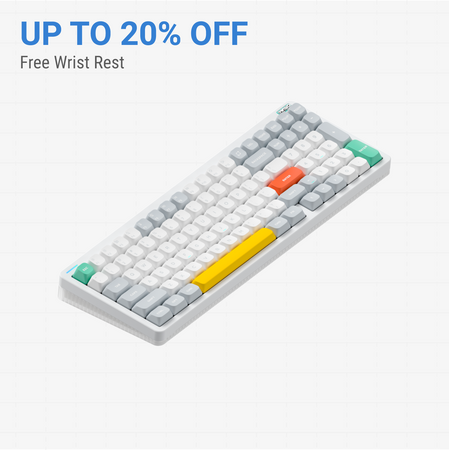
Choose the Epomaker Galaxy100 for its huge battery and included knob, or the Nuphy Halo96 V2 for a lighter build with more advanced RGB lighting effects.
KeebFinder may earn a commission when you buy through these links, at no extra cost to you.

4.6 (68)4.6 · 68 reviews
from$87at Epomaker
90-day lowLowest price in 90 days
No reviews
from$135at Nuphy
Which one should you get?
Get the
Epomaker Galaxy100
Battery Life
Build quality in the top 15% of 96% boards under $100.
- Massive 8000mAh battery for extended wireless use.
- Includes a dedicated metal control knob.
- Detailed five-layer sound dampening stack with Poron, IXPE, and PET foams.
- South-facing LEDs. Shine-through legends stay dark, and some sculpted keycaps can clip the LED.
Get the
Nuphy Halo96 V2
Portability
Build quality in the top 20% of 96% boards under $150.
- Significantly lighter at 1150g for better portability.
- Advanced 'Halolight 2.0' RGB with translucent bottom case and side columns.
- Includes three adjustable typing angles (5°, 8.5°, 12°).
- South-facing LEDs. Shine-through legends stay dark, and some sculpted keycaps can clip the LED.
Your primary need dictates the choice. If you want to forget about charging for weeks and value a tactile knob for control, the Epomaker Galaxy100 is the pragmatic pick. If you prefer a keyboard that's easier to move, offers stunning, customizable lighting, and has a more refined typing angle adjustment, the Nuphy Halo96 V2 justifies its higher cost. Both deliver excellent core features like gasket mounts and QMK/VIA support.
The differences that matter
Skip the 40-row spec sheet. These are the specs that change how each board feels, sounds, and fits your desk.
Epomaker Galaxy100
Nuphy Halo96 V2
Battery
8,000 mAh
4,000 mAh
A larger battery means fewer cables during the day
Case material
Aluminum
ABS, Aluminum
Switch options
Clicky, Linear
Mechanical
Knob
Yes
No
Weight
2,000 g
1,150 g
Heavier boards stay planted and lighter ones travel
- Epomaker Galaxy100
- Nuphy Halo96 V2
- Performance
- 8380
- Build quality
- 8481
- Productivity
- 9388
- Customizability
- 8889
- Portability
- 6255
- Layout size: 96%
- Connection: Bluetooth, 2.4 GHz, Wired
- Hot-swappable
- Max polling rate: 1,000 Hz
- Mount style: Gasket Mount
- QMK
What will you mostly use it for?
The Epomaker Galaxy100 wins for office use and gaming, largely due to its massive battery and included control knob. The Nuphy Halo96 V2 is the clear choice for travel thanks to its significantly lighter weight. For programming, both are equally capable with their extensive QMK/VIA support. Content creators may prefer the Halo96 V2's sophisticated, multi-zone RGB lighting system, while modders might lean towards the Galaxy100 for its well-documented internal foam stack.
Pick the Epomaker Galaxy100
- Includes a dedicated metal knob for volume or macro control, which the Halo96 V2 lacks.
- Specifies lower wireless latency figures (4.72ms on 2.4G) in its technical specs.
- Both share a 1000Hz polling rate in wired and 2.4G modes.
Epomaker Galaxy100 vs Nuphy Halo96 V2 specs
Every tracked spec, side by side. Rows marked with a dot differ between the boards.
10 of 26 specs differ
Epomaker Galaxy100
Nuphy Halo96 V2
Switch options
Hot-swappable
Mount style
Sound dampening
Layout size
Layout standard
Ergonomics
Knob
Display
Media keys
Connection
Max polling rate
Battery
USB-C
Case material
Plate material
Keycaps
Weight
Dimensions
Typing angle
Backlight
QMK
VIA
N-key rollover
Mac & Windows
Released
Compare prices
Live prices from the stores we track, cheapest in-stock offer first.
Prices in USD are converted to your currency and can change at any time. KeebFinder may earn a commission when you buy through these links, at no extra cost to you.
Lowest price across stores, Amazon excluded.



Epomaker Galaxy100 vs Nuphy Halo96 V2: your questions
The Epomaker Galaxy100 has a significantly larger 8000mAh battery, double the 4000mAh capacity of the Nuphy Halo96 V2. This gives the Galaxy100 a major advantage for long-term wireless use without needing a recharge.
No, the Nuphy Halo96 V2 does not include a dedicated control knob. The Epomaker Galaxy100 is the one that features a metal knob, which its vendor page states is for volume control and data entry tasks.
Yes, both the Epomaker Galaxy100 and Nuphy Halo96 V2 explicitly support QMK and VIA open-source firmware. This allows for deep customization of key mappings, layers, and macros on both devices.
The Epomaker Galaxy100 is much heavier, weighing 2000g (2kg). The Nuphy Halo96 V2 weighs 1150g, making it 850g lighter and more portable for travel or moving between desks.
The Nuphy Halo96 V2 offers several switch options including its proprietary Herb series (Mint, Raspberry, Lemon) and Cherry Silent Red Clear-Top switches. The Galaxy100 comes with linear options like the Feker Marble White.
Yes, both keyboards feature south-facing RGB LEDs. This orientation is preferred for compatibility with Cherry-profile keycaps and, as Nuphy notes, is used to illuminate the homing bars on its keycaps.
Yes, both manufacturers state compatibility with macOS. The Nuphy Halo96 V2 vendor description highlights a dedicated OS switch for easy access to Mac-specific function keys.
According to Nuphy, the Halo96 V2 box includes the keyboard, a USB cable, a 2.4G receiver, a keycap/switch puller, seven extra keycaps, three extra switches, a sticker set, and a quick guide.
The Epomaker Galaxy100 vendor page lists a five-layer sound dampening stack that includes a Poron sandwich pad, IXPE switch pad, PET sound enhancement pad, EMDP switch socket pad, and a PET bottom pad.
Halolight 2.0 is Nuphy's advanced lighting system for the Halo96 V2. It features more powerful LEDs, a translucent bottom case that merges with side light columns, a magnetic nameplate LED, and support for SignalRGB synchronization.
Yes, both the Epomaker Galaxy100 and Nuphy Halo96 V2 have hot-swappable PCBs that support both 3-pin and 5-pin mechanical switches, allowing you to change switches without soldering.
Both keyboards offer a 1000Hz polling rate in their wired and 2.4GHz wireless modes. In Bluetooth mode, both operate at a standard 125Hz polling rate.
Not sold on either?




Still torn?
Answer a few quick questions and the keyboard finder ranks 2,000+ boards by how you will actually use yours.