WhatGeek Galaxy80 vs MCHOSE Mix 87Aluminum DIY or Hall Effect
Choose the Mix 87 for Hall Effect gaming controls, or the Galaxy80 for an aluminum DIY kit with mechanical switch flexibility.
KeebFinder may earn a commission when you buy through these links, at no extra cost to you.


Which one should you get?
Get the
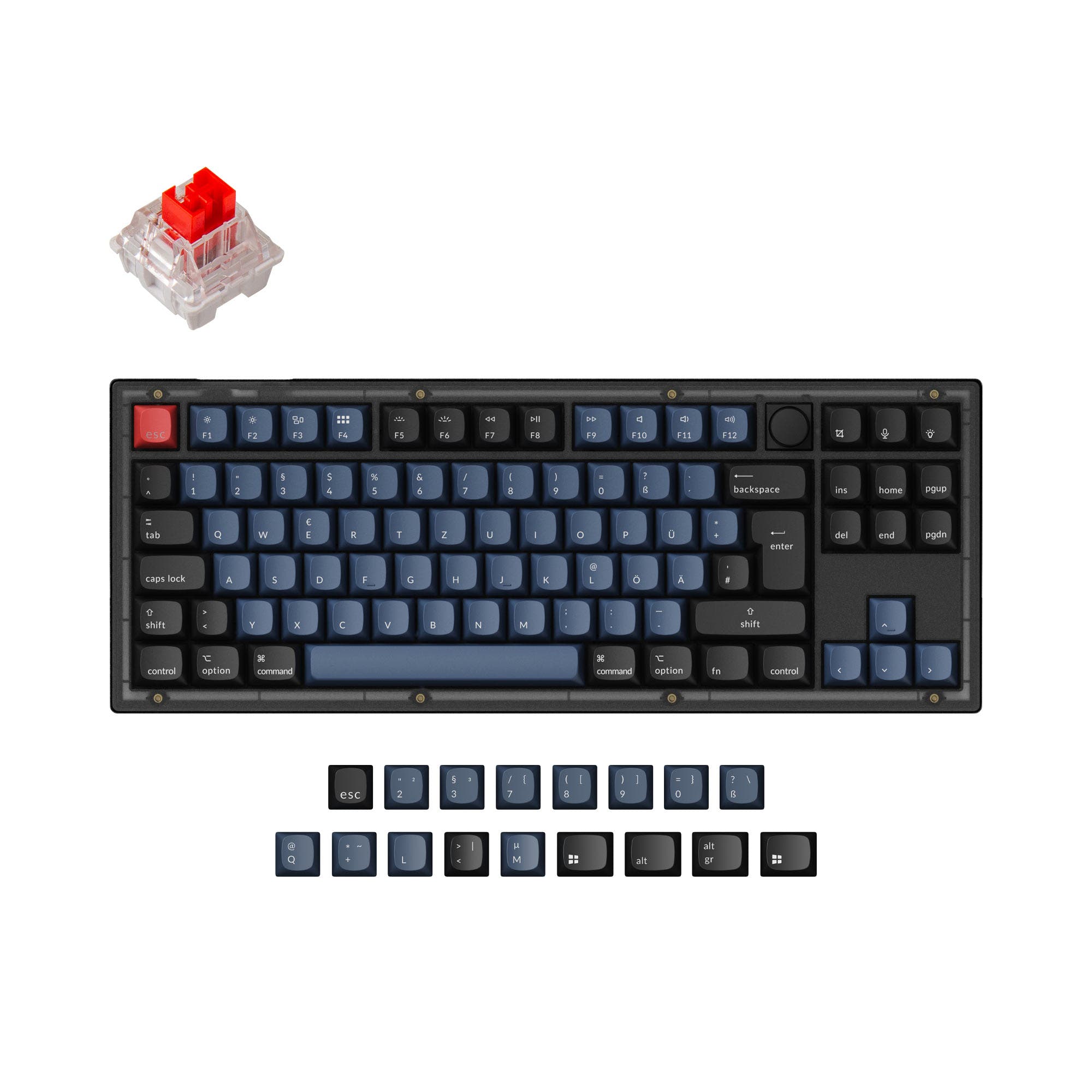
WhatGeek Galaxy80
Build quality in the top 25% of 80% boards under $100.
- Aluminum CNC case with a gasket mount.
- DIY barebones kit with hot-swap support for 3-pin or 5-pin mechanical switches.
- Vendor listing names Poron foam, an IXPE switch pad, PET sound and bottom pads, and an EMDP switch set pad.
- South-facing LEDs. Shine-through legends stay dark, and some sculpted keycaps can clip the LED.
Get the
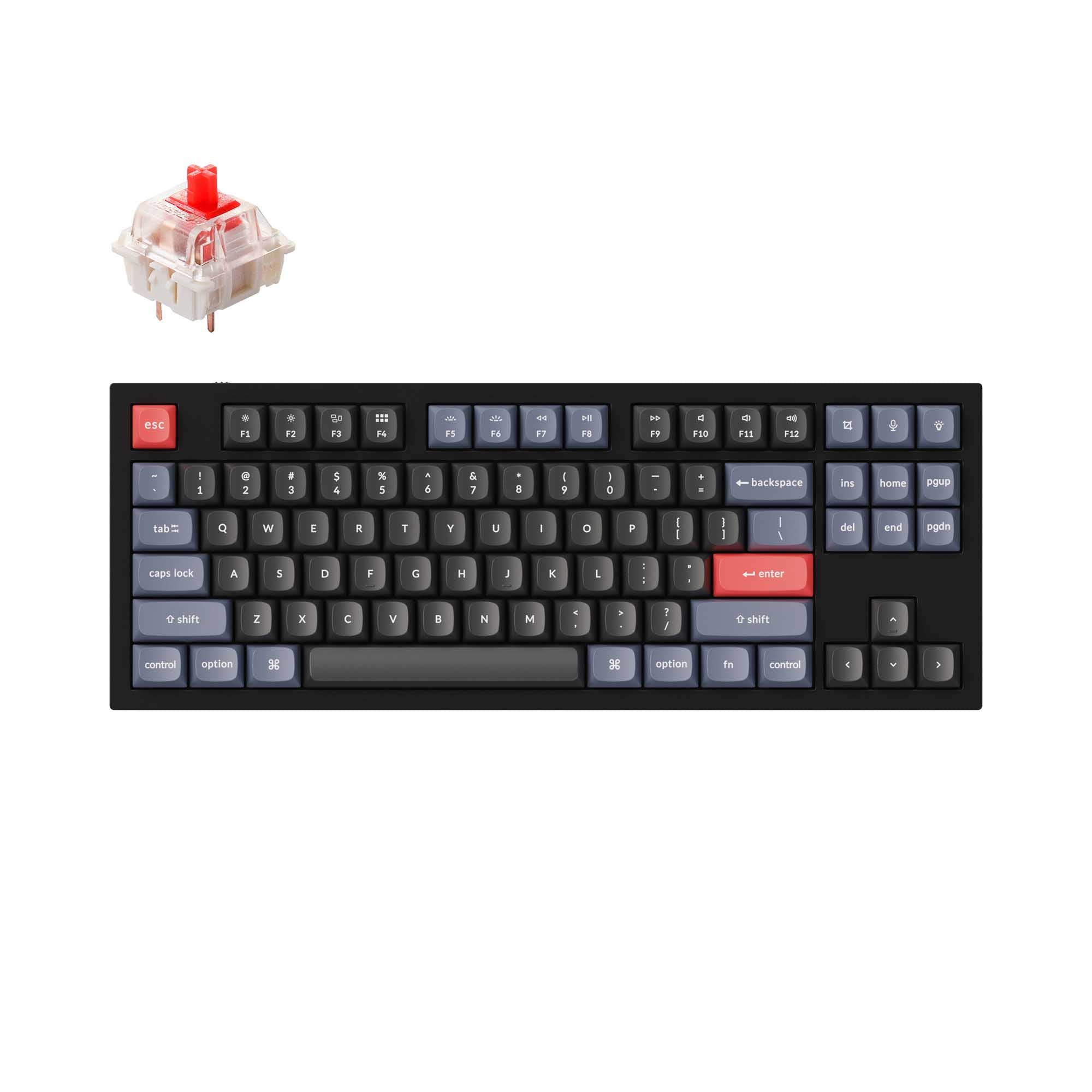
MCHOSE Mix 87
Hall effect
Build quality in the top 35% of 80% boards under $100.
- Hall Effect magnetic switches, Rapid Trigger, and an 8,000 Hz polling rate.
- Hot-swappable magnetic switches and adjustable actuation listed by the vendor.
- PBT keycaps, a volume knob, and a listed LED screen.
- Magnetic switches only. Standard MX switches will not fit.
- North-facing LEDs. Cherry-profile keycaps can hit the switch housing.
Pick the MCHOSE Mix 87 if gaming controls are your priority and you are comfortable with magnetic-only switch compatibility. Choose the WhatGeek Galaxy80 if you want an aluminum DIY kit that accepts 3-pin or 5-pin mechanical switches. Check keycap compatibility before buying either board, since their LED orientations have different limitations.
The differences that matter
Skip the 40-row spec sheet. These are the specs that change how each board feels, sounds, and fits your desk.
WhatGeek Galaxy80
MCHOSE Mix 87
Hall effect (magnetic)
No
Yes
Adjustable actuation helps in games and not in normal typing
Rapid trigger
No
Yes
Faster resets help in games and not in normal typing
Knob
No
Yes
Display
None
LED
A case display rather than a typing feature
Weight
1,600 g
992 g
Heavier boards stay planted and lighter ones travel
- WhatGeek Galaxy80
- MCHOSE Mix 87
- Performance
- 7695
- Build quality
- 7368
- Productivity
- 6869
- Customizability
- 7665
- Portability
- 5856
- Layout size: 80%
- Connection: Wired
- Hot-swappable
- Mount style: Gasket Mount
What will you mostly use it for?
The Mix 87 is the clearer fit for gaming and content setups that can use its magnetic-switch features, volume knob, and lighting options. The Galaxy80 suits buyers who want a mechanical-switch DIY kit and an aluminum case to build around. Office use is close because both share a wired 80% layout and gasket mount, with different sound and material details. For travel, the Mix 87's lower listed weight helps, though both require a wired connection.
Pick the MCHOSE Mix 87
- The Mix 87 has Hall Effect magnetic switches, Rapid Trigger, and an 8,000 Hz polling rate.
- Its vendor listing includes gaming-oriented features such as SOCD, DKS, MT, and key macros.
- The Galaxy80 offers N-Key Rollover, but its listed switch support is conventional 3-pin or 5-pin mechanical switches.
WhatGeek Galaxy80 vs MCHOSE Mix 87 specs
Every tracked spec, side by side. Rows marked with a dot differ between the boards.
11 of 22 specs differ
WhatGeek Galaxy80
MCHOSE Mix 87
Switch options
Hall effect (magnetic)
Rapid trigger
Hot-swappable
Mount style
Sound dampening
Layout size
Layout standard
Ergonomics
Knob
Display
Connection
Max polling rate
USB-C
Case material
Keycaps
Weight
Dimensions
Backlight
N-key rollover
Mac & Windows
Released
Compare prices
Live prices from the stores we track, cheapest in-stock offer first.
Prices in USD are converted to your currency and can change at any time. KeebFinder may earn a commission when you buy through these links, at no extra cost to you.
Lowest price across stores, Amazon excluded.



WhatGeek Galaxy80 vs MCHOSE Mix 87: your questions
The Galaxy80 is an aluminum DIY kit for conventional 3-pin or 5-pin mechanical switches. The Mix 87 is a pre-built Hall Effect keyboard with magnetic switches, Rapid Trigger, and an 8,000 Hz polling rate.
The Mix 87 lists Hall Effect magnetic switches, Rapid Trigger, and an 8,000 Hz polling rate. Its vendor description also lists gaming features including SOCD, DKS, MT, and key macros.
No, the Mix 87 is specified for magnetic switches, and standard MX switches will not fit. Its hot-swap support is for magnetic switches.
Yes, the Galaxy80 vendor description says it supports hot-swappable 3-pin or 5-pin mechanical switches. It is sold as a barebones DIY kit rather than a pre-built keyboard.
The MCHOSE Mix 87 is listed at 992 g, while the WhatGeek Galaxy80 weighs 1,600 g. Both are wired-only, so neither is a wireless travel option.
Yes, both have RGB lighting, but the Galaxy80 uses south-facing LEDs and the Mix 87 uses north-facing LEDs. The Mix 87 vendor page also describes custom GIF effects and music-reactive modes through M HUB.
The Mix 87 compatibility guidance warns that north-facing LEDs can cause Cherry-profile keycaps to hit the switch housing. Check the fit of your chosen keycaps before purchasing.
The Galaxy80's south-facing LEDs may leave shine-through legends dark. Its compatibility guidance also warns that some sculpted keycaps can clip the LED.
The MCHOSE Mix 87 has a volume knob that adjusts system volume and can be pressed to mute, according to the vendor. No volume knob is listed for the Galaxy80.
The Galaxy80 is the more suitable choice for conventional mechanical switch changes because it accepts 3-pin and 5-pin mechanical switches. The Mix 87's hot-swap sockets accept magnetic switches only.
Both keyboards are listed as wired only and use USB-C connectivity. Neither is listed as supporting wireless use.
Both listings describe multiple dampening components. The Galaxy80 names Poron foam, an IXPE switch pad, PET sound and bottom pads, and an EMDP switch set pad, while the Mix 87 describes a five-layer structure including silicone, fiber, PET, and cotton components.
Not sold on either?





Still torn?
Answer a few quick questions and the keyboard finder ranks 2,000+ boards by how you will actually use yours.