VTER K75 vs Nuphy Node75 High ProfileScreen or lighter build
Choose the VTER K75 for its screen, knob support, and larger battery, or the Nuphy Node75 for its lighter weight, ISO layout options, and stated 1000 Hz polling rate.
KeebFinder may earn a commission when you buy through these links, at no extra cost to you.


Which one should you get?
Get the
VTER K75
Battery
Build quality in the bottom 35% of 75% boards under $100.
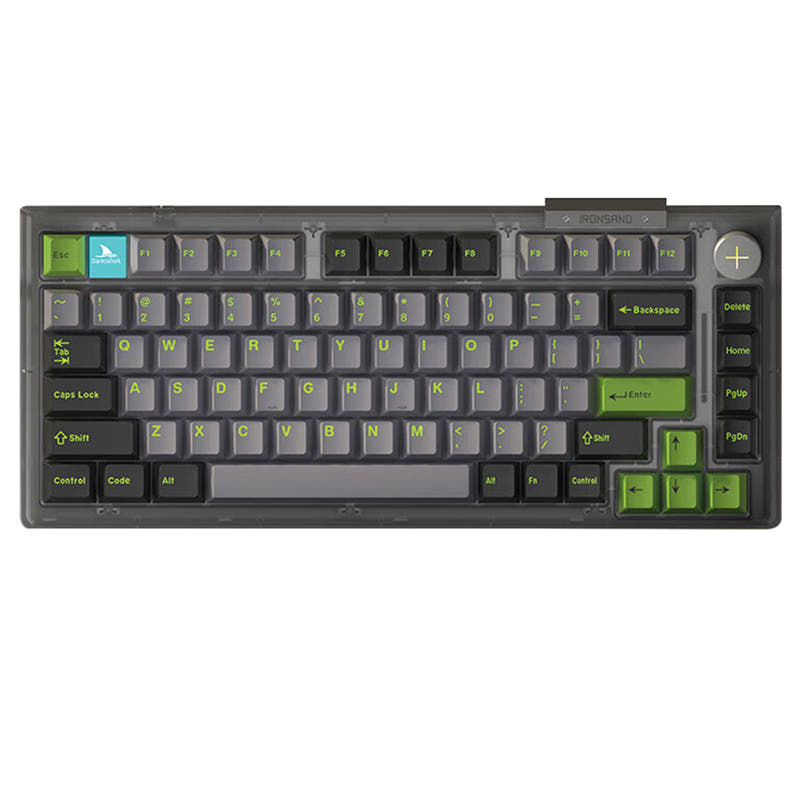
- Customizable TFT screen can show time, battery level, and connection mode.
- Knob support adds a physical control option.
- 5000mAh battery, larger than the Node75’s listed 4000mAh battery.
- No ISO layout. ISO-DE, UK, and other ISO variants are not offered.
Get the
Nuphy Node75 High Profile
Build quality in the bottom 40% of 75% boards under $100.
- Lighter than the K75 at 827g.
- Supports ANSI and ISO layouts, including ISO-DE.
- Lists a 1000 Hz polling rate.
Choose the VTER K75 if its TFT screen, knob support, and larger battery are useful to your setup, and you use ANSI. Choose the Nuphy Node75 High Profile if lower weight, ISO layout availability, or its listed 1000 Hz polling rate matters more. Both offer wireless and wired connectivity, RGB, PBT keycaps, and hot-swappable switches.
The differences that matter
Skip the 40-row spec sheet. These are the specs that change how each board feels, sounds, and fits your desk.
VTER K75
Nuphy Node75 High Profile
Battery
5,000 mAh
4,000 mAh
A larger battery means fewer cables during the day
Case material
Plastic
ABS
Switch options
Linear
Clicky, Linear
Knob
Yes
No
Display
TFT
None
A case display rather than a typing feature
- VTER K75
- Nuphy Node75 High Profile
- Performance
- 6861
- Build quality
- 5759
- Productivity
- 8462
- Customizability
- 7552
- Portability
- 8175
- Layout size: 75%
- Connection: Bluetooth, 2.4 GHz, Wired
- Hot-swappable
- Sound dampening
- Keycaps: PBT
What will you mostly use it for?
The Node75 gets the gaming and travel picks, with its stated polling rate and lower weight as the main distinguishing details. The K75 takes office, programming, modding, and content creation for its display and knob support, alongside its hot-swap sockets. Both are 75% hot-swappable wireless keyboards, so everyday usability will also depend on whether you prefer the K75’s extra controls or the Node75’s lighter, ISO-capable design.
Pick the Nuphy Node75 High Profile
- The Node75 lists a 1000 Hz polling rate.
- Its hot-swappable design and linear switch option suit buyers who want to change switches or use a linear setup.
VTER K75 vs Nuphy Node75 High Profile specs
Every tracked spec, side by side. Rows marked with a dot differ between the boards.
11 of 21 specs differ
VTER K75
Nuphy Node75 High Profile
Switch options
Hot-swappable
Mount style
Sound dampening
Layout size
Layout standard
Ergonomics
Knob
Display
Connection
Max polling rate
Battery
USB-C
Case material
Plate material
Keycaps
Weight
Dimensions
Backlight
Mac & Windows
Released
ISO layouts by store
Which stores sell ISO-DE, UK, and the other regional layouts.
VTER K75
No ISO layout at the stores we track.
Nuphy Node75 High Profile
Input Gear
ISO-DE
Out of stockShips to you
Compare prices
Live prices from the stores we track, cheapest in-stock offer first.
Prices in USD are converted to your currency and can change at any time. KeebFinder may earn a commission when you buy through these links, at no extra cost to you.
Lowest price across stores, Amazon excluded.



VTER K75 vs Nuphy Node75 High Profile: your questions
The VTER K75 has a TFT screen, knob support, and a 5000mAh battery. The Nuphy Node75 is lighter, supports ISO layouts, and lists a 1000 Hz polling rate.
Yes, the K75 has a TFT screen. The vendor says it can display time, battery level, and connection mode, and can be customized with static or GIF images.
No, the Node75 is listed without a screen. If an on-keyboard display is important, the VTER K75 is the option with a TFT screen.
The Nuphy Node75 weighs 827g, while the VTER K75 weighs 1200g. The Node75 is the lighter choice for carrying between locations.
No, the K75 is listed with an ANSI layout and does not offer ISO variants. The Node75 is listed with ANSI, ISO, and ISO-DE layouts.
The Node75 lists a 1000 Hz polling rate. No polling rate is listed for the VTER K75, so a direct rate comparison is not available.
Yes, both are listed as hot-swappable. The K75 vendor description specifies full-key hot-swappable sockets, while the Node75 vendor description specifies support for standard full-height MX-style switches.
The VTER K75 has a listed 5000mAh battery, compared with 4000mAh for the Node75. Battery capacity alone does not establish how long either keyboard will run between charges.
Yes, both list Bluetooth, 2.4 GHz, and wired connectivity, with USB-C listed as an extra feature. The supplied descriptions do not establish compatibility with particular consoles or other devices.
Both keyboards are hot-swappable. The K75 specifies full-key hot-swappable sockets, while the Node75 vendor description names standard full-height MX-style switch support.
Not sold on either?





Still torn?
Answer a few quick questions and the keyboard finder ranks 2,000+ boards by how you will actually use yours.