Gamakay LK70 vs TK68Sound Dampening vs Keycap Profile Choice
Choose the LK70 for a quieter, more acoustically treated experience, or the TK68 for a choice in keycap profiles and slightly better battery life.
KeebFinder may earn a commission when you buy through these links, at no extra cost to you.


Which one should you get?
Get the
Gamakay LK70
Sound Dampening
Build quality in the bottom 25% of 65% boards under $100.
- Includes EVA silent pad and bottom silencing cotton for noise reduction.
- Features south-facing RGB LEDs, which can prevent interference with Cherry-profile keycaps.
- Comes with a dust cover and puller tools in the box.
- South-facing LEDs. Shine-through legends stay dark, and some sculpted keycaps can clip the LED.
Get the
Gamakay TK68
Keycap Profile Choice
Build quality in the bottom 15% of 65% boards under $100.
- Larger 1900mAh rechargeable lithium battery.
- Offers keycaps in XDA or ASA profiles depending on the color variant.
- Vendor claims compatibility with 90% of mechanical switches on the market.
Select the Gamakay LK70 if your primary goal is a quieter typing experience out of the box, thanks to its pre-installed sound-dampening foam. Opt for the Gamakay TK68 if you value keycap profile options, slightly longer battery life, or broader advertised switch compatibility for future modifications. Both are competent, versatile keyboards where the decision rests on these specific, pre-installed features.
The differences that matter
Skip the 40-row spec sheet. These are the specs that change how each board feels, sounds, and fits your desk.
Gamakay LK70
Gamakay TK68
Battery
1,800 mAh
1,900 mAh
A larger battery means fewer cables during the day
Switch options
Linear, Tactile
Clicky, Linear, Tactile
Sound dampening
Yes
No
Backlight
RGB, south-facing
RGB
RGB for looks and low light rather than speed
Mac & Windows
No
Yes
- Gamakay LK70
- Gamakay TK68
- Performance
- 5655
- Build quality
- 5147
- Productivity
- 5459
- Customizability
- 5560
- Portability
- 7886
- Layout size: 65%
- Connection: Bluetooth, 2.4 GHz, Wired
- Hot-swappable
- Keycaps: PBT
What will you mostly use it for?
The LK70 takes a slight lead for office use due to its integrated sound-dampening materials. The TK68 is favored for travel and modding, citing a marginally larger battery and explicit vendor claims about broad switch compatibility. For gaming, programming, and content creation, the keyboards are effectively tied, sharing all critical performance-oriented features. Your priority for quietness versus keycap profile choice will determine the winner.
It's a tie
- Both offer triple-mode connectivity (Bluetooth 5.0, 2.4GHz, wired) for flexible setup.
- Both are hot-swappable, allowing for switch customization to personal preference.
- Both feature RGB backlighting for aesthetic customization.
Gamakay LK70 vs TK68 specs
Every tracked spec, side by side. Rows marked with a dot differ between the boards.
6 of 16 specs differ
Gamakay LK70
Gamakay TK68
Switch options
Hot-swappable
Sound dampening
Layout size
Layout standard
Ergonomics
Display
Connection
Battery
USB-C
Keycaps
Weight
Dimensions
Backlight
Mac & Windows
Released
Compare prices
Live prices from the stores we track, cheapest in-stock offer first.
Prices in USD are converted to your currency and can change at any time. KeebFinder may earn a commission when you buy through these links, at no extra cost to you.
Lowest price across stores, Amazon excluded.
- Check on Amazon
Amazon
Check price


Gamakay LK70 vs TK68: your questions
The Gamakay LK70 is designed to be quieter. Its product listing specifically mentions it has a noise reduction treatment that includes an EVA silent pad and bottom silencing cotton. The TK68's description does not highlight any similar pre-installed acoustic dampening.
No, the batteries are different capacities. The TK68 has a 1900mAh battery, while the LK70 has an 1800mAh battery. The TK68's vendor page estimates up to 6 hours of use with backlighting or 24 hours without.
Yes, both keyboards feature hot-swappable sockets, allowing you to change the mechanical switches without soldering. The TK68's vendor page explicitly states it supports 3-pin or 5-pin switches and is compatible with 90% of switches on the market.
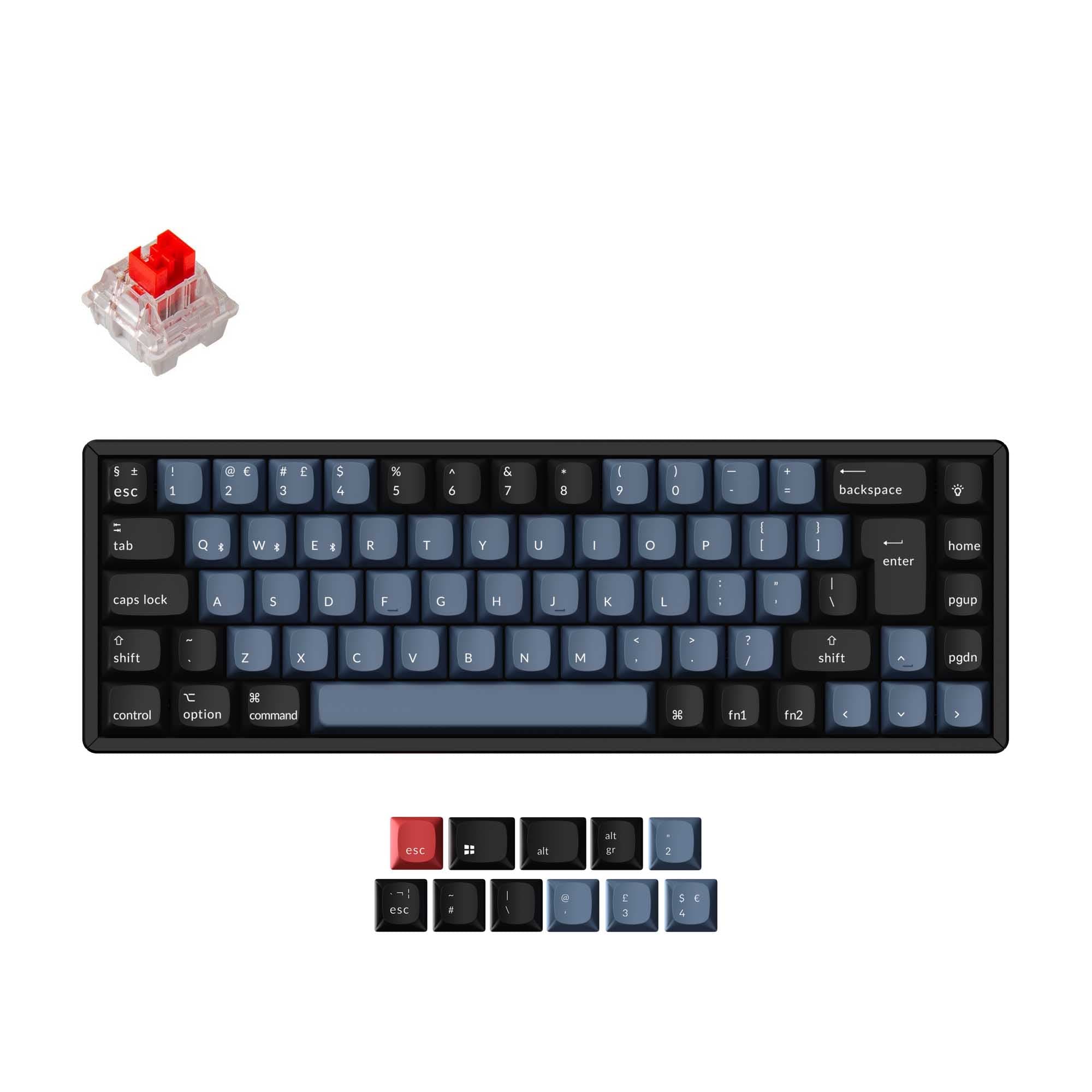
The LK70 comes with PBT Cherry profile keycaps. The TK68 offers different profiles based on color: the grey+white variant uses XDA profile keycaps, while the black+beige variant uses ASA profile keycaps.
The Gamakay LK70 is likely better for a shared office due to its built-in sound-dampening materials. The EVA pad and silencing cotton are intended to reduce typing noise, making it less disruptive to colleagues.
The TK68's specifications list explicit support for Mac OS. The LK70's vendor description does not explicitly list supported operating systems, so compatibility should be verified with the manufacturer.
The LK70 includes a Type-C cable, user manual, keyboard, and a shaft puller and key puller. The TK68 includes the keyboard, a 2.4GHz receiver, a keycap puller, a switch puller, and a Type-C charging cable.
The LK70 lists south-facing RGB LEDs as a feature. South-facing LEDs are positioned at the bottom of the switch, which can prevent the keycap from hitting the LED housing on certain profile keycaps, like Cherry profile, and may improve compatibility.
The TK68's ASA profile keycaps use a doubleshot printing method according to its specs. The LK70's keycaps are described as PBT Cherry profile color-blocking keycaps, but the printing method is not specified.
Both are 65% layouts and similarly sized, making them portable. The TK68 gets a slight edge as its vendor description explicitly markets it as "perfect for on-the-go," and it has a marginally larger battery capacity.
Yes, both the LK70 and TK68 offer 2.4 GHz wireless connectivity alongside Bluetooth and wired modes. The TK68's package is confirmed to include a 2.4GHz receiver.
Not sold on either?




Still torn?
Answer a few quick questions and the keyboard finder ranks 2,000+ boards by how you will actually use yours.