Desktop Tribe DT60 vs Wooting 60HE PlusAlu vs PC
Choose the DT60 for an aluminum case, gasket mounting, and QMK/VIA support, or the Wooting 60HE Plus for a pre-built 60% Hall effect keyboard with a polycarbonate plate.
KeebFinder may earn a commission when you buy through these links, at no extra cost to you.


Which one should you get?
Get the
Desktop Tribe DT60
Alu
Build quality in the top 15% of 60% boards under $200.
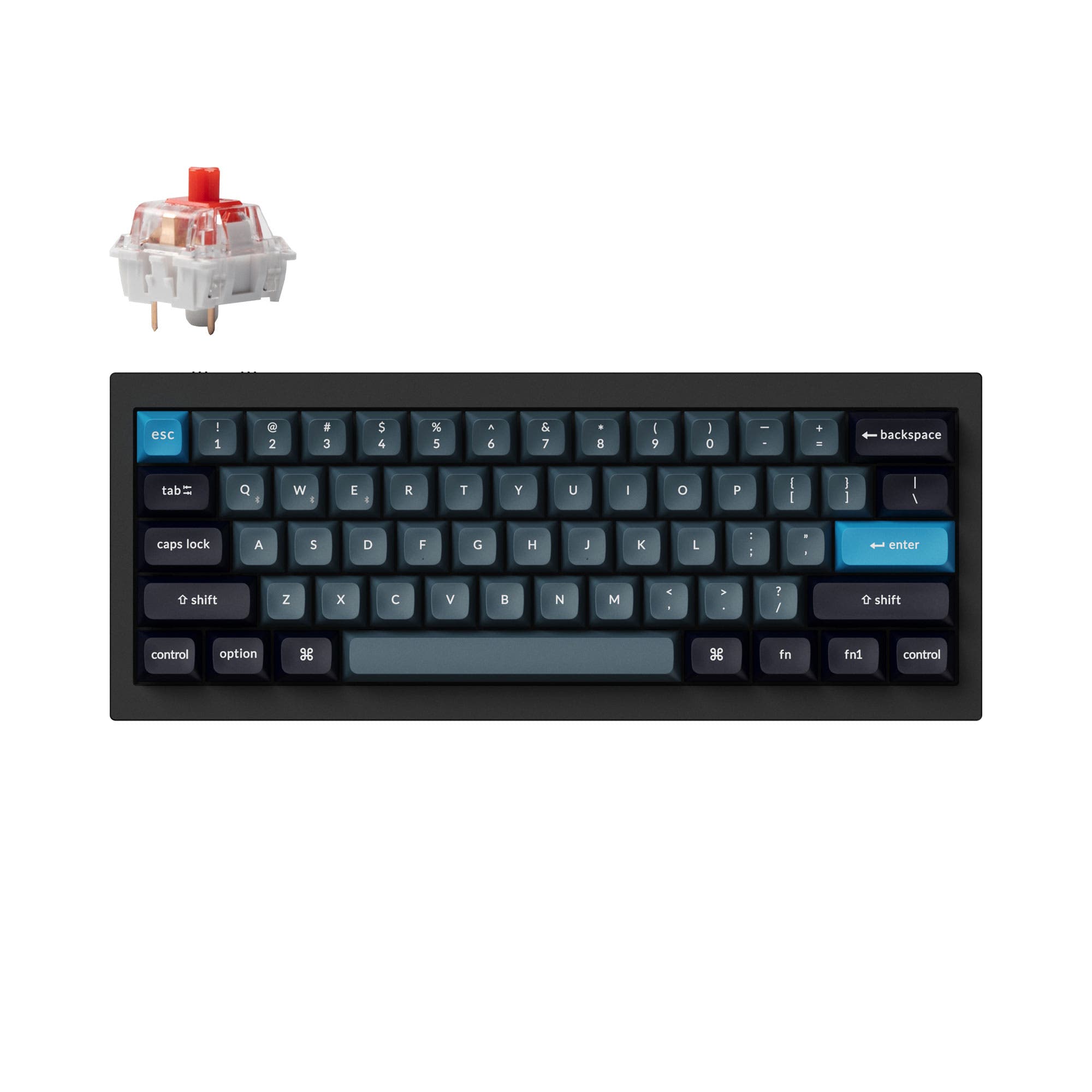
- 6063 CNC aluminum case with a gasket mount and vendor-listed top-mount option.
- FR4 plate, with a 3mm silent pad and 3mm bottom pad listed among the included components.
- QMK and VIA support, plus a one-click Windows/Mac system switch described by the vendor.
- Magnetic switches only. Standard MX switches will not fit.
Get the
Wooting 60HE Plus
PC
Build quality in the top 50% of 60% boards under $150.
- Pre-built 60% ANSI keyboard with magnetic Hall effect switches.
- Polycarbonate plate and screw-in stabilizers.
- USB-C connectivity is listed.
- Magnetic switches only. Standard MX switches will not fit.
Pick the Desktop Tribe DT60 if you want an aluminum case, gasket mounting, RGB, and QMK/VIA support, and are comfortable choosing a kit or barebones configuration. Choose the Wooting 60HE Plus if a pre-built 60% board with a polycarbonate plate and USB-C is the more practical fit. Both are wired magnetic-switch keyboards, and neither accepts standard MX switches.
The differences that matter
Skip the 40-row spec sheet. These are the specs that change how each board feels, sounds, and fits your desk.
Desktop Tribe DT60
Wooting 60HE Plus
Mount style
Gasket Mount
Tray Mount
QMK
Yes
No
The deep option when you want to remap every key
VIA
Yes
No
GUI remapping without compiling firmware
Plate material
FR4
Polycarbonate
Screw-in stabilizers
No
Yes
Easier to tune than the plate-mount stabs you get prebuilt
- Desktop Tribe DT60
- Wooting 60HE Plus
- Performance
- 8251
- Build quality
- 8361
- Productivity
- 6356
- Customizability
- 9250
- Portability
- 7070
- Layout size: 60%
- Hall effect (magnetic)
- Connection: Wired
- Hot-swappable
- Switch options: Magnetic
What will you mostly use it for?
The DT60 has the clearer advantage for customization-focused work, office use, and content creation, thanks to its mounting choices, firmware support, silent pad, and RGB. Its kit format and listed magnetic-switch compatibility also give it an edge for buyers assembling or modifying a board. Gaming is close because both are wired Hall effect keyboards, while the DT60 offers more explicit mounting and switch-option details. For travel, both are compact and wired, but the available weight information is incomplete for a direct comparison.
Pick the Desktop Tribe DT60
- Both keyboards use magnetic Hall effect switches and a wired connection.
- The DT60 supports both gasket and top mount structures, according to its vendor description.
- Its vendor listing says it is compatible with most magnetic switches, including Wooting 60HE.
Desktop Tribe DT60 vs Wooting 60HE Plus specs
Every tracked spec, side by side. Rows marked with a dot differ between the boards.
9 of 22 specs differ
Desktop Tribe DT60
Wooting 60HE Plus
Switch options
Hall effect (magnetic)
Hot-swappable
Mount style
Screw-in stabilizers
Layout size
Layout standard
Ergonomics
Display
Connection
USB-C
Case material
Plate material
Weight
Dimensions
Typing angle
Backlight
QMK
VIA
N-key rollover
Mac & Windows
Released
Compare prices
Live prices from the stores we track, cheapest in-stock offer first.
Prices in USD are converted to your currency and can change at any time. KeebFinder may earn a commission when you buy through these links, at no extra cost to you.
Lowest price across stores, Amazon excluded.
- Check on Amazon
Amazon
Check price



Desktop Tribe DT60 vs Wooting 60HE Plus: your questions
The DT60 has an aluminum case, gasket mount, FR4 plate, and RGB. The Wooting 60HE Plus is listed as pre-built, with a polycarbonate plate, USB-C, and no RGB.
Yes, both are listed with magnetic Hall effect switches. The DT60 vendor description says it is compatible with most magnetic switches, including Wooting 60HE.
No. Both compatibility rules specify that the boards use magnetic switches only, and standard MX switches will not fit.
Yes, QMK and VIA support are listed for the DT60. Its vendor description also says users can switch between Windows and Mac systems with one click.
No, the Wooting 60HE Plus is listed without RGB. The DT60 is listed with RGB lighting.
The DT60 has an aluminum case, identified in its vendor description as 6063 CNC aluminum. The Wooting 60HE Plus metadata lists a polycarbonate plate, but does not specify a case material.
The DT60 uses an FR4 plate, while the Wooting 60HE Plus uses a polycarbonate plate. These materials are the listed plate specifications for each keyboard.
The DT60 is listed as a DIY kit/barebones product. Its vendor description offers case-only and full-kit editions, so check the selected edition for its included parts.
The product metadata lists the Wooting 60HE Plus as pre-built. Its listed features include hot-swap support, USB-C, and screw-in stabilizers.
The DT60 has the more explicitly documented options for a modding-focused build, including QMK/VIA support, hot-swap, and vendor-described gasket and top-mount structures. Both keyboards are limited to magnetic switches rather than standard MX switches.
No wireless connection is listed for either keyboard. Both are described as wired-only.
Yes, both are listed as 60% keyboards with an ANSI layout. Their shared compact layout and wired connectivity make case construction and other listed features the main differentiators.
Not sold on either?




Still torn?
Answer a few quick questions and the keyboard finder ranks 2,000+ boards by how you will actually use yours.