Keychron Q3 vs Q5 HETKL Mechanical vs 8K Magnetic Gaming
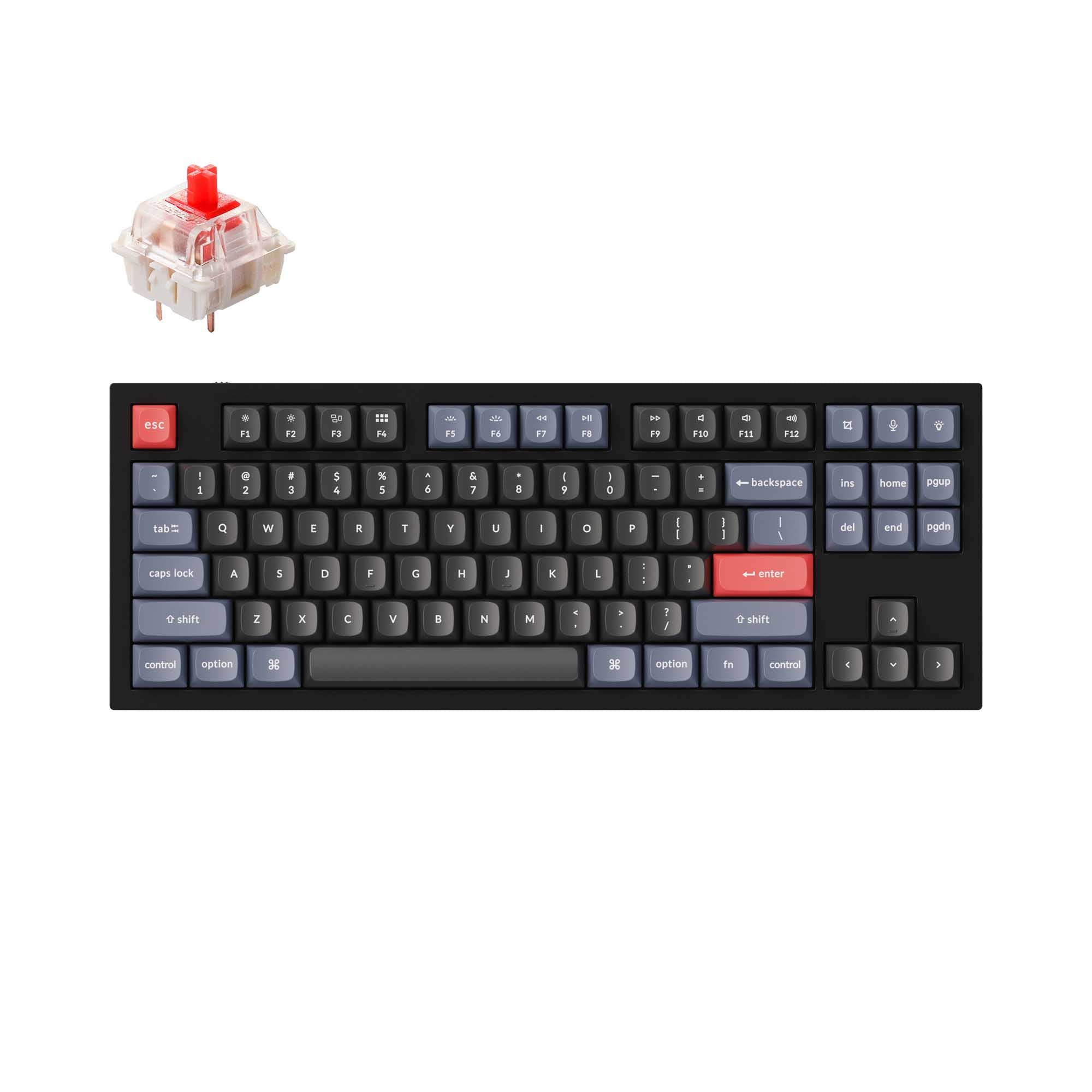
Pick the Q3 for a lighter, steel-plate TKL with wide ISO layout options, or the Q5 HE for 8K polling and adjustable magnetic switches.
KeebFinder may earn a commission when you buy through these links, at no extra cost to you.
4.8 (107)4.8 · 107 reviews
from$59at Keychron

5.0 (3)5.0 · 3 reviews
from$212at MK
Which one should you get?
Get the
Keychron Q3
TKL Mechanical
Build quality in the top 5% of 80% boards under $100.
- Full CNC machined 6063 aluminum case with a double-gasket design and silicone pads between top and bottom cases to reduce metal resonance.
- Broad ISO layout coverage including UK, DE, Nordic, FR, ES, and Swiss, plus ANSI and JIS in the metadata.
- QMK firmware and Keychron Launcher support, with a programmable aluminum rotary encoder for macros and shortcuts.
- South-facing LEDs. Shine-through legends stay dark, and some sculpted keycaps can clip the LED.
- Missing ISO-CH. The other board is sold in those layouts.
- No numpad.
Get the
Keychron Q5 HE
8K Magnetic Gaming
Build quality in the top 10% of 96% boards under $300.
- Magnetic switch platform with adjustable actuation from 0.1 to 3.35mm and Rapid Trigger listed for gaming.
- 8000 Hz polling rate in wired mode, with 4000 Hz and 1000 Hz also selectable.
- 1MB flash MCU and support for Dynamic Keystrokes, LKP, and Snap Click through the Keychron Launcher.
- Magnetic switches only. Standard MX switches will not fit.
- South-facing LEDs. Shine-through legends stay dark, and some sculpted keycaps can clip the LED.
- Missing ISO-FR, ISO-ES, ISO-SW. The other board is sold in those layouts.
- Compact full-size layout. The numpad is present, the gaps of a full-size board are not.
Choose the Q3 if you want a lighter 80% TKL with broad ISO layout coverage, a steel plate, and ABS shine-through keycaps for office or creative work. Choose the Q5 HE if gaming precision matters most, since its magnetic switches, adjustable actuation, Rapid Trigger, and 8K wired polling are the clearest differentiators. Neither board offers wireless in its listed specification, so portability favors the smaller Q3.
The differences that matter
Skip the 40-row spec sheet. These are the specs that change how each board feels, sounds, and fits your desk.
Keychron Q3
Keychron Q5 HE
Layout size
80%
96%
Hall effect (magnetic)
No
Yes
Adjustable actuation helps in games and not in normal typing
Rapid trigger
No
Yes
Faster resets help in games and not in normal typing
Connection
Wired
Bluetooth, 2.4 GHz, Wired
Wireless for several devices and wired for lower latency
Max polling rate
1,000 Hz
8,000 Hz
Higher polling helps competitive FPS and does nothing for typing
- Keychron Q3
- Keychron Q5 HE
- Performance
- 71100
- Build quality
- 9189
- Productivity
- 9897
- Customizability
- 9895
- Portability
- 5755
- Hot-swappable
- Case material: Aluminum
- Knob
- QMK
- VIA
- Sound dampening
What will you mostly use it for?
The Q5 HE takes gaming and modding on the strength of its magnetic switches, 8K polling, and layered internal foams. The Q3 wins travel and content creation because it is lighter, shorter, and its knob is explicitly tied to creative shortcuts like zoom and brush size. Office and programming land as ties since both boards share gasket mounting, aluminum cases, and QMK/Launcher support. Buyers who prioritize a defined magnetic switch upgrade path should lean toward the Q5 HE, while those who need broad ISO layout coverage should lean toward the Q3.
Pick the Keychron Q5 HE
- The Q5 HE supports adjustable actuation from 0.1 to 3.35mm, which lets you set shallow or deep press points per key.
- Rapid Trigger and Dynamic Keystrokes are explicitly listed for the Q5 HE, features the Q3 does not list.
- The Q5 HE is rated for 8000 Hz polling in wired mode, while the Q3 is listed at 1000 Hz.
What owners say
Ratings and quotes collected from verified store reviews, including the critical ones.
Keychron Q3
107 owner reviews
“I upgraded from the Q1 as I never really liked 75%. The weight, sound and feel of the Q3 are all amazing. Really good build quality. Money well spent.”
Keychron Q5 HE
3 owner reviews
“Excellent build quality with a sturdy metal chassis. Heavier than I thought haha. The keys sound significantly better than they do in videos online, though I did run into a slight issue with the initial firmware update.”
Keychron Q3 vs Q5 HE specs
Every tracked spec, side by side. Rows marked with a dot differ between the boards.
15 of 29 specs differ
Keychron Q3
Keychron Q5 HE
Switch options
Hall effect (magnetic)
Rapid trigger
Hot-swappable
Mount style
Sound dampening
Screw-in stabilizers
Layout size
Layout standard
Ergonomics
Knob
Display
Media keys
Connection
Max polling rate
Battery
USB-C
Case material
Plate material
Keycaps
Weight
Dimensions
Typing angle
Backlight
QMK
VIA
N-key rollover
Mac & Windows
Released
ISO layouts by store
Which stores sell ISO-DE, UK, and the other regional layouts.
Keychron Q3
Keychron
ISO-DE, ISO-UK, ISO-FR, ISO-ES, ISO-SW
In stockShips to you
Keychron (DE)
ISO-DE, ISO-UK, ISO-FR, ISO-ES, ISO-SW
Out of stockDoes not ship to you
Keychron Q5 HE
Keychron
ISO-DE, ISO-UK, ISO-CH
In stockShips to you
Keychron (DE)
ISO-DE, ISO-UK, ISO-CH
In stockDoes not ship to you
Compare prices
Live prices from the stores we track, cheapest in-stock offer first.
Prices in USD are converted to your currency and can change at any time. KeebFinder may earn a commission when you buy through these links, at no extra cost to you.
Lowest price across stores, Amazon excluded.




Keychron Q3 vs Q5 HE: your questions
Yes, on the features each listing emphasizes. The Q5 HE supports adjustable actuation from 0.1 to 3.35mm, Rapid Trigger, Dynamic Keystrokes, and 8000 Hz polling in wired mode, while the Q3 is listed at 1000 Hz with standard mechanical switches. If competitive gaming is the priority, the Q5 HE has the more relevant feature set.
Yes. The Q3 listing names QMK firmware and the Keychron Launcher web app for key remapping and macros, and the metadata also lists VIA support. The Launcher is opened in a Chrome, Opera, or Edge browser with the keyboard connected in wired mode.
The Q3 is an 80% TKL, and the Q5 HE is a 96% layout. The Q3 measures 20 x 137 x 365 mm and weighs 2000g, while the Q5 HE measures 32 x 408 x 145 mm and weighs 2301g. The Q5 HE is wider and heavier, while the Q3 is shorter and lighter.
The Q5 HE listing states hot-swap support for Keychron Lime and Gateron Jade magnetic switches, and does not list standard MX mechanical switches as compatible. Its switch technology is magnetic and contactless, with TMR sensing named in the vendor description. If you want to swap in standard MX switches, the Q3 explicitly supports both 3-pin and 5-pin MX switches.
The Q3 has broader ISO coverage. Its metadata lists ANSI, ISO, JIS, ISO-DE, ISO-ES, ISO-FR, ISO-SW, and ISO-UK, and the vendor page adds Nordic. The Q5 HE lists ISO, ISO-UK, ISO-DE, ISO-CH, and ANSI, so it covers fewer regional variants.
Both listings state Mac and Windows support with a system toggle and additional keycaps for each system. The Q5 HE page also lists Linux in its compatible systems. You can save two different layouts, one for each system, on either keyboard.
The Q3 assembled version ships with OSA profile ABS backlight shine-through keycaps. The Q5 HE ships with OSA double-shot PBT keycaps, which the vendor describes as oil resistant with legends designed not to fade. Both use south-facing RGB, which the listings note avoids interference with Cherry-profile keycaps.
The Q5 HE specification lists Type-C wired connectivity, and the vendor page describes the 8K polling rate as achieved in wired mode. The metadata field lists Bluetooth and 2.4 GHz, but the product specification section names wired connectivity, so treat wireless support as unconfirmed from the listing. The Q3 is wired only.
The Q3 is the more travel-friendly of the two on size and weight. It weighs 2000g and measures 20 x 137 x 365 mm, compared with 2301g and 32 x 408 x 145 mm for the Q5 HE. Neither board is listed with wireless connectivity, so both require a cable.
The Q5 HE vendor page lists EVA foam, EPDM film, a bottom case PET film, and a silicone bottom pad, alongside a double-gasket design with silicone pads between the top and bottom cases. The Q3 uses a double-gasket design with silicone pads between the top and bottom cases to reduce metal resonance. Both approaches aim to reduce case noise, but the Q5 HE lists more named foam layers.
Yes. The Q5 HE is sold as a Fully Assembled Knob version and lists knob support, and its Launcher web app handles remapping and macros. The Q3's aluminum rotary encoder can be assigned to keys or macros through VIA, for example zooming or adjusting brush size.
Both are close for programming because each supports QMK or Launcher-based remapping and a programmable knob. The Q3 adds VIA support and a steel plate, while the Q5 HE adds an aluminum plate and magnetic switch tuning. Choose the Q3 if you want the TKL layout and broad ISO options, or the Q5 HE if you want the 96% layout with more keys.
Not sold on either?


Still torn?
Answer a few quick questions and the keyboard finder ranks 2,000+ boards by how you will actually use yours.