Keychron Lemokey P1 Pro vs Lemokey P1 Pro
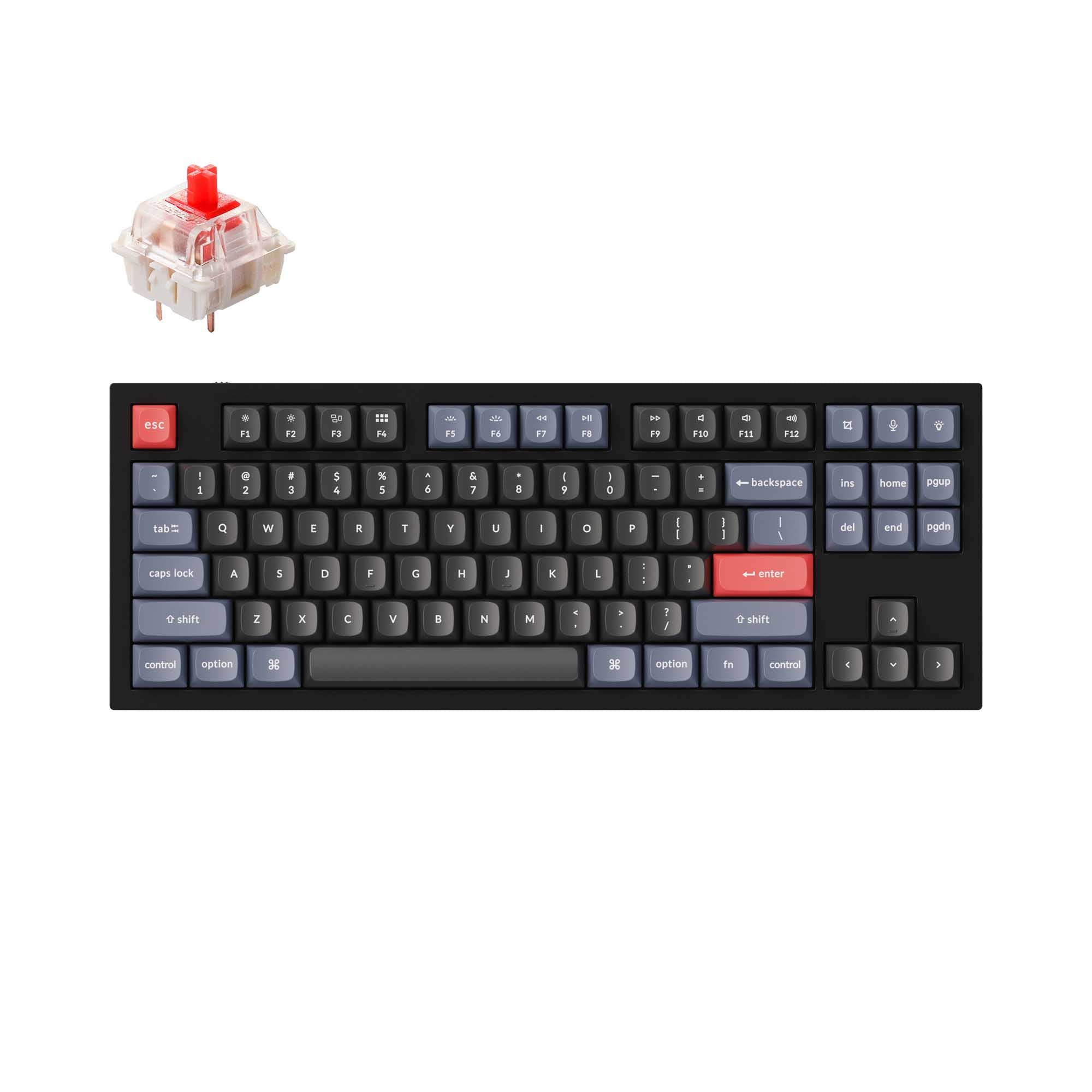
This is a comparison of the same keyboard model, sold under both the Keychron and Lemokey brand names.
KeebFinder may earn a commission when you buy through these links, at no extra cost to you.

Which one should you get?
Get the
Keychron Lemokey P1 Pro
- CNC-milled aluminum case for a solid build.
- Triple-mode connectivity with 1000 Hz polling on 2.4 GHz.
- Fully programmable via QMK and VIA firmware.
- South-facing LEDs. Shine-through legends stay dark, and some sculpted keycaps can clip the LED.
Get the
Keychron Lemokey P1 Pro
- CNC-milled aluminum case for a solid build.
- Triple-mode connectivity with 1000 Hz polling on 2.4 GHz.
- Fully programmable via QMK and VIA firmware.
- South-facing LEDs. Shine-through legends stay dark, and some sculpted keycaps can clip the LED.
You are looking at the same keyboard. The Keychron P1 Pro and Lemokey P1 Pro are identical in every technical specification and feature. Your decision should be based on retailer availability, warranty terms, or price at the time of purchase, not on perceived differences between the models.
The differences that matter
Skip the 40-row spec sheet. These are the specs that change how each board feels, sounds, and fits your desk.
- Keychron Lemokey P1 Pro
- Keychron Lemokey P1 Pro
- Performance
- 5858
- Build quality
- 7676
- Productivity
- 6666
- Customizability
- 6262
- Portability
- 5050
- Connection: Bluetooth, 2.4 GHz, Wired
- Hot-swappable
- Max polling rate: 1,000 Hz
- Case material: Aluminum
- Mount style: Gasket Mount
- Weight: 1,650 g
What will you mostly use it for?
Every use case results in a tie because the products are identical. The keyboard's feature set, including its wireless flexibility, programmability, and mod-friendly design, makes it a strong contender across all scenarios. The choice is not between different performance profiles but about recognizing you are selecting the same capable 75% mechanical keyboard.
It's a tie
- Both offer a 1000 Hz polling rate in 2.4 GHz wireless and wired modes.
- Both share the same aluminum case construction and gasket mount for a consistent typing feel.
- Both feature south-facing RGB lighting for compatibility with Cherry-profile keycaps.
Keychron Lemokey P1 Pro vs Lemokey P1 Pro specs
Every tracked spec, side by side. Rows marked with a dot differ between the boards.
0 of 16 specs differ
Keychron Lemokey P1 Pro
Keychron Lemokey P1 Pro
Hot-swappable
Mount style
Sound dampening
Screw-in stabilizers
Layout standard
Ergonomics
Display
Connection
Max polling rate
USB-C
Case material
Plate material
Keycaps
Weight
Backlight
Released
ISO layouts by store
Which stores sell ISO-DE, UK, and the other regional layouts.
Keychron Lemokey P1 Pro
Listed on the product, not split by store: ISO-DE.
Keychron Lemokey P1 Pro
Listed on the product, not split by store: ISO-DE.
Compare prices
Live prices from the stores we track, cheapest in-stock offer first.
Prices in USD are converted to your currency and can change at any time. KeebFinder may earn a commission when you buy through these links, at no extra cost to you.
Lowest price across stores, Amazon excluded.


Keychron Lemokey P1 Pro vs Lemokey P1 Pro: your questions
There is no functional difference. According to the vendor listing, the Lemokey P1 Pro is the same product. Lemokey is a sub-brand or alternate branding used by Keychron for certain markets or retailers.
Yes. The product description confirms it has triple connectivity modes: USB-C wired, 2.4 GHz wireless with 1000 Hz polling, and Bluetooth.
The vendor description does not specify the included switch brand or model. However, it confirms the keyboard is pre-built and features a hot-swappable PCB compatible with 3-pin and 5-pin MX-style switches.
Yes. Both the Keychron and Lemokey versions support full programmability through the QMK and VIA software, allowing for custom key mappings, layers, and macros.
The vendor listing states the keyboard comes with double-shot PBT keycaps in a Cherry or OSA profile. The south-facing RGB LEDs are designed to be compatible with these profiles.
Yes. The technical specifications list an integrated knob as a key feature, which can be used for volume control or other functions programmed via VIA.
Its 1000 Hz polling rate in wired and 2.4 GHz modes provides low latency, and the sturdy aluminum construction offers stability. The gasket mount may provide a slightly more flexible typing feel compared to a rigid tray mount.
The vendor lists the fully assembled weight as approximately 1650 grams (about 3.6 pounds), which is substantial and contributes to its desk-stable feel.
It uses a gasket mount system. The vendor describes this as a mounting style that uses gaskets or dampeners for a softer, more cushioned typing experience and improved acoustics.
The vendor description does not mention pre-lubrication. It does confirm the keyboard uses screw-in stabilizers, which are generally considered higher quality and easier to modify than clip-in variants.
The provided specifications and vendor description do not include any information about battery capacity or estimated battery life for the wireless modes.
While not explicitly stated, keyboards with standard USB HID and Bluetooth connectivity are typically compatible with both operating systems. The programmability via VIA is also OS-agnostic.
Not sold on either?




Still torn?
Answer a few quick questions and the keyboard finder ranks 2,000+ boards by how you will actually use yours.