Epomaker Galaxy100 vs TH87Aluminum 96% vs Portable TKL
Choose the Galaxy100 for a premium, full-featured desktop experience, or the TH87 for superior portability and battery life.
KeebFinder may earn a commission when you buy through these links, at no extra cost to you.

4.6 (68)4.6 · 68 reviews
from$87at Epomaker
90-day lowLowest price in 90 days

4.7 (16)4.7 · 16 reviews
from$60at Epomaker
90-day lowLowest price in 90 days
Which one should you get?
Get the
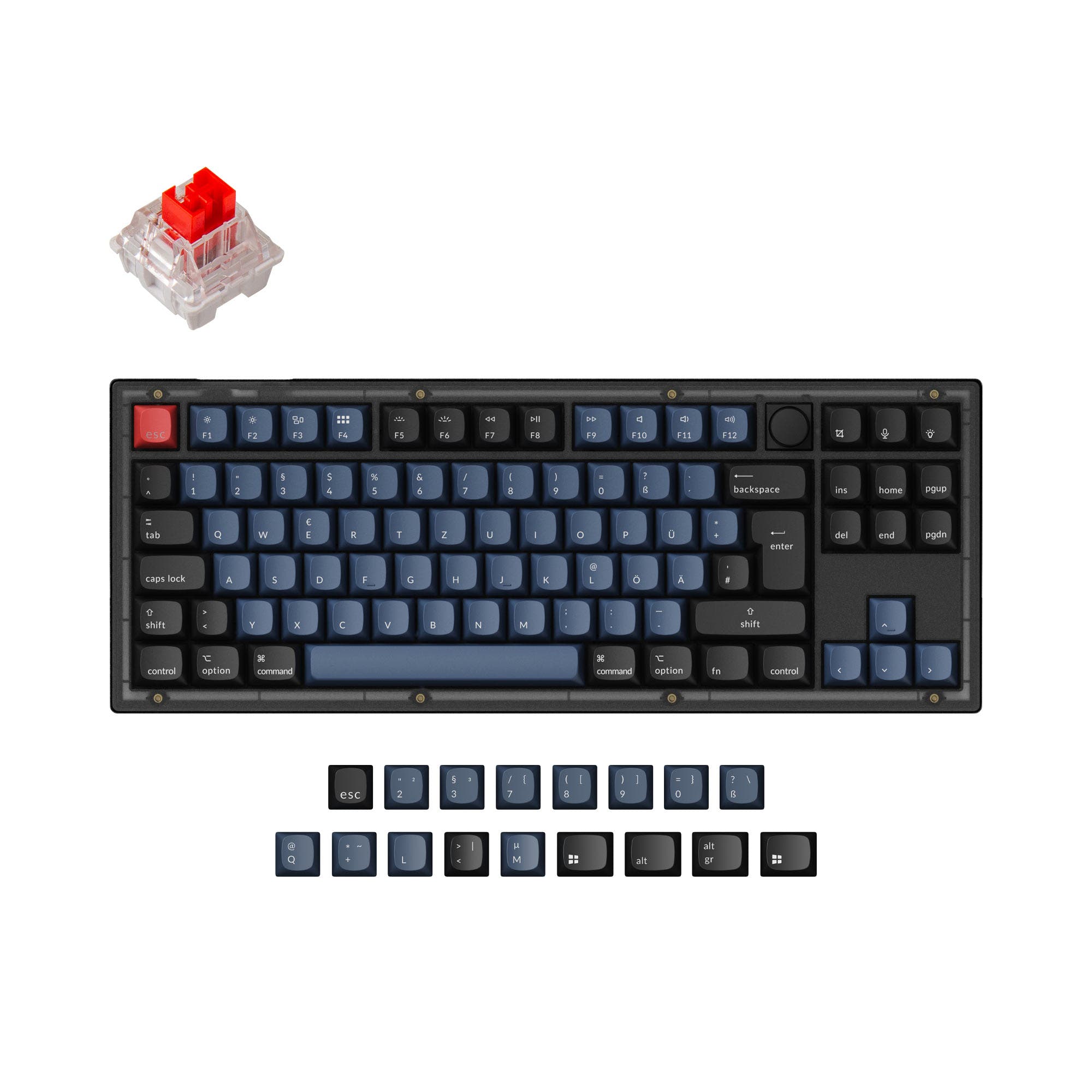
Epomaker Galaxy100
Aluminum 96%
Build quality in the top 15% of 96% boards under $100.
- Premium aluminum alloy case construction.
- Supports QMK and VIA for open-source, deep customization.
- Includes a dedicated metal control knob.
- South-facing LEDs. Shine-through legends stay dark, and some sculpted keycaps can clip the LED.
- No ISO layout. ISO-DE, UK, and other ISO variants are not offered.
- Compact full-size layout. The numpad is present, the gaps of a full-size board are not.
Get the
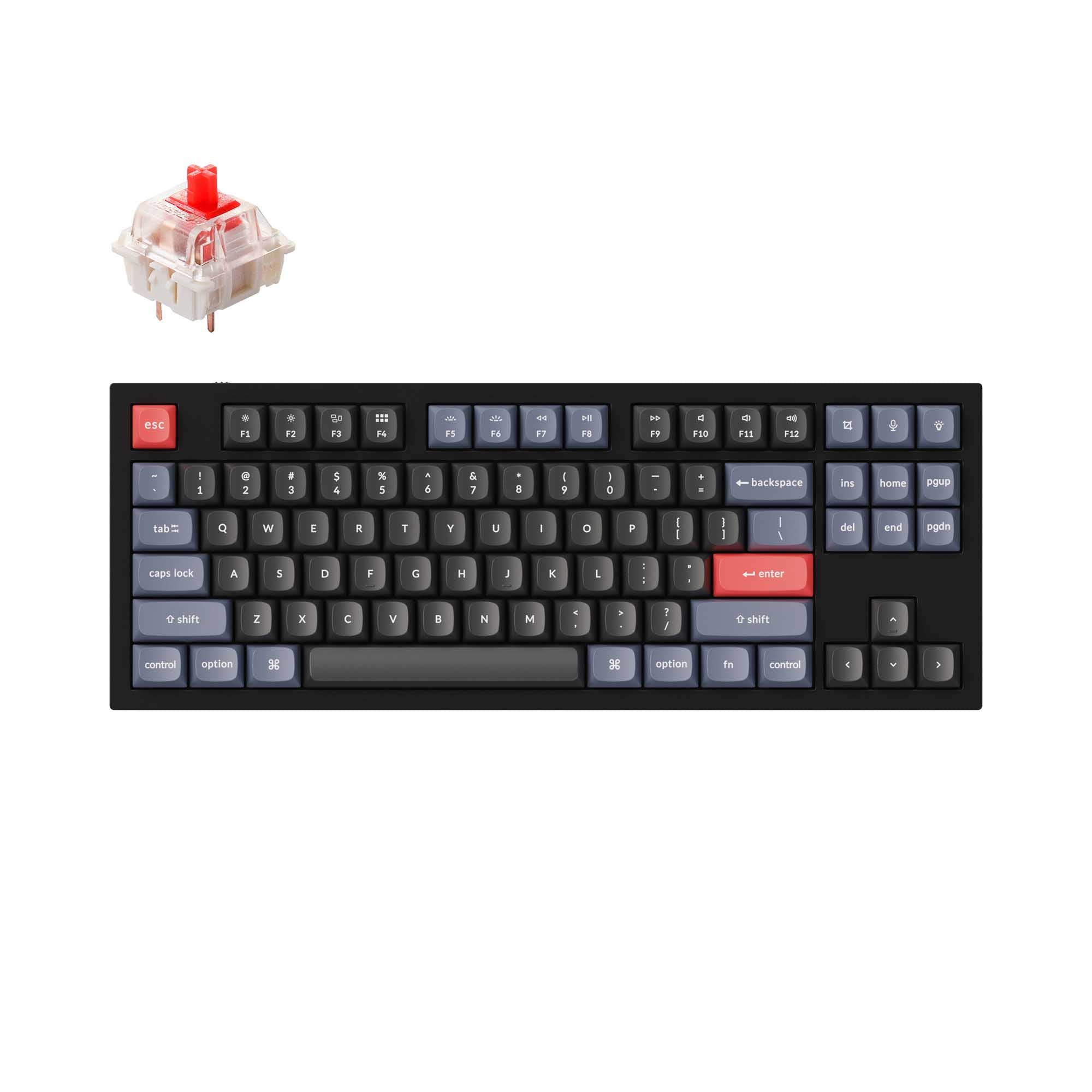
Epomaker TH87
Portable TKL
Build quality in the bottom 45% of 80% boards under $100.
- Large 10000mAh battery for extended wireless use.
- Lighter weight (1000g) and more compact 80% TKL layout.
- Includes a two-stage kickstand for three adjustable typing angles.
- South-facing LEDs. Shine-through legends stay dark, and some sculpted keycaps can clip the LED.
- No numpad.
Your primary need dictates the choice. If you want a heavyweight, feature-packed keyboard for a permanent desk setup with unparalleled customization, the Epomaker Galaxy100 is the superior investment. If your priority is a lightweight, long-lasting wireless keyboard for a mobile lifestyle or a cleaner desk, the Epomaker TH87 delivers excellent value and practicality.
The differences that matter
Skip the 40-row spec sheet. These are the specs that change how each board feels, sounds, and fits your desk.
Epomaker Galaxy100
Epomaker TH87
Layout size
96%
80%
Battery
8,000 mAh
10,000 mAh
A larger battery means fewer cables during the day
Case material
Aluminum
ABS
Switch options
Clicky, Linear
Linear, Silent
Knob
Yes
No
- Epomaker Galaxy100
- Epomaker TH87
- Performance
- 8374
- Build quality
- 8459
- Productivity
- 9375
- Customizability
- 8858
- Portability
- 6285
- Connection: Bluetooth, 2.4 GHz, Wired
- Hot-swappable
- Max polling rate: 1,000 Hz
- Mount style: Gasket Mount
- Sound dampening
- Keycaps: PBT
What will you mostly use it for?
The Galaxy100 is the clear choice for users who prioritize a premium, stationary workstation, excelling in programming, modding, and content creation with its aluminum build and advanced software. The TH87 wins for travel due to its lighter weight and larger battery, while office use is a draw depending on layout preference. For gaming, the Galaxy100's extra features give it a slight edge.
Pick the Epomaker Galaxy100
- The Galaxy100's aluminum case provides a more stable, premium feel during intense use.
- It includes a dedicated metal knob for quick volume or macro control during gameplay.
- Its 1000Hz polling rate in both wired and 2.4GHz modes matches the TH87 for responsiveness.
What owners say
Ratings and quotes collected from verified store reviews, including the critical ones.
Epomaker Galaxy100
68 owner reviews
“Amazing keyboard, via support could be better, but it works! i love the knob, its so nice. this has to be the worst financial decision ive ever made and i dont regret it”
“The keyboard has been great but when I received it a couple keys were broken. I had to glue the inside connector back together as it had broken apart. Otherwise the keyboard has functions very well.”
Epomaker TH87
16 owner reviews
“Im really happy with the overall quality of the keyboard. The silent switches are really great for working and gaming as well.”
“Ill start with the positives. - it sound creamy and has a great feel on the fingers. - a ten keyless that has all the functionality that i need In theory this is the perfect keyboard but i have had 1 issue that has been bugging me so much. Ever so often the…”
Epomaker Galaxy100 vs TH87 specs
Every tracked spec, side by side. Rows marked with a dot differ between the boards.
13 of 25 specs differ
Epomaker Galaxy100
Epomaker TH87
Switch options
Hot-swappable
Mount style
Sound dampening
Layout size
Layout standard
Ergonomics
Knob
Display
Connection
Max polling rate
Battery
USB-C
Case material
Plate material
Keycaps
Weight
Dimensions
Typing angle
Backlight
QMK
VIA
N-key rollover
Mac & Windows
Released
ISO layouts by store
Which stores sell ISO-DE, UK, and the other regional layouts.
Epomaker Galaxy100
No ISO layout at the stores we track.
Epomaker TH87
Epomaker
ISO-DE, ISO-UK
In stockShips to you
Compare prices
Live prices from the stores we track, cheapest in-stock offer first.
Prices in USD are converted to your currency and can change at any time. KeebFinder may earn a commission when you buy through these links, at no extra cost to you.
Lowest price across stores, Amazon excluded.


Epomaker Galaxy100 vs TH87: your questions
The Epomaker TH87 has a larger 10000mAh battery compared to the Galaxy100's 8000mAh. According to the manufacturer, the TH87 can last up to 45 hours with RGB at full brightness, or 200 hours with it off.
Yes, the Epomaker Galaxy100 supports QMK and VIA firmware for key remapping and macro creation. The manufacturer notes that QMK functions are supported in wired mode. A JSON file must be loaded into the VIA app for configuration.
No, the Epomaker TH87 does not include a dedicated control knob. The Galaxy100 is the model that features a metal knob, which can be used for volume control or other programmable functions.
The Epomaker TH87 is significantly more portable. It weighs 1000g compared to the Galaxy100's 2000g, and its 80% TKL layout is more compact than the Galaxy100's 96% layout, making it easier to transport.
Yes, both the Epomaker Galaxy100 and TH87 feature hot-swappable PCBs that support 3-pin and 5-pin mechanical switches, allowing you to change switches without soldering.
The Galaxy100 uses a powder-sprayed aluminum alloy case. The TH87 uses an ABS plastic case, which contributes to its lighter weight.
Yes, both keyboards feature south-facing per-key RGB LEDs. This orientation is often preferred as it reduces interference with Cherry-profile keycaps and improves visibility from the typist's angle.
Both keyboards offer a 1000Hz polling rate in their wired and 2.4GHz wireless modes, which is standard for responsive gaming. In Bluetooth mode, both drop to a 125Hz polling rate.
The TH87 includes a more comprehensive accessory kit. It comes with two extra switches and a 2-in-1 switch and keycap puller. The Galaxy100 listing mentions it includes a keycap puller and a USB cable.
Yes, both keyboards are listed as compatible with Mac, Windows, and Android systems. However, the TH87's programmable software is noted to be for Windows only, while the Galaxy100's VIA software is cross-platform.
Both use a gasket mount and multi-layer foam. The Galaxy100 specifically lists Poron sandwich pad, IXPE switch pad, PET sound enhancement pad, EMDP switch socket pad, and a PET bottom pad. The TH87 lists a 5-layer system with PORON foam, IXPE pad, a sound enhancement pad, EPDM pad, and a silicone bottom.
The Epomaker TH87 includes a two-stage kickstand that offers three adjustable typing angles: 6, 8, and 10.5 degrees. The Galaxy100 has a fixed 7-degree typing angle.
Not sold on either?






Still torn?
Answer a few quick questions and the keyboard finder ranks 2,000+ boards by how you will actually use yours.