Epomaker TH40 vs TH87Ultra-Compact 40% vs TKL Layout Choice
Choose the Epomaker TH40 for extreme portability and deep software customization, or the TH87 for a more traditional TKL layout with superior battery life.
KeebFinder may earn a commission when you buy through these links, at no extra cost to you.

3.9 (56)3.9 · 56 reviews
from$55at Epomaker
90-day lowLowest price in 90 days

4.7 (16)4.7 · 16 reviews
from$60at Epomaker
90-day lowLowest price in 90 days
Which one should you get?
Get the
Epomaker TH40
Ultra-Compact 40%
Build quality in the top 30% of 40% boards under $150.
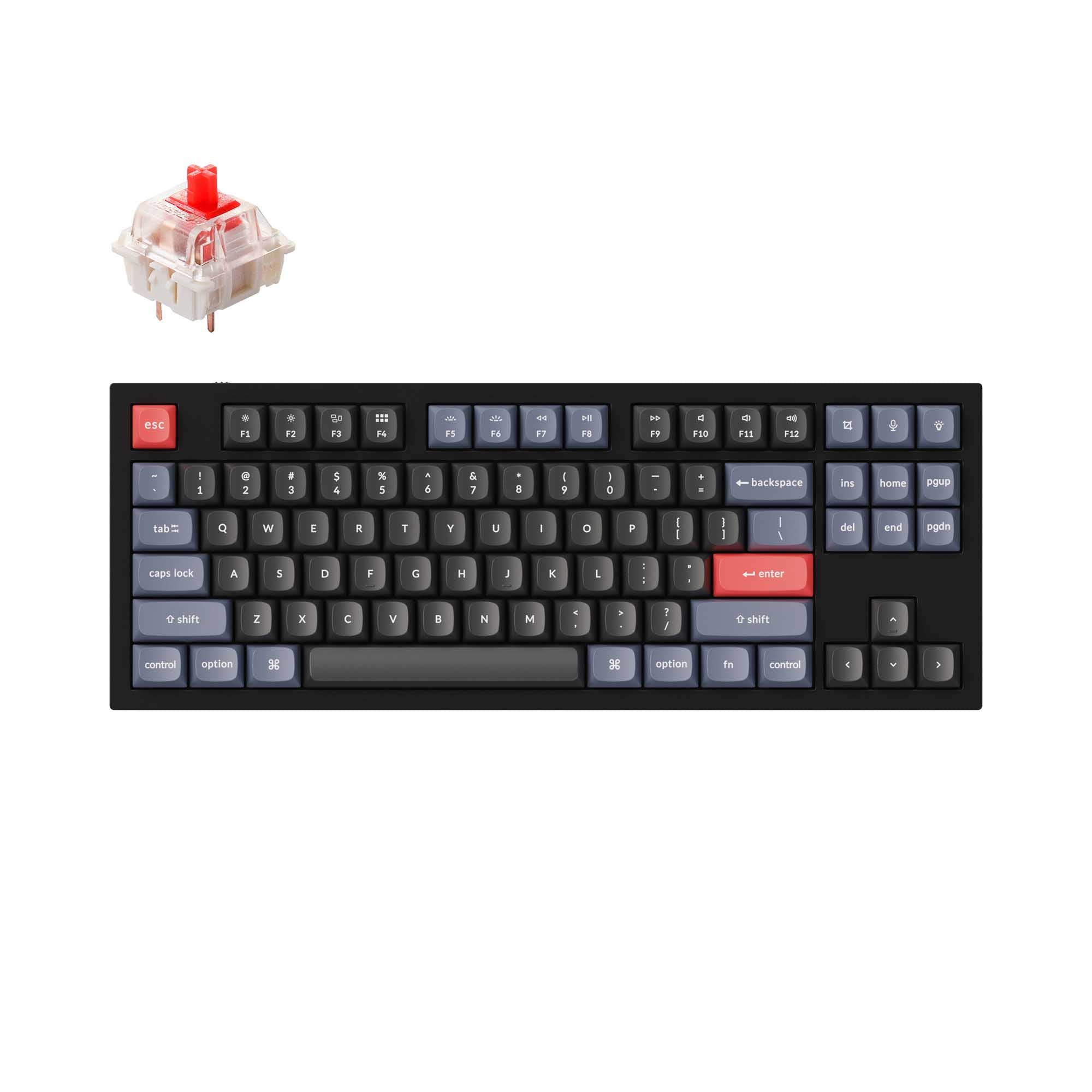
- Extreme 40% compact layout with split spacebar for portability and minimized finger travel.
- Full VIA and QMK firmware support for deep, layer-based key remapping.
- Detailed acoustic design with Poron plate foam, IXPE switch pad, and bottom Poron foam.
- South-facing LEDs. Shine-through legends stay dark, and some sculpted keycaps can clip the LED.
- No ISO layout. ISO-DE, UK, and other ISO variants are not offered.
- Compact layout only. No function row, dedicated arrow keys, or numpad.
Get the
Epomaker TH87
TKL Layout Choice
Build quality in the bottom 45% of 80% boards under $100.
- Massive 10000mAh battery, rated for up to 45 hours with RGB or 200 hours without.
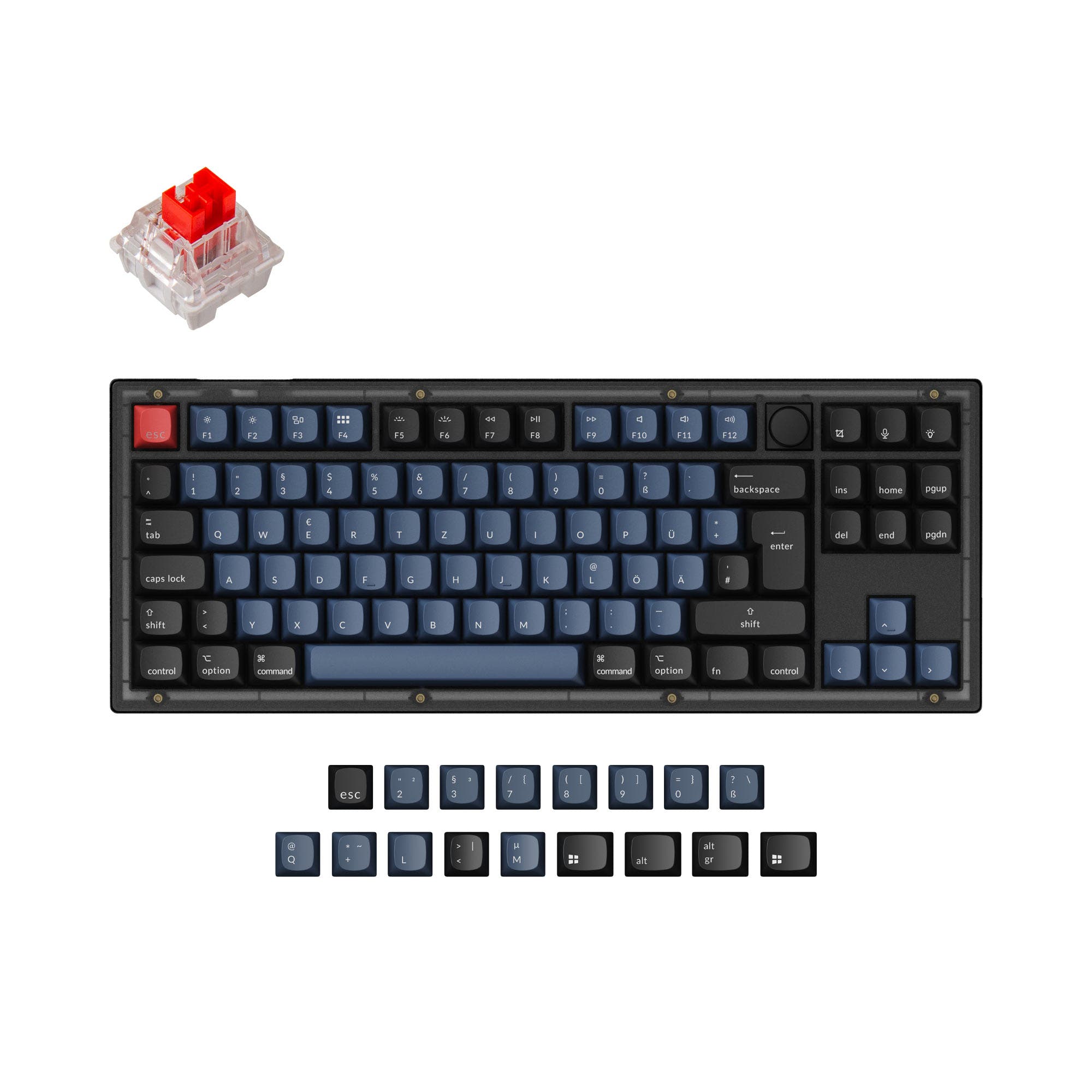
- Standard TKL layout with support for multiple regional standards (ANSI, ISO-DE, ISO-UK, JIS).
- Includes a two-stage kickstand for three adjustable typing angles (6°, 8°, 10.5°).
- South-facing LEDs. Shine-through legends stay dark, and some sculpted keycaps can clip the LED.
- No numpad.
Your primary need dictates the choice. If your priority is a portable, deeply customizable keyboard for specialized workflows and you're willing to learn layers, the Epomaker TH40 is compelling. If you prefer a traditional layout with outstanding battery life, silent operation, and ergonomic adjustability right out of the box, the Epomaker TH87 is the more practical daily driver. Consider how much you value dedicated keys versus desk space.
The differences that matter
Skip the 40-row spec sheet. These are the specs that change how each board feels, sounds, and fits your desk.
Epomaker TH40
Epomaker TH87
Layout size
40%
80%
Battery
3,000 mAh
10,000 mAh
A larger battery means fewer cables during the day
Ergonomics
Split Spacebar
Standard
Switch options
Linear
Linear, Silent
Weight
500 g
1,000 g
Heavier boards stay planted and lighter ones travel
- Epomaker TH40
- Epomaker TH87
- Performance
- 7474
- Build quality
- 7559
- Productivity
- 6275
- Customizability
- 8558
- Portability
- 8485
- Connection: Bluetooth, 2.4 GHz, Wired
- Hot-swappable
- Max polling rate: 1,000 Hz
- Case material: ABS
- Mount style: Gasket Mount
- Keycaps: PBT
What will you mostly use it for?
The TH87 is the more straightforward choice for gaming, office use, and content creation due to its standard layout, silent switch option, and long battery life. The TH40 excels in specialized scenarios like programming and travel, where its extreme compactness and superior VIA/QMK programmability are major assets. For keyboard modders, the TH40's open-source firmware support gives it an edge, despite both boards being hot-swappable.
Pick the Epomaker TH87
- The TH87's TKL layout provides dedicated arrow and function keys without layer switching.
- Both offer a 1000Hz polling rate in wired/2.4G modes, but the TH87's listing specifies 2ms wired and 5ms 2.4G latency.
- The TH87 includes a two-stage kickstand for adjustable typing angles.
What owners say
Ratings and quotes collected from verified store reviews, including the critical ones.
Epomaker TH40
56 owner reviews
“Overall good little keyboard for the price, other 40s cost more but better quality, also I could not find a few characters mapped on this one, not in manual or online.”
“The keyboard is very solid ooverall, but frequently will type two letters instead of one on key press. This is a very frustrating issue and leads to many typos. Without this problem, it would easily be a 5-star keyboard.”
Epomaker TH87
16 owner reviews
“Im really happy with the overall quality of the keyboard. The silent switches are really great for working and gaming as well.”
“Ill start with the positives. - it sound creamy and has a great feel on the fingers. - a ten keyless that has all the functionality that i need In theory this is the perfect keyboard but i have had 1 issue that has been bugging me so much. Ever so often the…”
Epomaker TH40 vs TH87 specs
Every tracked spec, side by side. Rows marked with a dot differ between the boards.
13 of 24 specs differ
Epomaker TH40
Epomaker TH87
Switch options
Hot-swappable
Mount style
Sound dampening
Layout size
Layout standard
Ergonomics
Display
Connection
Max polling rate
Battery
USB-C
Case material
Plate material
Keycaps
Weight
Dimensions
Typing angle
Backlight
QMK
VIA
N-key rollover
Mac & Windows
Released
ISO layouts by store
Which stores sell ISO-DE, UK, and the other regional layouts.
Epomaker TH40
No ISO layout at the stores we track.
Epomaker TH87
Epomaker
ISO-DE, ISO-UK
In stockShips to you
Compare prices
Live prices from the stores we track, cheapest in-stock offer first.
Prices in USD are converted to your currency and can change at any time. KeebFinder may earn a commission when you buy through these links, at no extra cost to you.
Lowest price across stores, Amazon excluded.


Epomaker TH40 vs TH87: your questions
The core difference is layout. The TH40 is a 40% keyboard with only 44 keys, requiring heavy use of function layers. The TH87 is an 87-key tenkeyless (TKL) keyboard with a standard layout that includes arrow keys, function row, and navigation cluster. This fundamental difference drives all other comparisons regarding portability, learning curve, and intended use case.
The Epomaker TH87 has a significantly larger 10000mAh battery. According to its specifications, it offers up to 45 hours of continuous use with RGB lighting at its brightest, or an estimated 200 hours with lighting off. The TH40 has a 3000mAh battery, which is smaller but appropriate for its more compact size and lower power draw from fewer LEDs.
Yes, but the method and depth differ. The TH40 supports VIA and QMK, which are open-source, cross-platform solutions for extensive remapping and macro creation on multiple programmable layers. The TH87 uses proprietary programming software which, according to its vendor page, is for Windows only. The TH40 offers more flexible and accessible software customization.
The Epomaker TH40 is far more portable. It measures 258 x 97 x 35 mm and weighs 500g, designed as an ultra-compact board. The TH87 measures 367 x 142 x 41 mm and weighs 1000g. The TH40's 40% layout is explicitly marketed for those on the move and will fit easily into a bag.
Only the Epomaker TH87 is listed with an explicit silent switch option, the Sea Salt Silent Switch. The TH40's metadata and vendor description only mention linear switches. If quiet typing in an office is a priority, the TH87 with silent switches is the clear choice.
Yes, both keyboards feature hot-swappable PCBs. The TH40 supports 3-pin and 5-pin switches. The TH87 also supports 5-pin switches. This allows you to easily change the mechanical switches without soldering on either model.
Both use gasket mounts and internal foam. The TH40 uses Poron plate foam, an IXPE switch pad, and bottom Poron foam. The TH87 features a more detailed 5-layer system with PORON sandwich foam, IXPE switch pad, sound enhancement pad, EPDM switch socket pad, and a silicone bottom. The TH87's design is more explicitly focused on sound optimization.
The Epomaker TH87 is better for beginners. Its standard TKL layout requires no retraining, and it includes helpful features like an adjustable kickstand and a silent switch option. The TH40's 40% layout has a steep learning curve and is better suited for enthusiasts seeking a specific compact form factor or deep programmability.
According to its vendor page, the TH87 includes the keyboard, a USB A-to-C cable, a 2.4Ghz receiver (stored under the kickstand), two extra switches, a 2-in-1 switch and keycap puller, and a manual. The TH40's listing shows it comes with just the keyboard, a USB cable, and a user manual.
The Epomaker TH87 includes a two-stage kickstand that offers three adjustable typing angles: 6 degrees, 8 degrees, and 10.5 degrees. The TH40 does not have an adjustable typing angle or kickstand mentioned in its specifications.
Both keyboards list Mac compatibility in their metadata. However, user reviews for the TH40 indicate some users experienced difficulties getting the VIA configuration software to recognize the keyboard on macOS. The TH87's proprietary software is listed as for Windows only, though the keyboard's basic functions will work on Mac.
Not sold on either?





Still torn?
Answer a few quick questions and the keyboard finder ranks 2,000+ boards by how you will actually use yours.