Epomaker HE68 Lite vs Yunzii RT688K Polling vs Gasket Mount
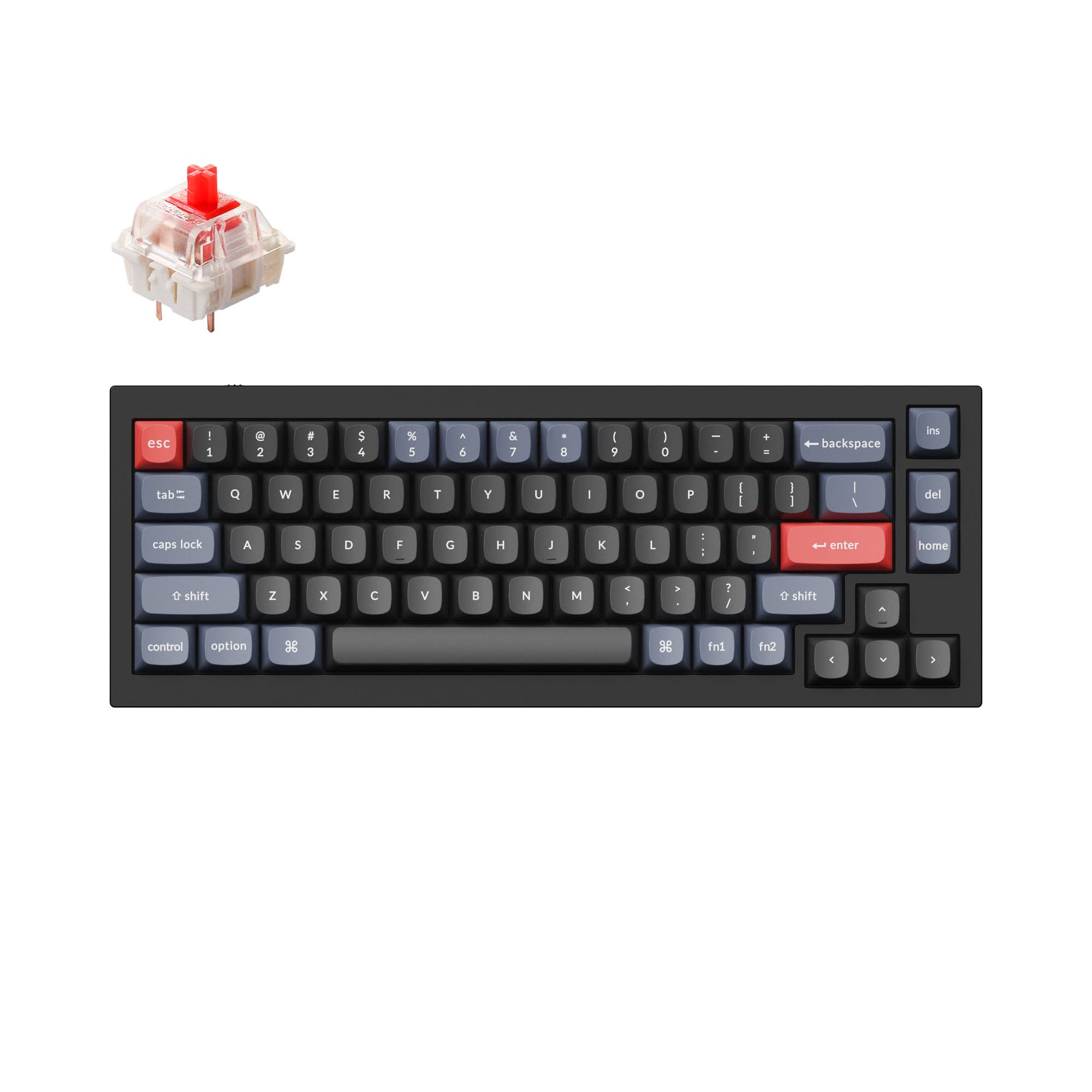
Choose the Epomaker HE68 Lite for its higher 8000Hz polling rate and detailed software customization, or the Yunzii RT68 for its gasket mount structure and potentially softer typing feel.
KeebFinder may earn a commission when you buy through these links, at no extra cost to you.

4.7 (61)4.7 · 61 reviews
from$42at Epomaker
90-day lowLowest price in 90 days

No reviews
from$59at Yunzii
90-day lowLowest price in 90 days
Which one should you get?
Get the
Epomaker HE68 Lite
8K Polling
Build quality in the top 35% of 65% boards under $50.
- 8000Hz polling rate with a 128kHz scan rate for minimal latency.
- Hot-swappable PCB for easy switch changes.
- Includes five detailed sound-dampening foam layers (PRO Sandwich, IXPE, PET, Switch Socket, Bottom).
- Magnetic switches only. Standard MX switches will not fit.
- South-facing LEDs. Shine-through legends stay dark, and some sculpted keycaps can clip the LED.
Get the
Yunzii RT68
Gasket Mount
Build quality in the bottom 35% of 65% boards under $100.
- Features a gasket mount structure for a potentially more flexible typing feel.
- Double-shot PBT Cherry profile keycaps.
- Includes four layers of soundproof pads according to the vendor.
- Magnetic switches only. Standard MX switches will not fit.
- South-facing LEDs. Shine-through legends stay dark, and some sculpted keycaps can clip the LED.
For most users, especially gamers and tinkerers, the Epomaker HE68 Lite is the more compelling and readily available option. Its combination of a high polling rate, hot-swap sockets, and extensive software features provides greater value and customization out of the box. Only consider the Yunzii RT68 if you specifically value its gasket mount design for acoustic properties and are willing to accept its lower polling rate and current lack of availability.
The differences that matter
Skip the 40-row spec sheet. These are the specs that change how each board feels, sounds, and fits your desk.
Epomaker HE68 Lite
Yunzii RT68
Hot-swappable
Yes
No
Switch changes without soldering
Max polling rate
8,000 Hz
1,000 Hz
Higher polling helps competitive FPS and does nothing for typing
Switch options
Linear, Magnetic
Magnetic
Mount style
Tray Mount
Gasket Mount
Weight
650 g
745 g
Heavier boards stay planted and lighter ones travel
- Epomaker HE68 Lite
- Yunzii RT68
- Performance
- 9687
- Build quality
- 7355
- Productivity
- 8654
- Customizability
- 7349
- Portability
- 7565
- Layout size: 65%
- Hall effect (magnetic)
- Rapid trigger
- Connection: Wired
- Sound dampening
- Keycaps: PBT
What will you mostly use it for?
The Epomaker HE68 Lite wins in most categories due to its higher-performance specs and included accessories. It is the stronger choice for gaming, programming, travel, modding, and content creation, primarily because of its 8000Hz polling, hot-swap capability, and detailed software. The two keyboards tie for general office use, sharing core wired functionality and compatibility. The Yunzii RT68's primary advantage is its gasket mount structure, which may appeal to users prioritizing a specific typing feel over maximum polling rate.
Pick the Epomaker HE68 Lite
- Higher 8000Hz polling rate versus 1000Hz on the Yunzii RT68.
- Software-adjustable actuation down to 0.01mm increments.
- Includes SOCD (Snap Key) cleaning for directional inputs.
Epomaker HE68 Lite vs Yunzii RT68 specs
Every tracked spec, side by side. Rows marked with a dot differ between the boards.
9 of 23 specs differ
Epomaker HE68 Lite
Yunzii RT68
Switch options
Hall effect (magnetic)
Rapid trigger
Hot-swappable
Mount style
Sound dampening
Screw-in stabilizers
Layout size
Layout standard
Ergonomics
Display
Connection
Max polling rate
USB-C
Case material
Plate material
Keycaps
Weight
Dimensions
Backlight
N-key rollover
Mac & Windows
Released
Compare prices
Live prices from the stores we track, cheapest in-stock offer first.
Prices in USD are converted to your currency and can change at any time. KeebFinder may earn a commission when you buy through these links, at no extra cost to you.
Lowest price across stores, Amazon excluded.



Epomaker HE68 Lite vs Yunzii RT68: your questions
The Epomaker HE68 Lite has an 8000Hz polling rate. The Yunzii RT68 has a 1000Hz polling rate. A higher polling rate can reduce input latency in fast-paced games.
Only the Epomaker HE68 Lite is explicitly listed as hot-swappable in its specifications and includes extra switches. The Yunzii RT68's product description does not mention hot-swap capability.
The Epomaker HE68 Lite uses a tray mount structure. The Yunzii RT68 uses a gasket mount structure, which typically aims to provide a softer, more consistent typing feel by isolating the plate from the case.
Yes, both the Epomaker HE68 Lite and the Yunzii RT68 list support for Mac and Windows operating systems in their specifications.
Both keyboards include sound-dampening materials. The Epomaker HE68 Lite details five specific foam layers, while the Yunzii RT68 mentions four soundproof pads and a gasket mount. The gasket mount of the RT68 may produce a different, potentially softer acoustic signature.
Yes, both support adjustable actuation due to their hall effect switches. The Epomaker HE68 Lite allows adjustment in 0.01mm increments via software. The Yunzii RT68 lists an adjustable precision of 0.1mm.
Both keyboards use Cherry profile keycaps made from PBT plastic. The Epomaker's are shine-through for its RGB, except in the Black Red colorway.
The Epomaker HE68 Lite includes a USB cable, a 2-in-1 keycap and switch puller, extra switches, a screwdriver, a hand strap, and a manual. The Yunzii RT68's package contents are not detailed in the provided information.
The Epomaker HE68 Lite is lighter at 650g (0.65kg) and includes a hand strap. The Yunzii RT68 weighs 745g. The Epomaker's dimensions are also slightly more compact.
Yes. The Epomaker HE68 Lite has dedicated software for Windows and Mac for adjusting actuation, RGB, macros, and DKS. The Yunzii RT68 mentions a web-based software for similar customizations.
SOCD (Simultaneous Opposite Cardinal Direction) cleaning prioritizes the latest input when opposing keys (like Left and Right) are pressed. This feature is specifically mentioned for the Epomaker HE68 Lite.
Not sold on either?


Still torn?
Answer a few quick questions and the keyboard finder ranks 2,000+ boards by how you will actually use yours.