Epomaker TH87 vs Nuphy Node75 High ProfileTKL vs 75% Layout
Choose the TH87 for its larger battery and TKL layout, or the Node75 if a smaller footprint and lower weight matter more.
KeebFinder may earn a commission when you buy through these links, at no extra cost to you.

4.7 (16)4.7 · 16 reviews
from$60at Epomaker
90-day lowLowest price in 90 days

No reviews
from$79at Input Gear
Which one should you get?
Get the
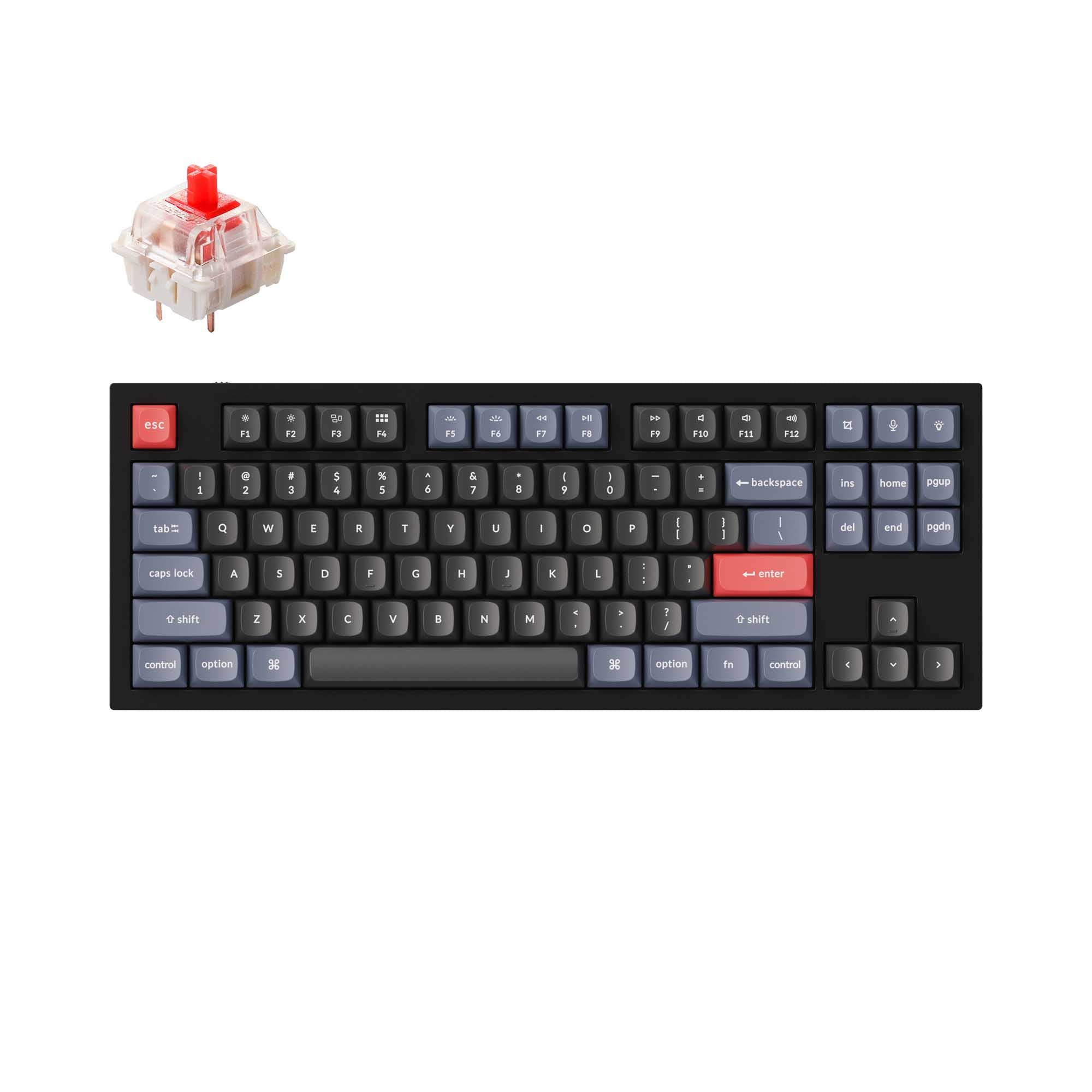
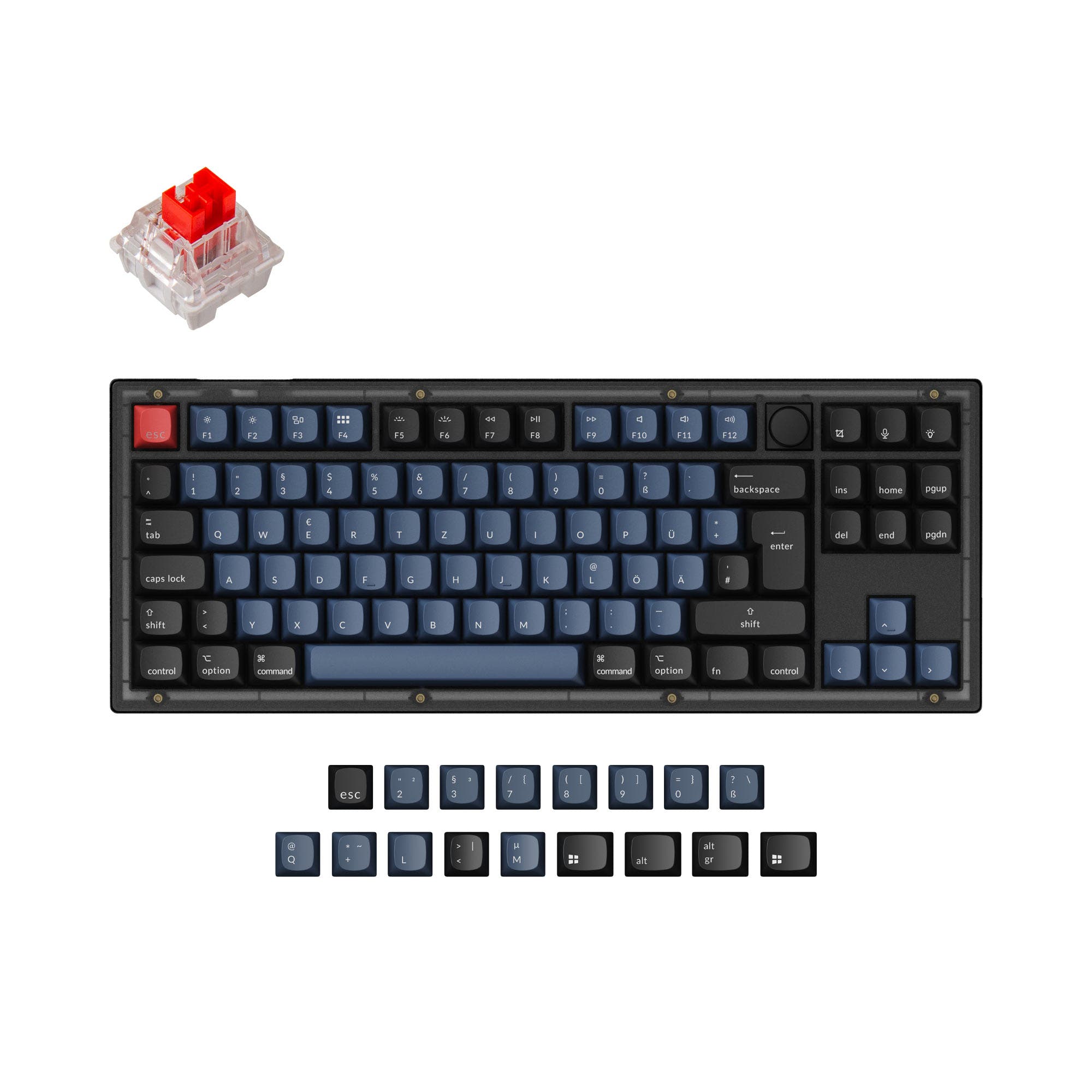
Epomaker TH87
TKL
Build quality in the bottom 45% of 80% boards under $100.
- 80% TKL layout with 87 keys, according to the vendor description.
- 10000mAh battery, with the vendor listing up to 200 hours with the backlight off.
- Silent switch option, alongside linear switches.
- South-facing LEDs. Shine-through legends stay dark, and some sculpted keycaps can clip the LED.
- No numpad.
Get the
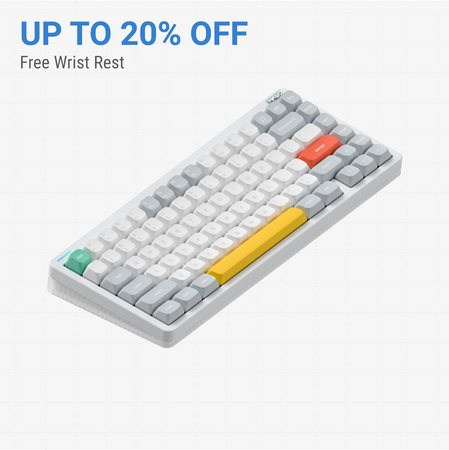
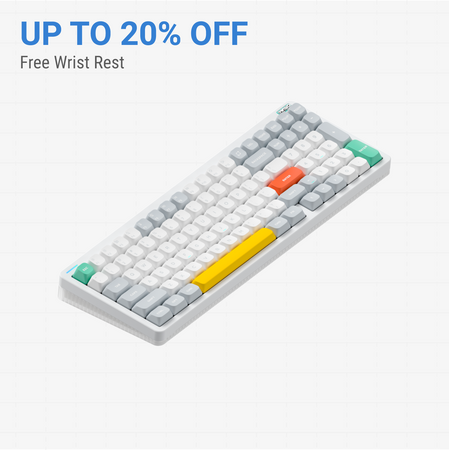
Nuphy Node75 High Profile
75% Layout
Build quality in the bottom 40% of 75% boards under $100.
- 75% layout with a smaller listed footprint than the TH87.
- Weighs 827g, compared with 1000g for the TH87.
- Hot-swap support with 5-pin MX compatibility specified by the vendor.
- Missing ISO-UK. The other board is sold in those layouts.
- No numpad.
Choose the Epomaker TH87 if you want the more spacious TKL layout, a much larger listed battery, or a silent switch option. Pick the Nuphy Node75 High Profile if a lighter, more compact keyboard is the priority and its listed layout options suit you. Both offer hot-swap support, gasket mounting, and tri-mode connectivity.
The differences that matter
Skip the 40-row spec sheet. These are the specs that change how each board feels, sounds, and fits your desk.
Epomaker TH87
Nuphy Node75 High Profile
Layout size
80%
75%
Battery
10,000 mAh
4,000 mAh
A larger battery means fewer cables during the day
Switch options
Linear, Silent
Clicky, Linear
Weight
1,000 g
827 g
Heavier boards stay planted and lighter ones travel
Layout standard
ANSI, ISO, ISO-DE, ISO-UK, JIS
ANSI, ISO, ISO-DE
ISO and JIS exist so regional layouts fit
- Epomaker TH87
- Nuphy Node75 High Profile
- Performance
- 7461
- Build quality
- 5959
- Productivity
- 7562
- Customizability
- 5852
- Portability
- 8575
- Connection: Bluetooth, 2.4 GHz, Wired
- Hot-swappable
- Max polling rate: 1,000 Hz
- Case material: ABS
- Mount style: Gasket Mount
- Sound dampening
What will you mostly use it for?
The TH87 takes the edge for office, programming, gaming, and content creation, mainly because its TKL layout keeps more keys and it offers a silent switch option. The Node75 is the more convenient travel pick because it weighs less and has a smaller listed footprint. Modding is a close match: both are hot-swappable and gasket-mounted, with the Node75 description specifying 5-pin MX compatibility. Both have the same listed polling rate in wired and 2.4 GHz modes.
Pick the Epomaker TH87
- Both keyboards list 1000 Hz polling for wired and 2.4 GHz connections.
- The TH87's TKL layout leaves room for mouse movement while retaining a familiar 87-key layout.
- The TH87 offers linear and silent switch options, while the Node75 lists linear and clicky switch types.
Epomaker TH87 vs Nuphy Node75 High Profile specs
Every tracked spec, side by side. Rows marked with a dot differ between the boards.
9 of 22 specs differ
Epomaker TH87
Nuphy Node75 High Profile
Switch options
Hot-swappable
Mount style
Sound dampening
Layout size
Layout standard
Ergonomics
Display
Connection
Max polling rate
Battery
USB-C
Case material
Plate material
Keycaps
Weight
Dimensions
Typing angle
Backlight
N-key rollover
Mac & Windows
Released
ISO layouts by store
Which stores sell ISO-DE, UK, and the other regional layouts.
Epomaker TH87
Epomaker
ISO-DE, ISO-UK
In stockShips to you
Nuphy Node75 High Profile
Input Gear
ISO-DE
Out of stockShips to you
Compare prices
Live prices from the stores we track, cheapest in-stock offer first.
Prices in USD are converted to your currency and can change at any time. KeebFinder may earn a commission when you buy through these links, at no extra cost to you.
Lowest price across stores, Amazon excluded.



Epomaker TH87 vs Nuphy Node75 High Profile: your questions
The TH87 is an 80% TKL keyboard, while the Node75 uses a 75% layout. The TH87 also has a larger 10000mAh battery, while the Node75 is lighter at 827g.
The Epomaker TH87 has a 10000mAh battery, compared with 4000mAh in the Nuphy Node75. Epomaker lists up to 200 hours with the TH87 backlight off, while the Node75 vendor listing says up to around 1000 hours with RGB off.
The Node75 weighs 827g and measures 318 x 141 x 19 mm in the product metadata. The TH87 weighs 1000g and has listed dimensions of 41 x 367 x 142 mm, so the Node75 is the lighter, smaller-footprint choice.
Yes, both list Bluetooth, 2.4 GHz, and wired connectivity. Both also list 1000 Hz polling for wired and 2.4 GHz modes.
Yes, both keyboards list hot-swap support. Epomaker describes the TH87 as having a 5-pin hot-swappable PCB, and the Node75 vendor listing specifies 5-pin MX compatibility.
The TH87 lists linear and silent switch types, and Epomaker names its Sea Salt Silent V2 option for office or night use. The Node75 metadata lists linear and clicky switch types.
The TH87 lists ISO-UK among its layout options. The Node75 layout options include ANSI, ISO-DE, and ISO, but not ISO-UK.
Neither keyboard has a numpad, according to the compatibility rules for both products. The TH87 has a TKL layout, while the Node75 uses a 75% layout.
Both keyboards list ABS cases, polycarbonate plates, and PBT keycaps. The TH87 vendor description also names five sound-dampening layers, including PORON, IXPE, EPDM, and silicone.
Both the TH87 and Node75 list RGB lighting. The TH87 has south-facing LEDs, which its compatibility note says may leave shine-through legends dark and can conflict with some sculpted keycaps.
Not sold on either?





Still torn?
Answer a few quick questions and the keyboard finder ranks 2,000+ boards by how you will actually use yours.