Keychron C1 vs Q3Budget TKL vs Premium Custom
Choose the Keychron C1 for a cost-effective entry into mechanical keyboards, or the Q3 if you prioritize a premium aluminum build, gasket mount, and extensive customization via QMK/VIA.
KeebFinder may earn a commission when you buy through these links, at no extra cost to you.

4.8 (180)4.8 · 180 reviews
from$39at Keychron
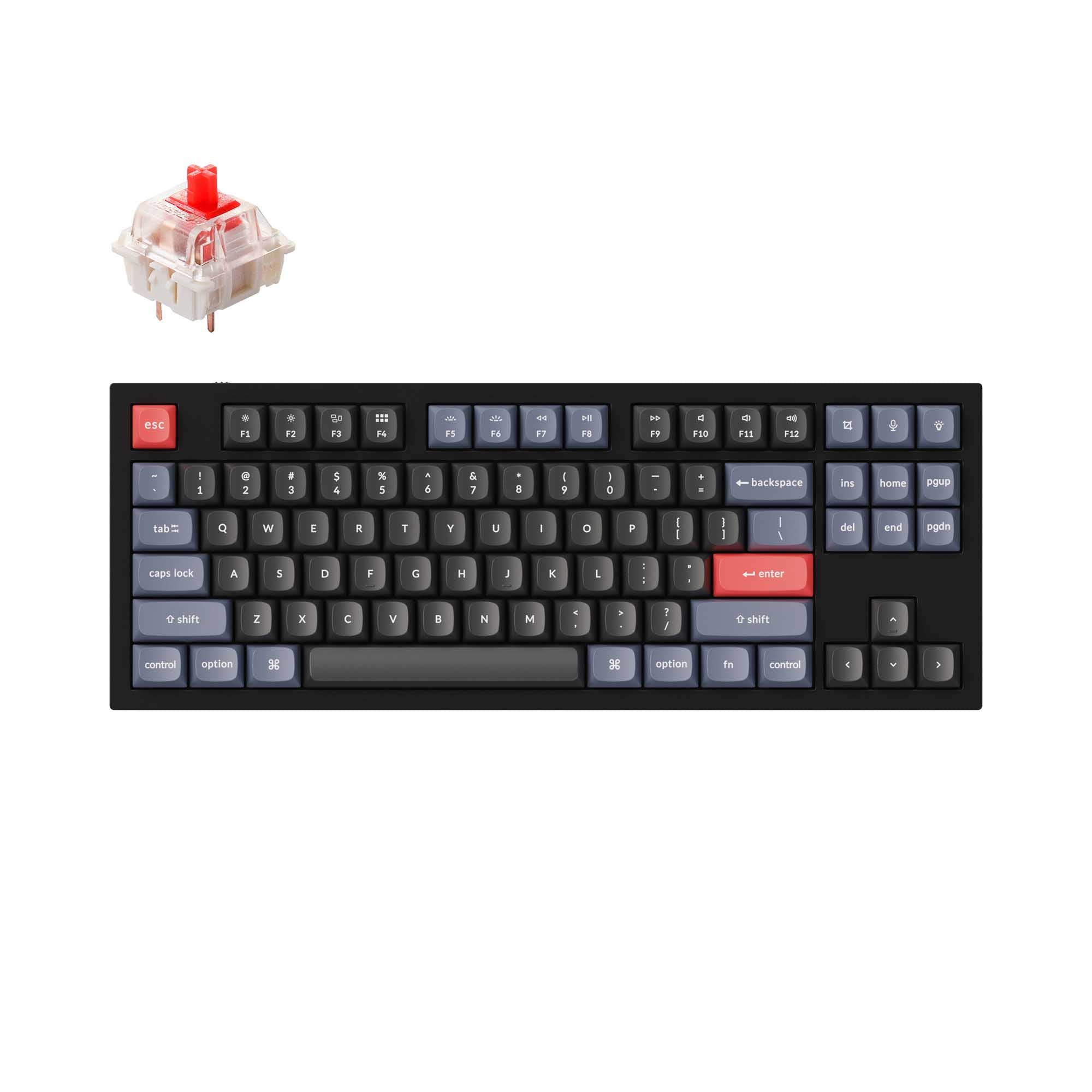
4.8 (108)4.8 · 108 reviews
from$59at Keychron
Which one should you get?
Get the
Keychron C1
Budget TKL
Build quality in the top 50% of 80% boards under $100.
- Plastic case and 685g weight make it very portable for its size.
- Price point is significantly lower, making it a very accessible entry into mechanical keyboards.
- Offers both a hot-swappable and non-hot-swappable version, providing a cheaper entry option.
- North-facing LEDs. Cherry-profile keycaps can hit the switch housing.
- No ISO layout. ISO-DE, UK, and other ISO variants are not offered.
Get the
Keychron Q3
Premium Custom
Build quality in the top 5% of 80% boards under $100.
- Full CNC-machined 6063 aluminum body provides a premium, heavy, and typing experience.
- Double-gasket design and steel plate offer a superior, flexible typing feel and sound dampening.
- Full QMK and VIA support, allowing for complete control over keymaps, macros, and the knob.
- South-facing LEDs. Shine-through legends stay dark, and some sculpted keycaps can clip the LED.
The Keychron Q3 is the superior keyboard in nearly every aspect of performance, feel, and features, but this comes at a much higher price and weight. Choose the Q3 if you want a top-tier typing experience and plan on using QMK/VIA for deep customization. The Keychron C1 remains an excellent choice for budget-conscious buyers who need a reliable, lighter mechanical keyboard for home, office, or travel without the need for heavy modding or custom firmware.
The differences that matter
Skip the 40-row spec sheet. These are the specs that change how each board feels, sounds, and fits your desk.
Keychron C1
Keychron Q3
Case material
ABS, Plastic
Aluminum
Switch options
Clicky, Linear, Tactile
Clicky, Linear, Silent, Tactile
Mount style
Tray Mount
Gasket Mount, PCB Mount, Plate Mount
Knob
No
Yes
Weight
685 g
2,000 g
Heavier boards stay planted and lighter ones travel
- Keychron C1
- Keychron Q3
- Performance
- 6672
- Build quality
- 6291
- Productivity
- 7798
- Customizability
- 7598
- Portability
- 5957
- Layout size: 80%
- Connection: Wired
- Hot-swappable
- Max polling rate: 1,000 Hz
What will you mostly use it for?
The Keychron Q3 is the clear winner for demanding use cases like gaming, office productivity, programming, and content creation, largely due to its superior build quality and QMK/VIA support. The C1 takes the win for travel, where its lighter plastic construction is a significant advantage. For modding, the Q3's gasket mount and barebones kit options make it a much more versatile platform. Overall, the Q3 is the better choice for users who want a premium, customizable experience, while the C1 is a more practical option for budget and portability.
Pick the Keychron Q3
- The Q3 includes a programmable aluminum knob that can be set to macros or volume control via VIA, a useful gaming feature not present on the C1.
- The Q3's double-gasket design and steel plate provide a more stable and premium typing feel, which can be beneficial for high-intensity gaming sessions.
- The C1 is described as suitable for light gaming, suggesting the Q3's more robust construction is better-suited for a dedicated gaming setup.
What owners say
Ratings and quotes collected from verified store reviews, including the critical ones.
Keychron C1
180 owner reviews
“This is my first mechanical keyboard. It is a fantastic keyboard and a fantastic typing experience. It seems extremely well built as well. Highly recommended.”
Keychron Q3
108 owner reviews
“I upgraded from the Q1 as I never really liked 75%. The weight, sound and feel of the Q3 are all amazing. Really good build quality. Money well spent.”
“I thought I had found exactly what I wanted and its great for what it is, but! This was advertised as an ANSI layout but what I received was an ISO layout board. The barebones board also states in the images that it comes with switch and keycap removal tools…”
Keychron C1 vs Q3 specs
Every tracked spec, side by side. Rows marked with a dot differ between the boards.
14 of 25 specs differ
Keychron C1
Keychron Q3
Switch options
Hot-swappable
Mount style
Sound dampening
Screw-in stabilizers
Layout size
Layout standard
Ergonomics
Knob
Display
Media keys
Connection
Max polling rate
USB-C
Case material
Plate material
Keycaps
Weight
Dimensions
Typing angle
Backlight
QMK
VIA
Mac & Windows
Released
ISO layouts by store
Which stores sell ISO-DE, UK, and the other regional layouts.
Keychron C1
No ISO layout at the stores we track.
Keychron Q3
Keychron
ISO-DE, ISO-UK, ISO-FR, ISO-ES, ISO-SW
In stockShips to you
Keychron (DE)
ISO-DE, ISO-UK, ISO-FR, ISO-ES, ISO-SW
Out of stockDoes not ship to you
Compare prices
Live prices from the stores we track, cheapest in-stock offer first.
Prices in USD are converted to your currency and can change at any time. KeebFinder may earn a commission when you buy through these links, at no extra cost to you.
Lowest price across stores, Amazon excluded.




Keychron C1 vs Q3: your questions
The main difference is the build and customizability. The C1 is a budget-friendly, wired TKL with an ABS plastic case and a tray mount design. The Q3 is a premium wired TKL that features a full CNC aluminum body, a double-gasket mount design, and full QMK/VIA programmability, which allows for extensive key remapping and macro creation.
Yes, the Keychron Q3 fully supports both QMK and VIA. The vendor description states it has open-source QMK firmware for endless customization possibilities and that you can easily customize each key using the Keychron Launcher web app, which is powered by VIA.
Yes, the C1 is available in both hot-swappable and non-hot-swappable versions. The vendor page lists a version called 'Keychron Mechanical (Hot-swappable),' which allows for switch changes without soldering. The standard version comes with soldered switches.
The Keychron Q3 is generally better for programming due to its QMK/VIA support. This allows you to create and save complex macros, remap any key, and create multiple layers, which can significantly speed up coding workflows. The C1 lacks this software-level customizability.
Yes, both the Keychron C1 and Q3 support both Mac and Windows. The vendor description for the C1 states it includes keycaps for both systems. The Q3 description also mentions it has a system toggle and an additional set of keycaps for both Windows and macOS.
The Keychron C1 weighs about 685g, making it relatively light for a TKL. The Keychron Q3 is significantly heavier, weighing in at approximately 2000g (or 2 kg) for the fully assembled version, largely due to its aluminum body and steel plate.
The Keychron Q3 is available in versions with and without a knob. The 'Fully Assembled Knob' and 'Barebone Knob' models include a programmable aluminum rotary encoder, while other versions do not. The C1 does not have a knob.
The Keychron C1 is much easier to travel with due to its lightweight ABS plastic construction (685g) compared to the Q3's heavy aluminum case (2000g). The C1 is also less expensive to replace if damaged during transit.
The Keychron Q3 uses screw-in PCB stabilizers, which are known for being more stable and less prone to rattling than other types. The Type of stabilizers for the Keychron C1 is not specified in its product data, which is typical for budget boards.
The Keychron C1 uses a tray mount design. The Keychron Q3 uses a more advanced double-gasket design, which the manufacturer says includes gaskets on the plates and silicone pads between the top and bottom cases for better sound and flexibility.
Both have RGB, but they are designed differently. The Keychron C1 has north-facing RGB LEDs, which the vendor says offers over 15 types of RGB effects. The Keychron Q3 has south-facing RGB LEDs, which is better for compatibility with Cherry-profile keycaps and is described as being designed for a better illumination angle from the typist's perspective.
The Keychron Q3 is explicitly designed for better sound. Its vendor description highlights a 'Double-Gasket Design' with silicone pads to reduce resonance and noise. The C1 does not list sound dampening features in its specifications.
Not sold on either?


Still torn?
Answer a few quick questions and the keyboard finder ranks 2,000+ boards by how you will actually use yours.