Keychron J1 vs Q10Wireless vs Alice Ergonomics
Choose the Keychron J1 for wireless portability and low-profile typing, or the Keychron Q10 for ergonomic Alice layout and premium aluminum build.
KeebFinder may earn a commission when you buy through these links, at no extra cost to you.

3.0 (5)3.0 · 5 reviews
from$59at Keychron

4.5 (29)4.5 · 29 reviews
from$79at Keychron
Which one should you get?
Get the
Keychron J1
Wireless
Build quality in the top 40% of 75% boards under $100.
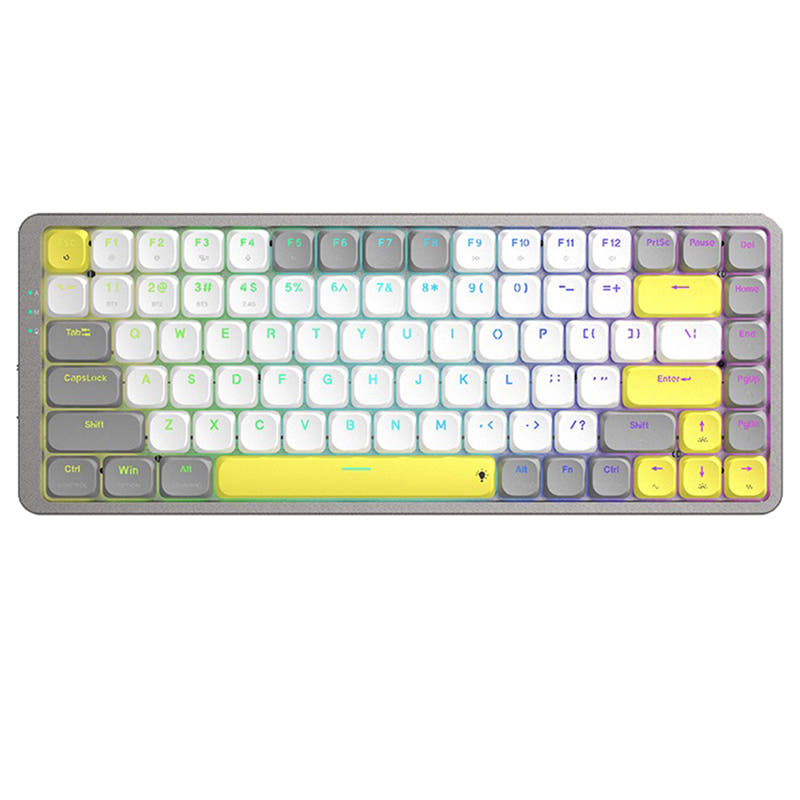
- Tri-mode connectivity (2.4 GHz, Bluetooth, wired) offers versatile connection options
- Low-profile PBT keycaps with double-shot construction resist oil and wear
- 1000 Hz polling rate on wireless and wired modes for low latency
- Low-profile switches and keycaps only. Standard MX keycaps will not fit.
- North-facing LEDs. Cherry-profile keycaps can hit the switch housing.
- No ISO layout. ISO-DE, UK, and other ISO variants are not offered.
Get the
Keychron Q10
Alice Ergonomics
Build quality in the top 5% of 75% boards under $100.
- Full CNC machined 6063 aluminum body provides exceptional build quality
- Alice layout promotes a more natural wrist angle for ergonomic typing
- Double-gasket design reduces acoustic resonance and improves typing sound
- South-facing LEDs. Shine-through legends stay dark, and some sculpted keycaps can clip the LED.
Choose the Keychron J1 if you need a portable wireless keyboard with fast low-profile switches for gaming and travel. Choose the Keychron Q10 if you value ergonomic Alice layout, premium aluminum build, and extensive programmability for office or creative work. The J1 excels in mobility and speed, while the Q10 offers superior comfort and customization for desktop use.
The differences that matter
Skip the 40-row spec sheet. These are the specs that change how each board feels, sounds, and fits your desk.
Keychron J1
Keychron Q10
Connection
Bluetooth, 2.4 GHz, Wired
Wired
Wireless for several devices and wired for lower latency
Low profile
Yes
No
Ergonomics
Standard
Alice
Case material
ABS
Aluminum
Knob
No
Yes
- Keychron J1
- Keychron Q10
- Performance
- 8272
- Build quality
- 7189
- Productivity
- 89100
- Customizability
- 8698
- Portability
- 8062
- Layout size: 75%
- Hot-swappable
- Max polling rate: 1,000 Hz
- Switch options: Clicky, Linear, Tactile
- QMK
- VIA
What will you mostly use it for?
The Keychron J1 wins for gaming and travel due to its low-profile fast actuation, wireless freedom, and light weight. The Keychron Q10 dominates office, programming, modding, and content creation scenarios with its ergonomic Alice layout, programmability, and premium build. The J1 prioritizes portability and speed, while the Q10 focuses on comfort and customization depth.
Pick the Keychron J1
- 1.3 mm low-profile switch actuation is about 35% faster than standard switches for competitive gaming
- 1000 Hz polling rate on 2.4 GHz and wired modes
- Last Key Priority (LKP) for smoother directional changes in games like Valorant
- Lighter 661g weight makes it easier to transport for LAN events
What owners say
Ratings and quotes collected from verified store reviews, including the critical ones.
Keychron J1
5 owner reviews
“I like everything about this keyboard: the keys, their profile, the typing sound of the banana switch, the shape of the keyboard itself, and its size. There are no battery issues either; it holds a charge surprisingly long, and I don't remember the last time…”
“Almost perfect keyboard for me, low profile, etc., but battery dies too fast, i'd say 2-3 days max. and when it dies it does not reconnect when charging cable is plugged in, you have to toggle wired mode, plug in the cable and then toggle wireless mode for it…”
Keychron Q10
29 owner reviews
“For this kind of layout, having an option around 200usd is great, and even better when it is at this level of build quality and customization”
Keychron J1 vs Q10 specs
Every tracked spec, side by side. Rows marked with a dot differ between the boards.
15 of 28 specs differ
Keychron J1
Keychron Q10
Switch options
Hot-swappable
Mount style
Low profile
Sound dampening
Screw-in stabilizers
Layout size
Layout standard
Ergonomics
Knob
Display
Media keys
Connection
Max polling rate
Battery
USB-C
Case material
Plate material
Keycaps
Weight
Dimensions
Typing angle
Backlight
QMK
VIA
N-key rollover
Mac & Windows
Released
ISO layouts by store
Which stores sell ISO-DE, UK, and the other regional layouts.
Keychron J1
No ISO layout at the stores we track.
Keychron Q10
Keychron
ISO-DE, ISO-UK, ISO-FR, ISO-ES, ISO-SW
In stockShips to you
Keychron (DE)
ISO-DE, ISO-UK, ISO-FR, ISO-ES, ISO-SW
In stockDoes not ship to you
Compare prices
Live prices from the stores we track, cheapest in-stock offer first.
Prices in USD are converted to your currency and can change at any time. KeebFinder may earn a commission when you buy through these links, at no extra cost to you.
Lowest price across stores, Amazon excluded.



Keychron J1 vs Q10: your questions
The Keychron Q10 is better for long typing sessions due to its Alice layout that promotes a more relaxed wrist angle. User reviews mention that the Q10's ergonomic design helped reduce carpal tunnel symptoms during all-day coding and writing. The J1's low-profile design offers a different typing feel but lacks the Q10's ergonomic split layout.
Yes, the Keychron J1 supports 2.4 GHz wireless connection with a 1000 Hz polling rate, making it suitable for gaming on a PC. It also connects via Bluetooth 5.2 to up to three devices, though the Bluetooth polling rate drops to 125 Hz. The included Type-A receiver provides a low-latency plug-and-play experience.
Yes, the Keychron Q10 comes with a system toggle and includes keycaps for both macOS and Windows. The QMK/VIA support allows you to save two different keymaps, one for each operating system. The manufacturer states it is built with Mac users in mind while retaining Windows compatibility.
The Keychron J1 only supports Gateron/Keychron low-profile mechanical switches due to QMK not supporting low-profile optical switches. The Keychron Q10 supports standard 3 pin and 5 pin MX mechanical switches, offering a wider range of compatible switches including Gateron G Pro series. This makes the Q10 more versatile for switch customization.
The Keychron J1 is significantly easier to carry at 661g compared to the Q10's 2460g weight. The J1 also features built-in wireless modes (2.4 GHz and Bluetooth) and a receiver compartment, while the Q10 only supports wired connectivity. The J1's low-profile design also makes it thinner for slipping into a bag.
Yes, the Keychron Q10 features south-facing RGB LED backlighting. The south-facing orientation is designed to work well with non-shine-through PBT keycaps and does not interfere with OEM or Cherry-profile alternative keycaps. Users can customize lighting effects through VIA software.
Yes, the Keychron J1 supports QMK firmware and the Keychron Launcher web app for programming macros, key remapping, and shortcuts. The manufacturer states it allows anyone to master any keys or macro commands on its 75% TKL layout. Programming requires connecting via wired mode in Chrome, Opera, or Edge browser.
The Keychron Q10 has a 5 degree typing angle with 2.7 mm feet height, which is relatively flat compared to the J1's 19 degree angle. The Q10's angle is designed for ergonomic Alice layout typing where users may benefit from a flatter wrist position. There are no adjustable feet mentioned in the specifications.
The Keychron Q10 features a full CNC machined 6063 aluminum body with 24 manufacturing stages, offering premium build quality. The Keychron J1 uses an ABS plastic frame, which is lighter but less premium. The Q10 also employs a double-gasket design for noise reduction, while the J1 uses IXPE and latex acoustic foam.
The Keychron Q10 offers more keycap options as it comes with double-shot OSA PBT keycaps and is compatible with third-party Cherry and OEM profile keycaps. The J1 uses proprietary low-profile double-shot PBT keycaps with a specific height and shape, limiting replacement options to other low-profile sets.
Both keyboards support VIA and QMK for customization according to the specifications. The Keychron Q10 specifically mentions VIA software for customizing the knob and keys. The Keychron J1 is listed as having VIA support in addition to the Keychron Launcher web app for programming.
Not sold on either?




Still torn?
Answer a few quick questions and the keyboard finder ranks 2,000+ boards by how you will actually use yours.