Keychron K3 vs Q10Portability vs Build Quality
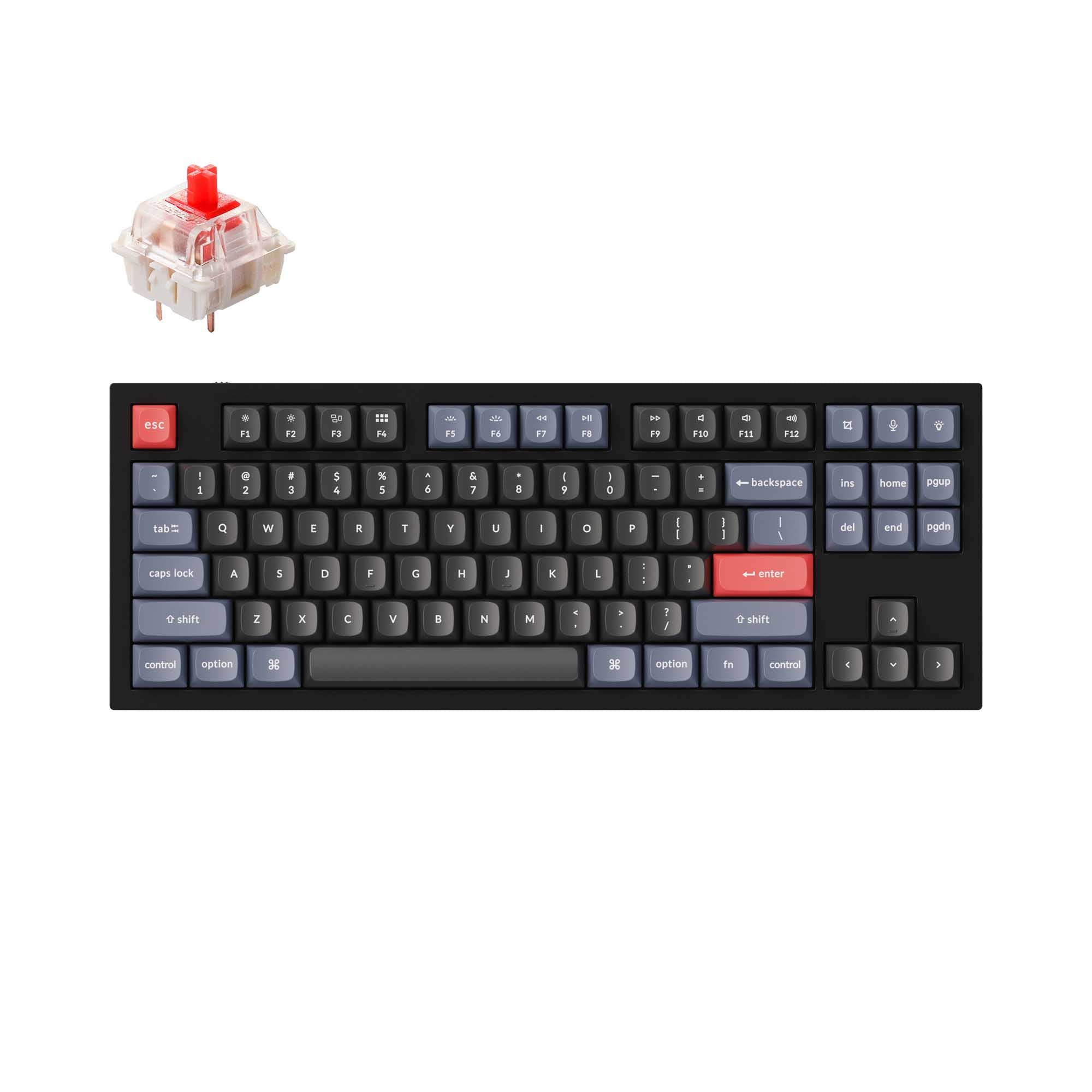
Choose the K3 for wireless portability and a low profile, or the Q10 for a premium, customizable, ergonomic Alice layout.
KeebFinder may earn a commission when you buy through these links, at no extra cost to you.

No reviews
from$105at Keychron (DE)

4.5 (29)4.5 · 29 reviews
from$79at Keychron
Which one should you get?
Get the
Keychron K3
Portability
Build quality in the bottom 40% of 75% boards under $150.
- Ultra-slim and lightweight design, ideal for travel and carrying between workstations.
- Wireless connectivity via Bluetooth 5.1 with a 1550mAh rechargeable battery.
- Hot-swappable low profile optical switches for easy customization without soldering.
- Low-profile switches and keycaps only. Standard MX keycaps will not fit.
- North-facing LEDs. Cherry-profile keycaps can hit the switch housing.
- Missing ISO-DE, ISO-UK, ISO-ES. The other board is sold in those layouts.
Get the
Keychron Q10
Build Quality
Build quality in the top 5% of 75% boards under $100.
- Full CNC-machined 6063 aluminum case and steel plate for exceptional build quality and durability.
- Ergonomic Alice layout designed to reduce wrist strain during long typing sessions.
- Fully customizable with QMK/VIA support, programmable knob, and extra macro keys.
- South-facing LEDs. Shine-through legends stay dark, and some sculpted keycaps can clip the LED.
For users who need a portable, wireless keyboard for travel or a clutter-free desk, the Keychron K3 is the better fit. For those who prioritize a premium typing experience, extensive customization, and ergonomic benefits for all-day use, the Keychron Q10 is the superior choice. The Q10's build quality and feature set justify its status as a desk-bound workstation tool, while the K3 serves as an excellent on-the-go companion.
The differences that matter
Skip the 40-row spec sheet. These are the specs that change how each board feels, sounds, and fits your desk.
Keychron K3
Keychron Q10
Connection
Bluetooth, Wired
Wired
Wireless for several devices and wired for lower latency
Low profile
Yes
No
Ergonomics
Standard
Alice
Case material
ABS, Aluminum
Aluminum
Mount style
Plate Mount
Gasket Mount, Plate Mount
- Keychron K3
- Keychron Q10
- Performance
- 6472
- Build quality
- 6189
- Productivity
- 66100
- Customizability
- 6898
- Portability
- 8062
- Layout size: 75%
- Hot-swappable
- Switch options: Clicky, Linear, Tactile
- Keycaps: ABS, PBT
What will you mostly use it for?
The Keychron Q10 wins in gaming, office, programming, modding, and content creation due to its robust build, ergonomic Alice layout, and high customizability via QMK/VIA. Its 1000 Hz polling rate and programmable knob are key advantages. The Keychron K3 is the clear choice for travel, winning solely due to its wireless connectivity, slim profile, and integrated battery. The Q10's wired-only nature and heavy weight make it unsuitable for portability.
Pick the Keychron Q10
- 1000 Hz polling rate as stated in the specs, which helps with lower latency.
- Heavy all-metal construction (2460g) provides stability during intense use.
- QMK/VIA support allows for custom keybinds and macros for games.
Keychron K3 vs Q10 specs
Every tracked spec, side by side. Rows marked with a dot differ between the boards.
15 of 27 specs differ
Keychron K3
Keychron Q10
Switch options
Hot-swappable
Mount style
Low profile
Sound dampening
Screw-in stabilizers
Layout size
Layout standard
Ergonomics
Knob
Display
Media keys
Connection
Max polling rate
Battery
USB-C
Case material
Plate material
Keycaps
Weight
Dimensions
Typing angle
Backlight
QMK
VIA
Mac & Windows
Released
ISO layouts by store
Which stores sell ISO-DE, UK, and the other regional layouts.
Keychron K3
Keychron (DE)
ISO-FR
In stockDoes not ship to you
Keychron Q10
Keychron
ISO-DE, ISO-UK, ISO-FR, ISO-ES, ISO-SW
In stockShips to you
Keychron (DE)
ISO-DE, ISO-UK, ISO-FR, ISO-ES, ISO-SW
In stockDoes not ship to you
Compare prices
Live prices from the stores we track, cheapest in-stock offer first.
Prices in USD are converted to your currency and can change at any time. KeebFinder may earn a commission when you buy through these links, at no extra cost to you.
Lowest price across stores, Amazon excluded.



Keychron K3 vs Q10: your questions
The Keychron Q10 has superior build quality with a full CNC-machined 6063 aluminum case and steel plate, while the K3 uses an aluminum body with an ABS bottom and a plastic plate. The Q10's all-metal construction is significantly more rigid and premium.
The Keychron K3 is significantly better for travel due to its ultra-slim design, lightweight construction, and wireless Bluetooth connectivity with a 1550mAh battery. The Q10 is heavy at 2460g, large, and wired-only, making it a stationary desk keyboard.
No, only the Keychron K3 supports wireless connectivity via Bluetooth 5.1. The Keychron Q10 is a wired-only keyboard that connects via a USB-C cable.
The Keychron Q10 features a dedicated ergonomic Alice layout designed to reduce wrist and hand strain by angling the two halves of the keyboard. The Keychron K3 has a standard, non-ergonomic 75% layout.
Both keyboards are hot-swappable. The K3 uses hot-swappable low profile optical switches that are not compatible with standard MX switches. The Q10 uses a hot-swappable PCB that supports standard 3-pin and 5-pin MX mechanical switches.
The Keychron Q10 is generally better for programming due to its ergonomic Alice layout for comfort, QMK/VIA support for custom layers and macros, and extra macro keys on the left side. The K3 provides a standard layout in a smaller wireless form.
Only the Keychron Q10 supports QMK and VIA, allowing for full key remapping, macro creation, and knob customization. The Keychron K3 does not have QMK or VIA support.
The Keychron Q10 weighs 2460g, making it a very heavy keyboard. The weight of the Keychron K3 is not specified, but its design is described as ultra-slim and lightweight, making it much more portable.
The Keychron K3 has a 6-degree typing angle with two-level adjustable rubber feet. The Keychron Q10 has a fixed 5-degree typing angle. The K3 offers slight adjustability.
Yes, both the K3 and Q10 include support for macOS and Windows layouts. The K3 comes with extra keycaps for both systems, and the Q10 has a system toggle switch and an additional set of keycaps.
Yes, the Keychron Q10 includes a programmable aluminum rotary encoder knob that can be used for volume control or other custom functions via VIA software. The K3 does not have a knob.
The Keychron Q10 features south-facing RGB LEDs, which work better with Cherry profile keycaps without interference. The K3 uses north-facing RGB or white backlight, depending on the variant.
Not sold on either?




Still torn?
Answer a few quick questions and the keyboard finder ranks 2,000+ boards by how you will actually use yours.