Monka K75 vs Qwertykeys Neo65 Core Plus75% Pre-Built vs 65% DIY Kit
Choose the Monka K75 for a ready-to-use 75% layout with RGB, or the Qwertykeys Neo65 for a premium aluminum DIY build experience.
KeebFinder may earn a commission when you buy through these links, at no extra cost to you.

No reviews
from$69at Mechkeys

5.0 (14)5.0 · 14 reviews
from$75at Divinikey
Which one should you get?
Get the
Monka K75
75% Pre-Built
Build quality in the bottom 20% of 75% boards under $100.
- Comes fully assembled with switches and dual-tone PBT keycaps included.
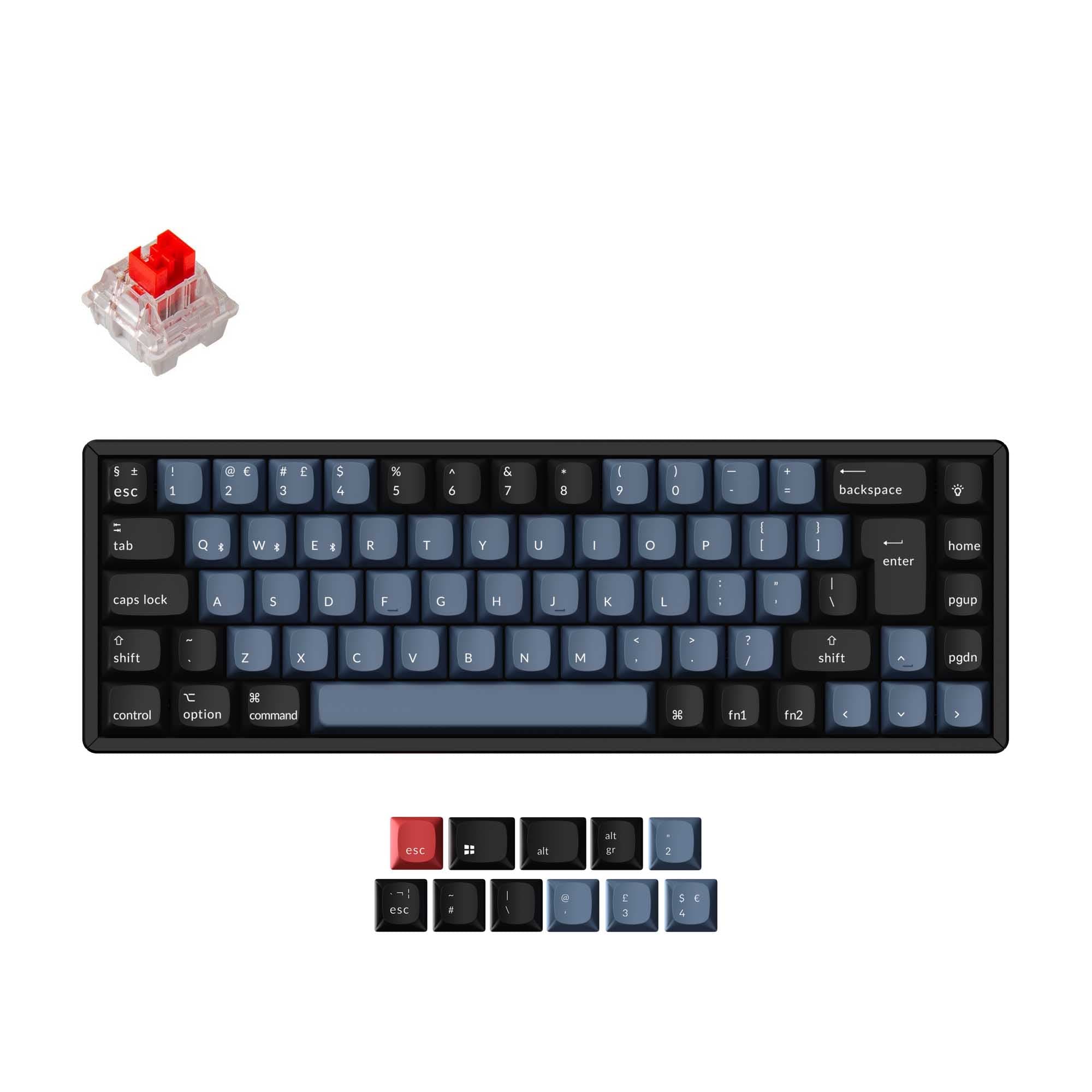
- Features a 75% layout with a dedicated function row and a metallic control knob.
- Includes dynamic RGB backlighting with 19 different lighting modes.
- No ISO layout. ISO-DE, UK, and other ISO variants are not offered.
- No numpad.
Get the
Qwertykeys Neo65 Core Plus
65% DIY Kit
Build quality in the top 25% of 65% boards under $100.
- Features a premium aluminum unibody case with an optional brass or copper weight.
- Offers extensive customization as a DIY kit with multiple plate material choices.
- Includes a sophisticated internal structure designed for natural, foam-free acoustics.
- 65% layout. No function row and no numpad.
Your choice depends entirely on your willingness to build. For a complete, feature-rich keyboard ready to use immediately, the Monka K75 is the practical option. If you seek a premium aluminum foundation for a custom build and are willing to source your own switches and keycaps, the Qwertykeys Neo65 Core Plus offers superior materials and deeper customization. Consider the K75 for its utility and the Neo65 for its potential as a long-term enthusiast project.
The differences that matter
Skip the 40-row spec sheet. These are the specs that change how each board feels, sounds, and fits your desk.
Monka K75
Qwertykeys Neo65 Core Plus
Layout size
75%
65%
Battery
5,000 mAh
4,400 mAh
A larger battery means fewer cables during the day
Case material
Plastic
Aluminum
Knob
Yes
No
Weight
860 g
1,340 g
Heavier boards stay planted and lighter ones travel
- Monka K75
- Qwertykeys Neo65 Core Plus
- Performance
- 5053
- Build quality
- 5080
- Productivity
- 8280
- Customizability
- 6666
- Portability
- 7988
- Connection: Bluetooth, 2.4 GHz, Wired
- Hot-swappable
- Mount style: Gasket Mount
- Sound dampening
What will you mostly use it for?
The Monka K75 is the clear choice for office work, programming, and gaming due to its functional 75% layout, included features like RGB and a knob, and its pre-built nature. The Qwertykeys Neo65 Core Plus excels for modding enthusiasts who want a premium aluminum foundation. For travel, the Neo65's smaller footprint is an advantage, though its heavier weight is a trade-off. Content creators may value either the K75's media controls or the Neo65's premium look.
Pick the Monka K75
- Includes dynamic RGB backlighting with 19 lighting modes, which the Neo65 lacks.
- Has a dedicated function row and arrow keys in its 75% layout for quick access.
- Comes pre-built and ready to use out of the box.
Monka K75 vs Qwertykeys Neo65 Core Plus specs
Every tracked spec, side by side. Rows marked with a dot differ between the boards.
11 of 24 specs differ
Monka K75
Qwertykeys Neo65 Core Plus
Switch options
Hot-swappable
Mount style
Sound dampening
Screw-in stabilizers
Layout size
Layout standard
Ergonomics
Knob
Display
Connection
Max polling rate
Battery
USB-C
Case material
Plate material
Keycaps
Weight
Dimensions
Typing angle
Backlight
N-key rollover
Mac & Windows
Released
ISO layouts by store
Which stores sell ISO-DE, UK, and the other regional layouts.
Monka K75
No ISO layout at the stores we track.
Qwertykeys Neo65 Core Plus
Listed on the product, not split by store: ISO.
Compare prices
Live prices from the stores we track, cheapest in-stock offer first.
Prices in USD are converted to your currency and can change at any time. KeebFinder may earn a commission when you buy through these links, at no extra cost to you.
- Check on Amazon
Amazon
Check price



- Check on Amazon
Amazon
Check price

Monka K75 vs Qwertykeys Neo65 Core Plus: your questions
The Monka K75 is likely better for gamers who want features out of the box. It includes RGB lighting and a pre-built 75% layout with arrow keys. The Qwertykeys Neo65 lacks RGB and is a barebones kit, requiring additional investment before it's game-ready.
No, the Qwertykeys Neo65 Core Plus is sold as a DIY kit. According to the vendor listing, it includes the case, PCB, plate, and various accessories, but you must purchase switches and keycaps separately to complete the build.
Yes, the Monka K75 features full-key hot-swappable sockets. This allows you to change the mechanical switches without soldering, using the included MONKA Sea Salt V2 switches or compatible alternatives.
The Monka K75 has a plastic case, while the Qwertykeys Neo65 Core Plus features an aluminum unibody case. The Neo65 also includes a substantial brass or copper weight in its base, contributing to its heavier 1340g mass.
The Monka K75 has a larger 5000mAh battery, which the manufacturer claims lasts up to 15 days with lighting off. The Qwertykeys Neo65 uses two 2200mAh batteries for a total of 4400mAh, but no specific runtime estimates are provided.
Yes, the product metadata for the Qwertykeys Neo65 Core Plus lists Mac/Win support as an extra feature, indicating compatibility with macOS systems.
Yes, the Monka K75 supports tri-mode connectivity, which includes Bluetooth, 2.4GHz wireless, and a wired USB-C connection.
Both keyboards use a gasket mount design. The Monka K75 uses a leaf-spring gasket structure. The Neo65 offers a dual-mounting system, supporting either a PCB gasket mount or a gummy O-ring mount.
The Qwertykeys Neo65 has a smaller 65% footprint (313mm x 111mm) compared to the Monka K75's 75% size (327mm x 143mm). However, the Neo65 is significantly heavier at 1340g versus the K75's 860g, making the K75 lighter to carry.
The Monka K75 uses a five-layered internal padding system with an IXPE underswitch pad, Poron sandwich cotton pad, and silicone bottom pads. The Qwertykeys Neo65 has a tuned internal bottom case to reduce echo and includes a foam kit with a PE sheet, PCB foam, and Poron case foam.
Only the Qwertykeys Neo65 Core Plus has a stated polling rate of 1000 Hz in its metadata. The polling rate for the Monka K75 is not specified by the manufacturer or vendor.
According to the vendor, the kit includes the aluminum case, a bottom weight, a PCB (choice of tri-mode, wired hotswap, or solder), a plate, a foam kit, gaskets, an O-ring, rubber feet, and free gifts like a screwdriver, keycap puller, and screw-in stabilizers.
Not sold on either?




Still torn?
Answer a few quick questions and the keyboard finder ranks 2,000+ boards by how you will actually use yours.