Epomaker Galaxy100 Lite vs AULA F108Aluminum vs Plastic Build Choice
Choose the Galaxy100 Lite for a premium aluminum build and deep software customization, or the F108 for a standard full-size layout at a slightly lower price.


Which one should you get?
Get the
Epomaker Galaxy100 Lite
Aluminum
- Aluminum alloy case construction for premium feel and durability.
- Full QMK and VIA software support for deep key remapping and macros.
- Includes a control knob and comes with a 2-in-1 puller plus extra switches.
- Heavier at 1660g, making it less portable.
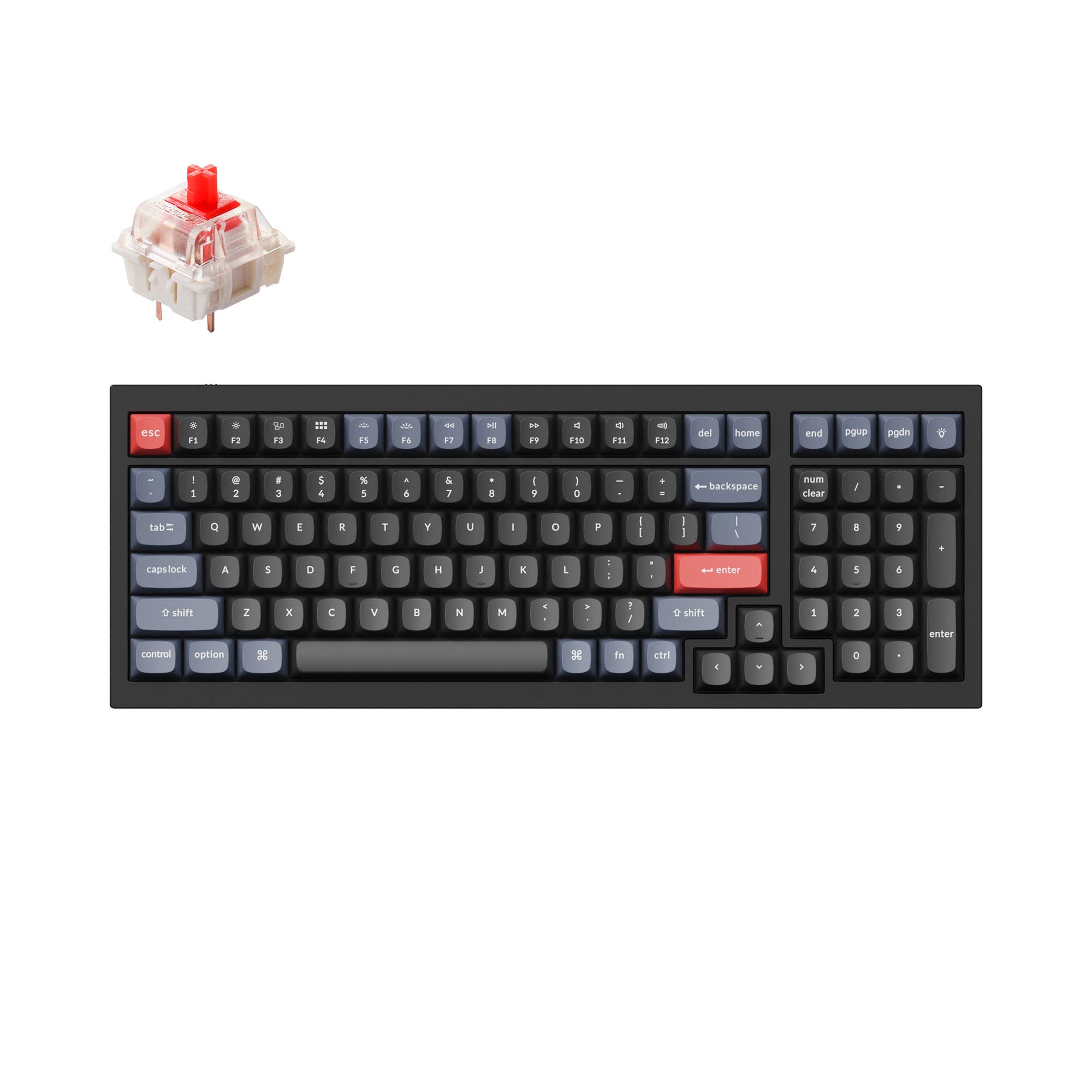
- 96% layout with condensed nav cluster may require an adjustment period.
- More expensive than the F108, according to listed price ranges.
Get the
AULA F108
Plastic Build Choice
- Traditional 100% layout with a full numpad for data entry.
- Lighter weight of 1000g due to its ABS plastic case.
- Generally more affordable than the Galaxy100 Lite.
- ABS plastic case lacks the premium feel and heft of aluminum.
- No mentioned support for QMK or VIA firmware customization.
- Smaller 4000mAh battery compared to the Galaxy100 Lite.
Your budget and core needs dictate the choice. Invest in the Epomaker Galaxy100 Lite for its aluminum build, superior customization via QMK/VIA, and longer battery life. Choose the Epomaker F108 if you require a standard full-size layout with a numpad, prefer a lighter keyboard, and want to spend less. Both deliver a gasket-mounted, sound-dampened typing experience with versatile connectivity.
The differences that matter
Skip the 40-row spec sheet. These are the specs that change how each board feels, sounds, and fits your desk.
Epomaker Galaxy100 Lite
AULA F108
Layout size
96%
100%
Case material
Aluminum
ABS
Switch options
Clicky, Linear
Linear
Knob
Yes
No
Weight
1,660 g
1,000 g
- Epomaker Galaxy100 Lite
- AULA F108
- Performance
- 8275
- Build quality
- 8360
- Productivity
- 9376
- Customizability
- 8958
- Portability
- 6563
- Connection: Bluetooth, 2.4 GHz, Wired
- Hot-swappable
- Battery: 8,000 mAh
- Max polling rate: 1,000 Hz
- Mount style: Gasket Mount
- Sound dampening
What will you mostly use it for?
The Galaxy100 Lite wins for gaming, programming, and modding due to its documented performance, software support, and premium construction. The F108 is better suited for office use and travel, thanks to its full numpad and lighter weight. For content creation, it's a tie, as the knob on the Galaxy100 Lite balances against the immediate key access of the F108's full layout.
Pick the Epomaker Galaxy100 Lite
- The Galaxy100 Lite lists specific latency figures (2.81ms wired, 4.72ms 2.4GHz).
- Its aluminum case provides more stability and a heftier feel during intense use.
- Both share a 1000Hz polling rate, but the Galaxy100 Lite's documented latency gives it an edge.
What owners say
Ratings and quotes collected from verified store reviews, including the critical ones.
Epomaker Galaxy100 Lite
33 owner reviews
“I like the feel and the sounds the keyboard has. However, one of the foot is missing, and there's no feature to disable the backlight from numlock.”
“Had it for maybe a month or two and it no longer works, the lighting is gone and it won’t even turn on now”
AULA F108
14 owner reviews
“The title describes itself, it sounds amazing, it has a great battery length, the keys feel amazing, I love the size and it's great for my work as a programmer. Would recommend, 10/10.”
Epomaker Galaxy100 Lite vs AULA F108 specs
Every tracked spec, side by side. Rows marked with a dot differ between the boards.
10 of 25 specs differ
Epomaker Galaxy100 Lite
AULA F108
Switch options
Hot-swappable
Mount style
Sound dampening
Layout size
Layout standard
Ergonomics
Knob
Display
Connection
Max polling rate
Battery
USB-C
Case material
Plate material
Keycaps
Weight
Dimensions
Typing angle
Backlight
QMK
VIA
N-key rollover
Mac & Windows
Released
Compare prices
Live prices from the stores we track, cheapest in-stock offer first.
Lowest price across stores, Amazon excluded.


Prices in USD are converted to your currency and can change at any time. KeebFinder may earn a commission when you buy through these links, at no extra cost to you.
Epomaker Galaxy100 Lite vs AULA F108: your questions
The Galaxy100 Lite uses a powder-coated CNC aluminum alloy case, which typically offers greater rigidity and a premium feel. The F108 uses an ABS plastic case, which is lighter but less dense. The choice between aluminum and plastic is the primary differentiator in build quality.
The Galaxy100 Lite supports QMK and VIA, allowing for extensive key remapping, macro creation, and layer programming. The F108's product description mentions programming software for remapping, but does not specify QMK or VIA support, suggesting its software may be more limited.
The Galaxy100 Lite has an 8000mAh battery, while the F108 has a 4000mAh battery. Based on the manufacturer's specifications, the Galaxy100 Lite's battery capacity is double that of the F108, which should translate to longer usage between charges, especially with RGB enabled.
Yes, both the Epomaker Galaxy100 Lite and the Epomaker F108 are listed as compatible with Mac and Windows operating systems. The Galaxy100 Lite's description also explicitly mentions Android compatibility and notes it is not compatible with PS4, PS5, or Nintendo Switch.
Both keyboards use a gasket mount and have multi-layer sound dampening foam for a cushioned, quieter typing experience. The Galaxy100 Lite's aluminum case may provide a more solid acoustic base, while the F108's polycarbonate plate might offer a slightly different flex feel. Preference between 96% and 100% layout will also affect typing comfort.
Yes, the Epomaker Galaxy100 Lite features a 96% (1800-compact) layout, which includes a numpad but condenses it closer to the main alphanumeric cluster, removing some of the spacing found on a full-size keyboard. The F108 has a traditional 100% layout with a fully spaced numpad.
Yes, both the Epomaker Galaxy100 Lite and the Epomaker F108 feature hot-swappable PCBs that support 3-pin and 5-pin mechanical switches. This allows you to change switches without soldering.
According to its vendor page, the Epomaker F108 comes with pre-lubed LEOBOG Graywood V3 linear switches. The Galaxy100 Lite offers a choice between Feker Marble White and Epomaker Wisteria Linear switches, both also pre-lubed.
The Epomaker F108 is more portable by weight, at 1000g compared to the Galaxy100 Lite's 1660g. However, both are large format keyboards (full-size and 96%), so neither is designed for frequent travel. The F108's lighter plastic build is easier to move around a desk or carry occasionally.
The Galaxy100 Lite includes a detachable USB-C cable, a 2-in-1 keycap and switch puller, two extra switches, three Mac keycaps, a 2.4GHz dongle, and a manual. The F108 includes a USB cable, a keycap puller, and a manual.
Yes, both the Epomaker Galaxy100 Lite and the Epomaker F108 feature per-key, south-facing RGB LEDs. South-facing LEDs are often preferred as they improve compatibility with Cherry-profile keycaps and reduce glare for the typist.
Not sold on either?



Still torn?
Answer a few quick questions and the keyboard finder ranks 2,000+ boards by how you will actually use yours.