Leobog Hi75C Pro vs Keychron Lemokey P1Wireless Flexibility vs Pro Features
Choose the Keychron P1 for its extensive programmability and pro-grade features, or the Leobog Hi75C Pro for a more affordable entry into tri-mode aluminum keyboards.


Which one should you get?
Get the
Leobog Hi75C Pro
Wireless Flexibility
- More affordable price point according to listed vendor ranges.
- Lighter weight (1230g) for better portability.
- Offers tri-mode connectivity (wired, 2.4G, Bluetooth) as per its vendor description.
- Lacks the advanced programmability of QMK or VIA support.
- Vendor description mentions a 'gaming chip' but does not specify a polling rate.
- Offers only linear switch options in the provided metadata.
Get the
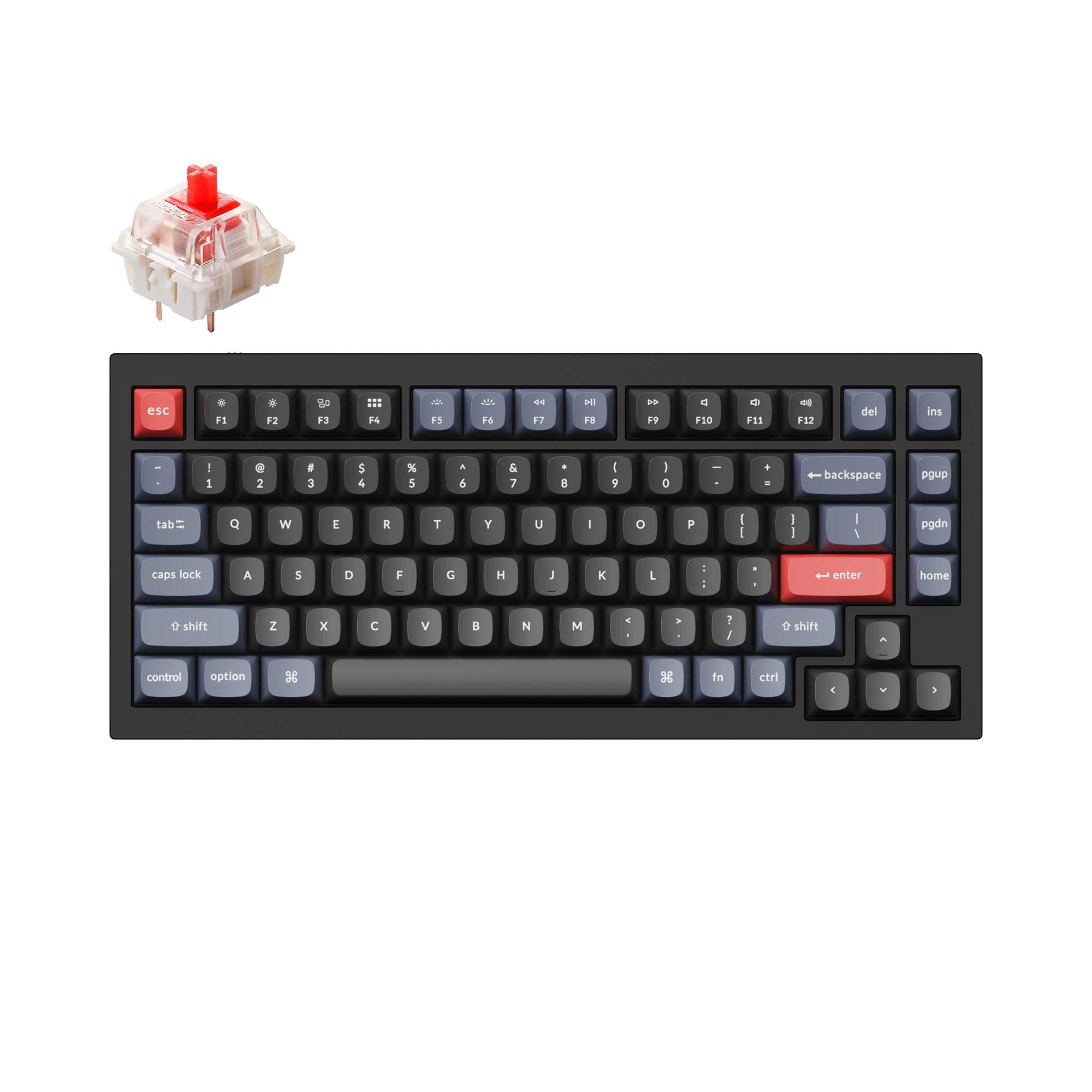
Keychron Lemokey P1
Pro Features
- Supports QMK and VIA firmware for extensive programmability.
- Specifies a 1000 Hz polling rate for wired and 2.4GHz modes.
- Includes multiple acoustic foam layers (IXPE, PET, absorbing foam) for sound dampening.
- Heavier at 1650g, making it less portable.
- Commands a higher price point than the Leobog.
- The wireless 'Pro' version appears to be a separate model from the base wired P1 in the description.
Your primary need dictates the choice. If you want a capable, wireless, aluminum keyboard that works great immediately without tinkering, the Leobog Hi75C Pro offers strong value. If you are an enthusiast or gamer who values granular control over your typing experience, key mappings, and firmware, the Keychron P1's proven feature set is worth the investment.
The differences that matter
Skip the 40-row spec sheet. These are the specs that change how each board feels, sounds, and fits your desk.
Leobog Hi75C Pro
Keychron Lemokey P1
Switch options
Linear
Clicky, Linear, Tactile
Weight
1,230 g
1,650 g
QMK
No
Yes
VIA
No
Yes
Layout standard
ANSI
ANSI, ISO, ISO-DE, ISO-ES, ISO-FR, ISO-Nordic, ISO-SW, ISO-UK
- Leobog Hi75C Pro
- Keychron Lemokey P1
- Performance
- 7882
- Build quality
- 7688
- Productivity
- 8297
- Customizability
- 7796
- Portability
- 7981
- Layout size: 75%
- Connection: Bluetooth, 2.4 GHz, Wired
- Hot-swappable
- Battery: 4,000 mAh
- Case material: Aluminum
- Mount style: Gasket Mount
What will you mostly use it for?
The Keychron P1 is the clear choice for users who prioritize programmability, gaming performance, and building from a barebones kit. It wins in Gaming, Programming, Modding, and Content Creation due to its verified polling rate, QMK/VIA support, and macro features. The Leobog Hi75C Pro is better for Office use and Travel, thanks to its lower cost, lighter weight, and convenient tri-mode wireless connectivity straight out of the box.
Pick the Keychron Lemokey P1
- The Keychron P1 has a specified 1000 Hz polling rate in its product description.
- Its vendor page mentions an 'ultra-low latency connection' for its 2.4GHz wireless.
- It includes screw-in stabilizers for more consistent large key presses.
What owners say
Ratings and quotes collected from verified store reviews, including the critical ones.
Leobog Hi75C Pro
No owner reviews collected yet.
Keychron Lemokey P1
10 owner reviews
“Love the keyboard, i got the red switches, i also got a silicon palm rest, feels super nice, super high quality, super heavy. No complaints It looks great with any setup, my friends were shocked when they found out the price.”
Leobog Hi75C Pro vs Keychron Lemokey P1 specs
Every tracked spec, side by side. Rows marked with a dot differ between the boards.
8 of 26 specs differ
Leobog Hi75C Pro
Keychron Lemokey P1
Switch options
Hot-swappable
Mount style
Sound dampening
Screw-in stabilizers
Layout size
Layout standard
Ergonomics
Knob
Display
Connection
Max polling rate
Battery
USB-C
Case material
Plate material
Keycaps
Weight
Dimensions
Typing angle
Backlight
QMK
VIA
N-key rollover
Mac & Windows
Released
Compare prices
Live prices from the stores we track, cheapest in-stock offer first.
Lowest price across stores, Amazon excluded.




Prices in USD are converted to your currency and can change at any time. KeebFinder may earn a commission when you buy through these links, at no extra cost to you.
Leobog Hi75C Pro vs Keychron Lemokey P1: your questions
The Keychron P1 Pro (wireless version) is described as having an 'ultra-low latency connection' with a specified 1000 Hz polling rate over its 2.4GHz wireless. The Leobog Hi75C Pro's vendor page mentions a 'gaming chip' but does not specify a wireless polling rate, making the Keychron the more verifiable choice for competitive wireless gaming.
Only the Keychron P1 offers extensive reprogramming. It supports QMK and VIA firmware, and its vendor description highlights the Lemokey Launcher web app for remapping any key. The Leobog Hi75C Pro's description does not mention similar software or firmware programmability.
The Keychron P1 specifically includes double-shot PBT keycaps according to its specs. The Leobog Hi75C Pro's metadata and vendor description do not state the keycap material, so it may not come with PBT keycaps.
The Leobog Hi75C Pro is marketed as a pre-built, ready-to-use option and is suggested as a good first custom keyboard. The Keychron P1, while available pre-built, offers more complex features like QMK/VIA and barebones kits that may have a steeper learning curve for absolute beginners.
Yes. The Keychron P1 includes screw-in stabilizers, which are generally preferred for modding and stability. The Leobog Hi75C Pro's listing does not specify the type of stabilizers used.
Yes, both keyboards list Mac and Windows support in their metadata. The Keychron P1 also includes extra keycaps for both operating systems in its fully assembled version.
The Keychron P1's vendor description details the use of multiple acoustic foam layers, including IXPE, PET, and absorbing foam. The Leobog Hi75C Pro mentions a gasket structure with PORON gaskets for sound minimization, but does not list specific internal foam types.
Yes, there is a significant weight difference. The Keychron P1 weighs 1650g, while the Leobog Hi75C Pro weighs 1230g. This makes the Leobog noticeably lighter and potentially more portable.
The Keychron P1 explicitly supports a wide range of ISO layouts (UK, German, Nordic, Swiss, etc.) in both assembled and barebone forms. The Leobog Hi75C Pro's metadata only lists an ANSI layout, with no mention of ISO support.
The Keychron P1 offers linear, tactile, and clicky switch options in its metadata. The Leobog Hi75C Pro, according to the provided data, is only listed with linear switch types.
Yes, both the Leobog Hi75C Pro and the Keychron P1 are listed as hot-swappable, compatible with 3-pin and 5-pin MX-style switches.
Not sold on either?




Still torn?
Answer a few quick questions and the keyboard finder ranks 2,000+ boards by how you will actually use yours.