Epomaker TH40 vs Nuphy Halo75 V240% vs 75% Layout Showdown
Choose the Epomaker TH40 for extreme portability and layer-based typing, or the Nuphy Halo75 V2 for a full-featured layout with premium materials.
KeebFinder may earn a commission when you buy through these links, at no extra cost to you.

3.9 (56)3.9 · 56 reviews
from$55at Epomaker
90-day lowLowest price in 90 days
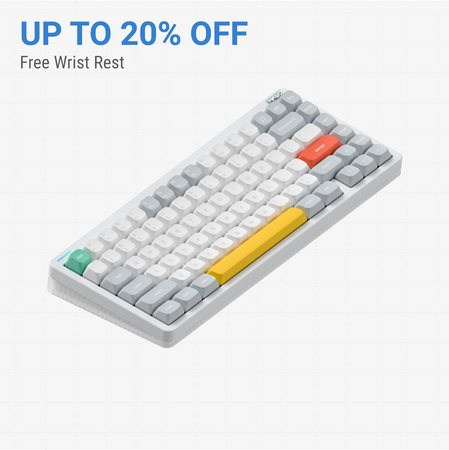
No reviews
from$126at Nuphy
Which one should you get?
Get the
Epomaker TH40
40%
Build quality in the top 30% of 40% boards under $150.
- Extremely compact 40% layout with a split spacebar for enhanced portability.
- Lightweight ABS plastic construction at 500 grams.
- Includes Poron plate foam, an IXPE switch pad, and bottom Poron foam for sound dampening.
- South-facing LEDs. Shine-through legends stay dark, and some sculpted keycaps can clip the LED.
- Compact layout only. No function row, dedicated arrow keys, or numpad.
Get the
Nuphy Halo75 V2
75% Layout Showdown
Build quality in the top 15% of 75% boards under $150.
- 75% layout retains arrow keys, function row, and navigation cluster for immediate access.
- Premium build with an aluminum top case, POM plate, and a six-piece sound mod stack.
- Offers a choice of multiple switch types at purchase, including linear, tactile, and silent Cherry switches.
- South-facing LEDs. Shine-through legends stay dark, and some sculpted keycaps can clip the LED.
- No numpad.
Your primary need dictates the choice. If your top priority is a keyboard that disappears into a backpack for use with a laptop, the Epomaker TH40's ultra-compact design is compelling despite its learning curve. For a primary desktop keyboard where you value a traditional layout, premium materials, and a wide selection of stock switches, the Nuphy Halo75 V2 is the more capable and user-friendly option. Both deliver on core modern features like wireless connectivity and programmability.
The differences that matter
Skip the 40-row spec sheet. These are the specs that change how each board feels, sounds, and fits your desk.
Epomaker TH40
Nuphy Halo75 V2
Layout size
40%
75%
Battery
3,000 mAh
4,000 mAh
A larger battery means fewer cables during the day
Ergonomics
Split Spacebar
Standard
Case material
ABS
ABS, Aluminum
Switch options
Linear
Mechanical
- Epomaker TH40
- Nuphy Halo75 V2
- Performance
- 7480
- Build quality
- 7581
- Productivity
- 6288
- Customizability
- 8589
- Portability
- 8481
- Connection: Bluetooth, 2.4 GHz, Wired
- Hot-swappable
- Max polling rate: 1,000 Hz
- Mount style: Gasket Mount
- QMK
- VIA
What will you mostly use it for?
The Nuphy Halo75 V2 is the more versatile choice for most stationary use cases, winning in gaming, office, programming, and content creation due to its standard layout and premium build. The Epomaker TH40's decisive advantage is in travel, where its minimal size and weight are paramount. For modding enthusiasts, both are equally capable platforms with hot-swap sockets and full VIA support, leaving the choice to layout preference.
Pick the Nuphy Halo75 V2
- The Halo75 V2 has a 1000Hz polling rate in its 2.4GHz wireless mode, matching wired performance for low latency.
- Its 75% layout includes dedicated arrow keys, which are often crucial for in-game menus or controls.
- It offers a choice of linear, tactile, and silent switch types at purchase to suit different gaming preferences.
Epomaker TH40 vs Nuphy Halo75 V2 specs
Every tracked spec, side by side. Rows marked with a dot differ between the boards.
11 of 25 specs differ
Epomaker TH40
Nuphy Halo75 V2
Switch options
Hot-swappable
Mount style
Sound dampening
Layout size
Layout standard
Ergonomics
Display
Media keys
Connection
Max polling rate
Battery
USB-C
Case material
Plate material
Keycaps
Weight
Dimensions
Typing angle
Backlight
QMK
VIA
N-key rollover
Mac & Windows
Released
Compare prices
Live prices from the stores we track, cheapest in-stock offer first.
Prices in USD are converted to your currency and can change at any time. KeebFinder may earn a commission when you buy through these links, at no extra cost to you.
Lowest price across stores, Amazon excluded.



Epomaker TH40 vs Nuphy Halo75 V2: your questions
The core difference is the layout size. The Epomaker TH40 is a 40% keyboard with only 44 keys, requiring the use of function layers for numbers, arrows, and punctuation. The Nuphy Halo75 V2 is a 75% keyboard with 83 keys, retaining dedicated arrow keys, a function row, and a navigation cluster for more immediate access.
Yes, both the Epomaker TH40 and Nuphy Halo75 V2 offer tri-mode connectivity. This includes a USB-C wired connection, 2.4GHz wireless with a dongle, and Bluetooth for pairing with multiple devices. The Halo75 V2 specifies Bluetooth 5.0 in its technical specifications.
Yes, both keyboards are hot-swappable. They support 3-pin and 5-pin mechanical switches, allowing you to easily change switches without soldering. The TH40 comes with linear switches, while the Halo75 V2 offers a choice of linear, tactile, or silent switches at purchase.
The Nuphy Halo75 V2 is generally better suited for programming. Its standard 75% layout provides direct access to symbols, arrow keys, and the function row, which are frequently used in coding environments. While the TH40 is fully programmable via VIA, its 40% layout requires memorizing and using multiple layers for these same keys.
Both keyboards support customization using the open-source VIA software. You can remap keys, create macros, and adjust lighting effects through a graphical interface. The Epomaker TH40 listing mentions it has four switchable layers, three of which are programmable.
Based on the listed specifications, the Nuphy Halo75 V2 has a larger 4000mAh battery compared to the Epomaker TH40's 3000mAh battery. The Halo75 V2 vendor page also provides lab test results for battery life with different lighting settings, suggesting longer potential runtime.
Yes, there is a significant weight difference. The Nuphy Halo75 V2 weighs 1020 grams (over 2 pounds), largely due to its aluminum top case. The Epomaker TH40, with its ABS plastic case, weighs 500 grams, making it half the weight and much more portable.
Yes, both product listings state compatibility with Mac and Windows operating systems. The Nuphy Halo75 V2 description specifically mentions a physical OS switch to easily toggle between Mac and Windows key mappings, and also lists Linux compatibility.
Both are gasket-mounted with sound-dampening materials. The Epomaker TH40 uses Poron plate foam, an IXPE switch pad, and bottom Poron foam. The Nuphy Halo75 V2 features a more extensive six-piece sound stack including plate foam, a switch pad, a sound damper, PCB foam, and bottom silicone, aimed at producing a deeper, more muted sound.
The Nuphy Halo75 V2 is more beginner-friendly due to its familiar 75% layout. The Epomaker TH40's 40% layout has a steep learning curve, as noted in user reviews, requiring users to adapt to layer-based typing for basic functions like question marks and arrow keys.
The included accessories differ. The Nuphy Halo75 V2 comes with a keycap/switch puller, extra keycaps, and extra switches in the box. The Epomaker TH40 vendor description lists only the keyboard, USB cable, and user manual, with no mention of included pullers or extra components.
Not sold on either?


Still torn?
Answer a few quick questions and the keyboard finder ranks 2,000+ boards by how you will actually use yours.