Keychron K1 Pro vs Q1Low Profile vs Full Aluminum
Choose the K1 Pro if you need Bluetooth and a slim profile; choose the Q1 if you prefer a hefty all-aluminum body with a gasket mount for refined typing acoustics.
KeebFinder may earn a commission when you buy through these links, at no extra cost to you.

5.0 (5)5.0 · 5 reviews
from$67at Keychron

4.9 (10)4.9 · 10 reviews
from$109at Keychron
Which one should you get?
Get the
Keychron K1 Pro
Low Profile
Build quality in the top 15% of 80% boards under $100.
- Bluetooth 5.1 supports up to 3 wireless devices for seamless multitasking.
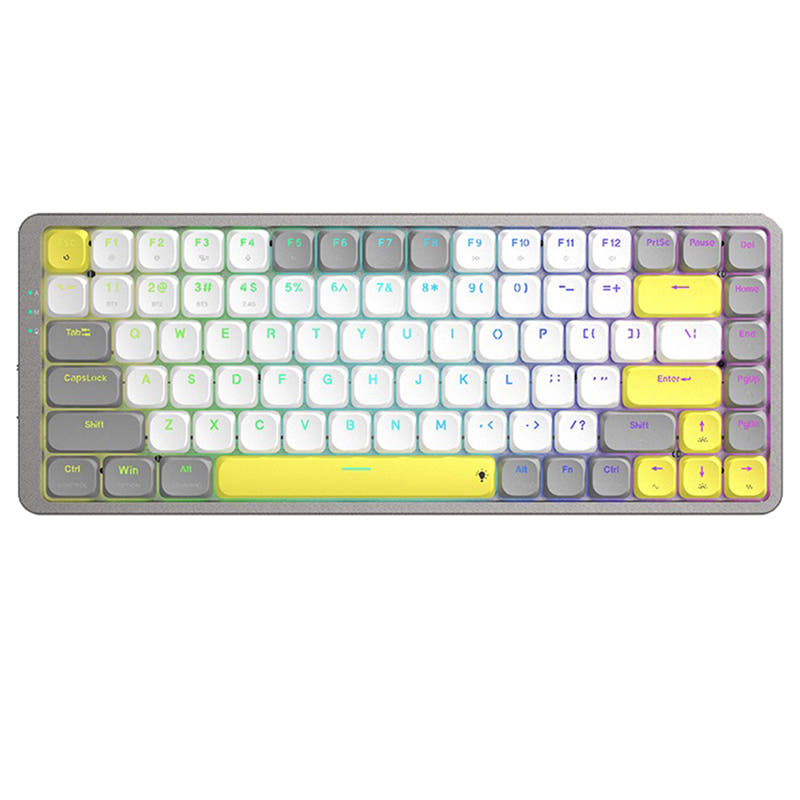
- Ultra-slim aluminum body with low-profile Gateron switches provides a compact typing experience.
- Hot-swappable with low-profile Gateron mechanical switches only, no soldering required.
- Low-profile switches and keycaps only. Standard MX keycaps will not fit.
- North-facing LEDs. Cherry-profile keycaps can hit the switch housing.
- No numpad.
Get the
Keychron Q1
Full Aluminum
Build quality in the top 5% of 75% boards under $150.
- Full CNC machined 6063 aluminum body with double-gasket design for premium build and sound.
- Hot-swappable PCB supports both 3-pin and 5-pin MX switches, offering wider switch choice.
- Programmable rotary encoder knob for customizable controls via VIA software.
- South-facing LEDs. Shine-through legends stay dark, and some sculpted keycaps can clip the LED.
- Missing ISO-Nordic. The other board is sold in those layouts.
- No numpad.
Select the Keychron K1 Pro if you need Bluetooth, a slim profile, and lighter weight for gaming or travel. Choose the Keychron Q1 if you want a heavy, fully customizable aluminum board with a gasket mount and programmable knob for focused desktop work. The Q1 is the better choice for modders and content creators who value build depth, while the K1 Pro suits those who prioritize wireless freedom and a compact footprint.
The differences that matter
Skip the 40-row spec sheet. These are the specs that change how each board feels, sounds, and fits your desk.
Keychron K1 Pro
Keychron Q1
Layout size
80%
75%
Connection
Bluetooth, Wired
Wired
Wireless for several devices and wired for lower latency
Low profile
Yes
No
Case material
ABS, Aluminum, Plastic
Aluminum
Mount style
Tray Mount
Gasket Mount, Plate Mount
- Keychron K1 Pro
- Keychron Q1
- Performance
- 8172
- Build quality
- 8089
- Productivity
- 8097
- Customizability
- 8898
- Portability
- 7365
- Hot-swappable
- Max polling rate: 1,000 Hz
- Switch options: Clicky, Linear, Tactile
- QMK
- VIA
- Keycaps: ABS, PBT
What will you mostly use it for?
The K1 Pro dominates in portable and gaming scenarios due to its Bluetooth capability, low weight, and low-profile switches. The Q1 takes the lead in programming, modding, and content creation thanks to its gasket-mounted aluminum frame, adjustable plate options, and rotary encoder. For office work, the two are evenly matched, each offering solid programmability but appealing to different typing preferences. The key split is between the K1 Pro's wireless mobility and the Q1's desktop-focused customizability.
Pick the Keychron K1 Pro
- 1000 Hz wired polling rate out of the box for competitive gaming.
- Ultra-low profile reduces finger travel for faster key presses.
- Lighter weight (580g) makes it easier to reposition during play.
- N-Key Rollover supported in both wireless and wired modes.
What owners say
Ratings and quotes collected from verified store reviews, including the critical ones.
Keychron K1 Pro
5 owner reviews
“I realy like this keyboard. I feel is harder to make typos compared to the K3 v2. I decided to go with the K1 Pro instead of the K3 Pro and it's going to to take time to adjust to the new layout, but the feeling and shape of the keys is definitely better.”
Keychron Q1
10 owner reviews
“Very pretty and good quality, only con is it's kind of pingy but it's easy to mod and fix with some tape, force break mod.”
Keychron K1 Pro vs Q1 specs
Every tracked spec, side by side. Rows marked with a dot differ between the boards.
15 of 28 specs differ
Keychron K1 Pro
Keychron Q1
Switch options
Hot-swappable
Mount style
Low profile
Sound dampening
Screw-in stabilizers
Layout size
Layout standard
Ergonomics
Knob
Display
Media keys
Connection
Max polling rate
Battery
USB-C
Case material
Plate material
Keycaps
Weight
Dimensions
Typing angle
Backlight
QMK
VIA
N-key rollover
Mac & Windows
Released
ISO layouts by store
Which stores sell ISO-DE, UK, and the other regional layouts.
Keychron K1 Pro
Keychron
ISO-DE, ISO-UK, ISO-Nordic, ISO-FR, ISO-ES, ISO-SW
In stockShips to you
Keychron (DE)
ISO-DE, ISO-UK, ISO-Nordic, ISO-FR, ISO-ES, ISO-SW
In stockDoes not ship to you
Keychron Q1
Keychron
ISO-DE, ISO-UK, ISO-FR, ISO-ES, ISO-SW
In stockShips to you
MK
ISO
Out of stockShips to you
Keychron (DE)
ISO-DE, ISO-UK, ISO-FR, ISO-ES, ISO-SW
Out of stockDoes not ship to you
Keychron (DE)
ISO
Out of stockDoes not ship to you
Compare prices
Live prices from the stores we track, cheapest in-stock offer first.
Prices in USD are converted to your currency and can change at any time. KeebFinder may earn a commission when you buy through these links, at no extra cost to you.
Lowest price across stores, Amazon excluded.



Keychron K1 Pro vs Q1: your questions
The Keychron K1 Pro supports Bluetooth 5.1 for up to 3 wireless devices and a USB-C wired mode. The Keychron Q1 is wired-only with no wireless or Bluetooth capability. If you need wireless freedom, the K1 Pro is the clear choice.
Yes, the Q1 has a 1000 Hz polling rate over its USB-C connection, which is suitable for gaming. However, its heavier weight and 5° typing angle are designed more for typing stability and comfort than competitive gaming speed. The K1 Pro's low-profile switches may be faster for some gamers.
No, the K1 Pro uses low-profile double-shot PBT keycaps that are specific to low-profile Gateron switches and are not compatible with standard MX keycaps. The Q1 uses OSA profile ABS keycaps for standard MX switches, so they are not swappable between the two keyboards.
The Q1 is generally preferred for programming due to its gasket mount, sound dampening, and steeper 5° typing angle, which reduce fatigue during long coding sessions. The K1 Pro is still comfortable but its 3° angle and low-profile feel may not suit everyone for extended typing.
Yes, the Q1 features hot-swappable sockets that support both 3-pin and 5-pin MX mechanical switches. This allows you to change switches without soldering, and it is compatible with many MX-style switches from brands like Gateron, Cherry, and Kailh.
Both keyboards support QMK and VIA open-source firmware, allowing full key remapping, macros, and shortcuts. The K1 Pro can be customized via the Keychron Launcher web app, while the Q1 also uses VIA software for the same purpose. Both require a wired connection for firmware changes.
The K1 Pro is far more portable at 580g with a slim low-profile aluminum body and Bluetooth connectivity for use without wires. The Q1 weighs 1825g and requires a USB-C cable, making it impractical for travel unless you have a dedicated desk setup.
Neither the Keychron K1 Pro nor the Keychron Q1 includes a screen or OLED display. Both rely on RGB backlighting and keycaps for visual feedback, with the Q1 adding a programmable rotary knob for additional control.
The K1 Pro comes with low-profile Gateron mechanical switches in linear (red), tactile (brown), or clicky (blue) options, and it is hot-swappable only with Gateron low-profile mechanical switches. The Q1 fully assembled version ships with Gateron G Pro switches (red or brown) and supports any 3-pin or 5-pin MX switch, offering a wider range of aftermarket choices.
The Q1 is built from a full CNC machined 6063 aluminum body with a double-gasket design, providing exceptional rigidity and sound control. The K1 Pro uses an aluminum frame paired with plastic construction, which is lighter but less dense. The Q1 is widely regarded as having superior build quality for a desk-based keyboard.
Not sold on either?




Still torn?
Answer a few quick questions and the keyboard finder ranks 2,000+ boards by how you will actually use yours.