Keychron Q10 vs Q8 MaxWired 75% vs Wireless 65% Alice
Pick the Q10 for more keys, macro columns, and ISO options in a wired 75% Alice, or the Q8 Max for 2.4 GHz and Bluetooth wireless with a lighter 65% frame.
KeebFinder may earn a commission when you buy through these links, at no extra cost to you.

4.7 (29)4.7 · 29 reviews
from$79at Keychron

5.0 (8)5.0 · 8 reviews
from$219at Keychron
Which one should you get?
Get the
Keychron Q10
Wired 75%
Build quality in the top 5% of 75% boards under $100.
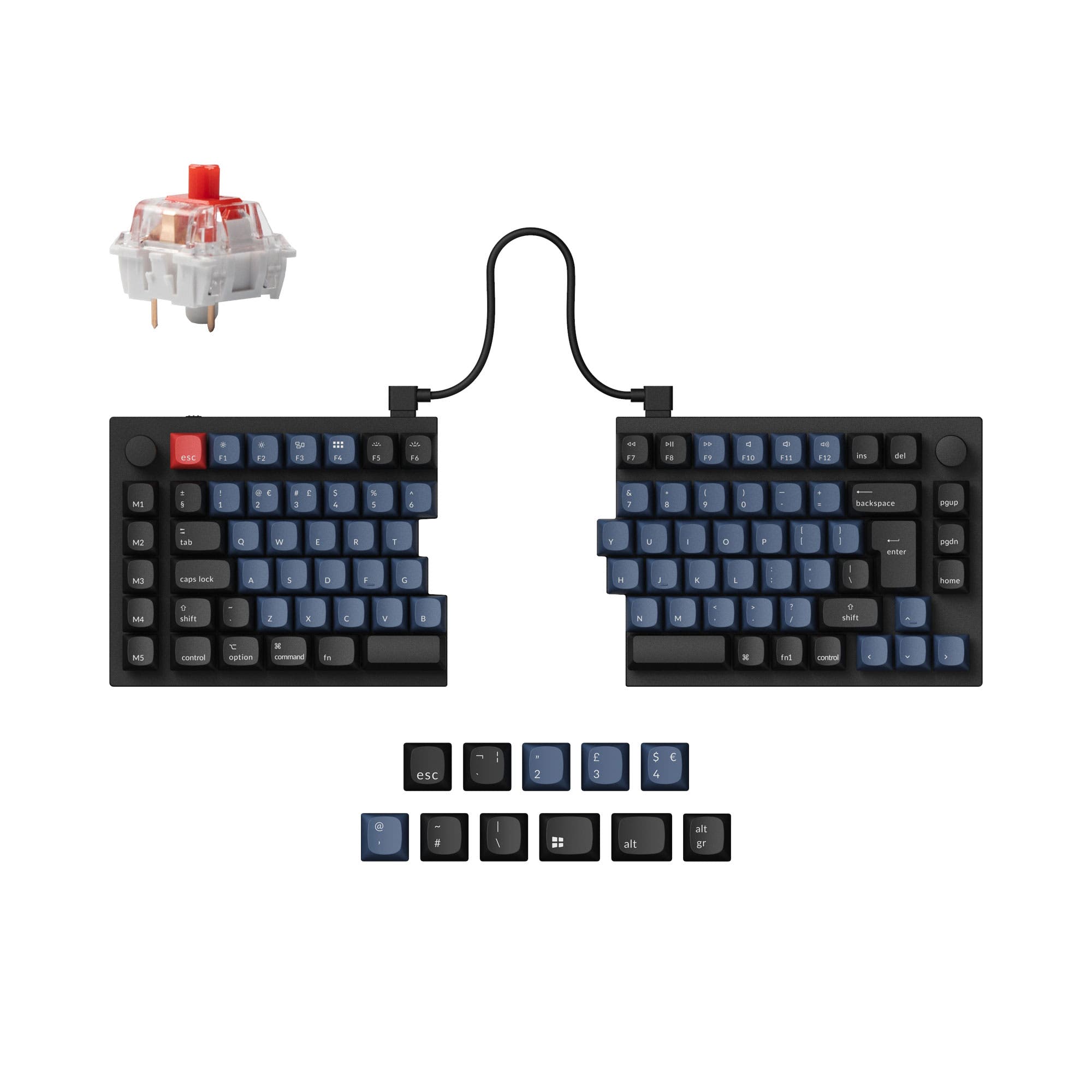
- 75% Alice layout with left-side macro columns and a programmable left knob for shortcuts and volume.
- Full CNC machined 6063 aluminum case with double-gasket design and silicone pads between top and bottom cases.
- Wide layout support including ANSI, ISO, JIS, and several ISO regional variants such as ISO-DE, ISO-UK, and ISO-FR.
- South-facing LEDs. Shine-through legends stay dark, and some sculpted keycaps can clip the LED.
- No numpad.
Get the
Keychron Q8 Max
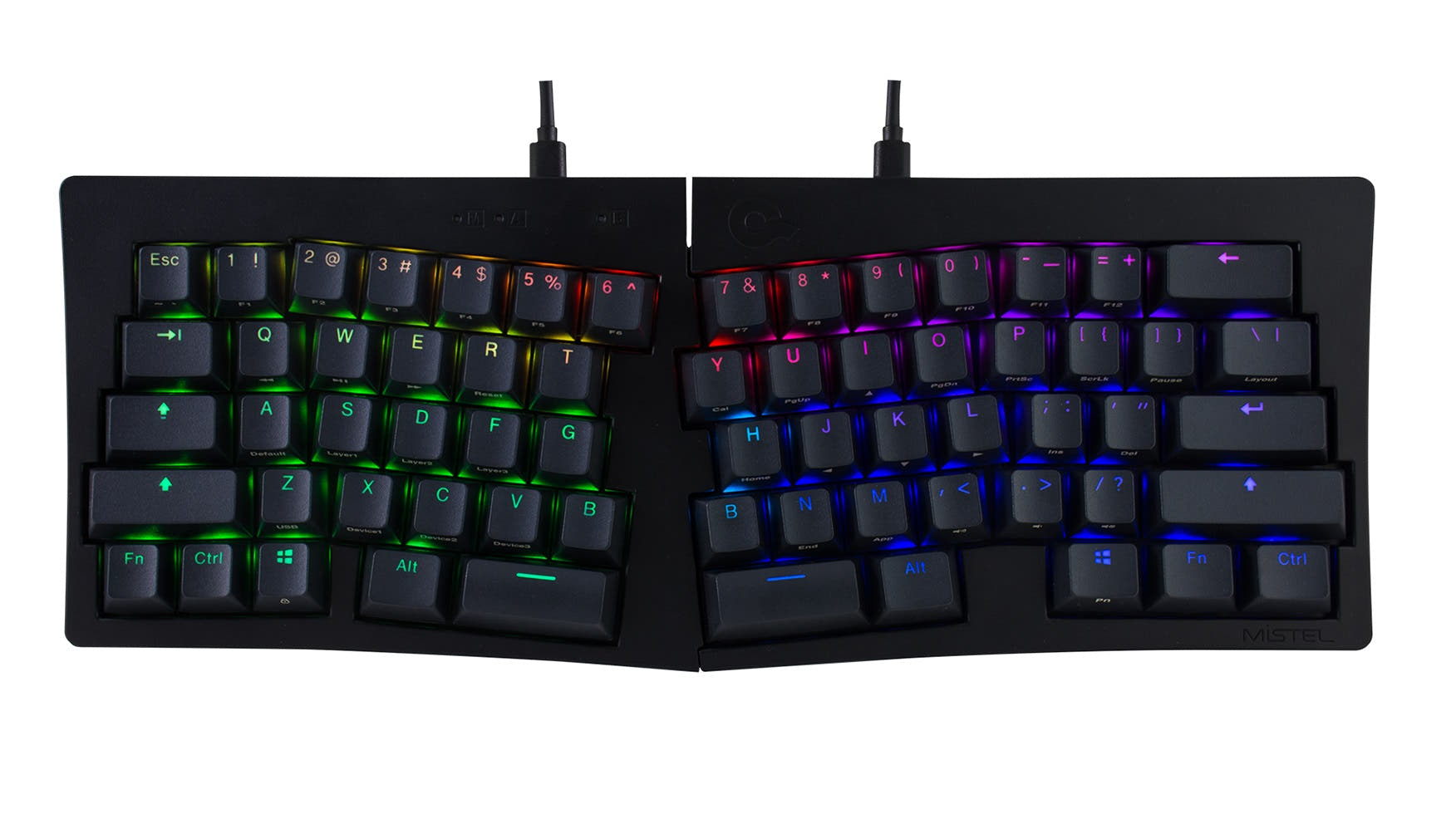
Wireless 65% Alice
Build quality in the top 5% of 65% boards under $300.
- Tri-mode connectivity with 2.4 GHz, Bluetooth 5.1 for up to three devices, and Type-C wired.
- 4000mAh battery rated up to 180 hours with backlight off and up to 100 hours at lowest RGB brightness.
- Multiple acoustic foam layers including IXPE, PET, and latex, plus a polycarbonate plate for a softer gasket feel.
- South-facing LEDs. Shine-through legends stay dark, and some sculpted keycaps can clip the LED.
- No ISO layout. ISO-DE, UK, and other ISO variants are not offered.
- 65% layout. No function row and no numpad.
Choose the Q10 if your priority is a 75% Alice with macro keys, a left knob, ISO layout options, and a firm steel-plate typing feel at a desk. Choose the Q8 Max if wireless freedom matters more: 2.4 GHz and Bluetooth 5.1, a 4000mAh battery, a lighter 65% body, and a foam-and-polycarbonate acoustic build. The primary differentiator is connectivity plus size, so decide that first, then accept the plate and layout trade-offs that follow.
The differences that matter
Skip the 40-row spec sheet. These are the specs that change how each board feels, sounds, and fits your desk.
Keychron Q10
Keychron Q8 Max
Layout size
75%
65%
Connection
Wired
Bluetooth, 2.4 GHz, Wired
Wireless for several devices and wired for lower latency
Weight
2,460 g
1,745 g
Heavier boards stay planted and lighter ones travel
Layout standard
ANSI, ISO, ISO-DE, ISO-ES, ISO-FR, ISO-SW, ISO-UK, JIS
ANSI
ISO and JIS exist so regional layouts fit
Plate material
Steel
Polycarbonate
- Keychron Q10
- Keychron Q8 Max
- Performance
- 7178
- Build quality
- 8989
- Productivity
- 10097
- Customizability
- 9898
- Portability
- 6289
- Hot-swappable
- Ergonomics: Alice
- Max polling rate: 1,000 Hz
- Case material: Aluminum
- Switch options: Clicky, Linear, Tactile
- Mount style: Gasket Mount, Plate Mount
What will you mostly use it for?
The Q10 takes office, programming, and content creation because its 75% layout, macro columns, and left knob favor desk workflows with many shortcuts. The Q8 Max wins gaming, travel, and modding through 2.4 GHz and Bluetooth wireless, a lighter 65% body, N-Key Rollover, and a foam-and-polycarbonate acoustic package. Neither board is a clear all-rounder: the Q10 is wired only, while the Q8 Max gives up function-row keys and some ISO layout options. Buyers who need both wireless freedom and a numpad-adjacent layout will have to compromise on one side.
Pick the Keychron Q8 Max
- The Q8 Max lists 1000 Hz polling on both 2.4 GHz wireless and wired modes, per Keychron.
- It supports N-Key Rollover in wireless and wired use, according to Keychron.
- Its lighter 1745g aluminum build is easier to reposition than the 2460g Q10.
What owners say
Ratings and quotes collected from verified store reviews, including the critical ones.
Keychron Q10
29 owner reviews
“For this kind of layout, having an option around 200usd is great, and even better when it is at this level of build quality and customization”
Keychron Q8 Max
8 owner reviews
“An amazing keyboard for the money! The build quality is immaculate and the keycaps and switches are just fantastic. I was very pleasantly surprised with the included keycaps and I like the KSA profile much better than I expected to.”
Keychron Q10 vs Q8 Max specs
Every tracked spec, side by side. Rows marked with a dot differ between the boards.
9 of 27 specs differ
Keychron Q10
Keychron Q8 Max
Switch options
Hot-swappable
Mount style
Sound dampening
Screw-in stabilizers
Layout size
Layout standard
Ergonomics
Knob
Display
Media keys
Connection
Max polling rate
Battery
USB-C
Case material
Plate material
Keycaps
Weight
Dimensions
Typing angle
Backlight
QMK
VIA
N-key rollover
Mac & Windows
Released
ISO layouts by store
Which stores sell ISO-DE, UK, and the other regional layouts.
Keychron Q10
Keychron
ISO-DE, ISO-UK, ISO-FR, ISO-ES, ISO-SW
In stockShips to you
Keychron (DE)
ISO-DE, ISO-UK, ISO-FR, ISO-ES, ISO-SW
In stockDoes not ship to you
Keychron Q8 Max
No ISO layout at the stores we track.
Compare prices
Live prices from the stores we track, cheapest in-stock offer first.
Prices in USD are converted to your currency and can change at any time. KeebFinder may earn a commission when you buy through these links, at no extra cost to you.
Lowest price across stores, Amazon excluded.



Keychron Q10 vs Q8 Max: your questions
No. The Q10 is listed as wired only, using Type-C connectivity with a 1000 Hz polling rate. If you need Bluetooth or 2.4 GHz, the Q8 Max is the wireless option in this comparison.
Yes. Keychron lists macOS, Windows, and Linux compatibility for the Q8 Max, and it ships with a system toggle plus Mac and Windows keycaps so you can save two layouts. The Q10 also supports Mac and Windows with its own toggle and keycap set.
The Q10 uses a steel plate, which gives a firmer, more rigid feel under the gasket mount. The Q8 Max uses a polycarbonate plate paired with IXPE, PET, and latex foams, which Keychron positions as a softer, more damped typing experience.
Keychron rates the 4000mAh battery at up to 180 hours with the backlight off and up to 100 hours at the lowest RGB brightness. Actual runtime depends on backlight use and wireless mode.
Yes. The Q10 is listed with ANSI, ISO, JIS, ISO-DE, ISO-UK, ISO-FR, ISO-ES, and ISO-SW layout support, and Keychron offers an ISO collection with regional keycaps. The Q8 Max listing shows ANSI only.
Yes. Both the Q10 and Q8 Max use hot-swap sockets that accept 3-pin and 5-pin MX-style switches, and both offer barebone knob versions for builders. This means you can change switches without soldering on either board.
The Q8 Max is the stronger fit because Keychron lists 1000 Hz polling on 2.4 GHz and wired modes plus N-Key Rollover in both. The Q10 also runs 1000 Hz wired, but it has no wireless mode and is heavier at 2460g.
Yes. The Q10 is a 75% Alice layout with extra left-side macro columns and a left-mounted programmable knob. Reviewers mention using those macros in design work and the knob for volume without leaving the mouse.
The Q10 weighs 2460g fully assembled, while the Q8 Max weighs 1745g fully assembled according to Keychron. The Q8 Max is therefore the more portable of the two, though both use aluminum cases.
Yes. Both are listed with QMK firmware and Keychron Launcher web app support for key remapping and macros. Keychron notes that the Launcher requires a wired connection and a current Chrome, Opera, or Edge browser.
Both use an Alice ergonomic angle, so the wrist benefit is shared. The Q10 adds a function row and macro columns in a larger 75% frame, while the Q8 Max trims to 65% for a shorter 358mm footprint and lighter 1745g body.
Keychron lists IXPE foam, PET film, a latex bottom pad, bottom case acoustic foam, and bottom case PET film for the Q8 Max. The Q10 uses a double-gasket design with silicone pads between the top and bottom cases rather than the same foam stack.
Not sold on either?




Still torn?
Answer a few quick questions and the keyboard finder ranks 2,000+ boards by how you will actually use yours.