Keychron Q11 vs Q13 MaxSplit or Wireless Alice?
Choose the Keychron Q11 for a true split ergonomic layout or the Q13 Max for a wireless Alice layout with a compact 96% key set.
KeebFinder may earn a commission when you buy through these links, at no extra cost to you.
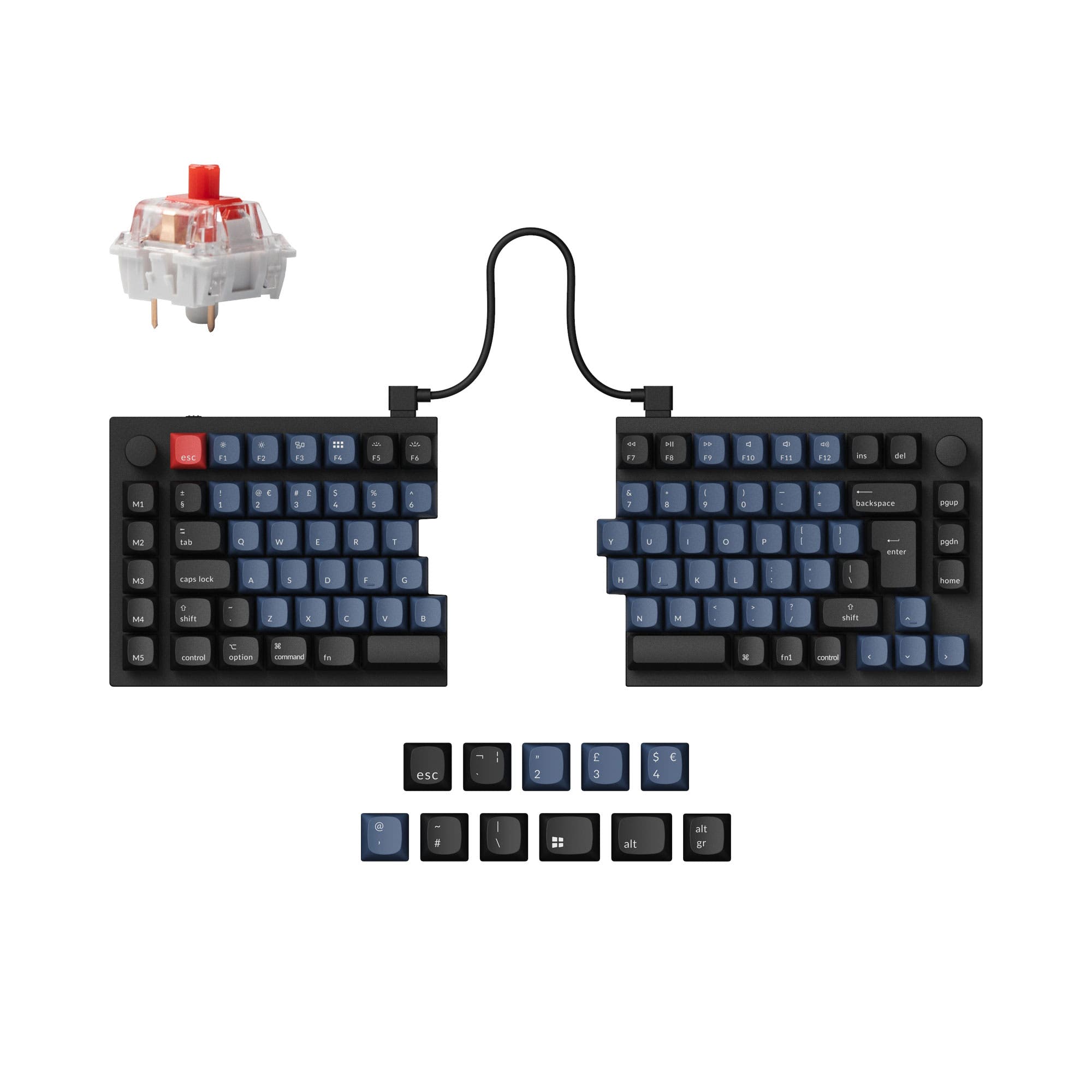
4.7 (13)4.7 · 13 reviews
from$184at Keychron

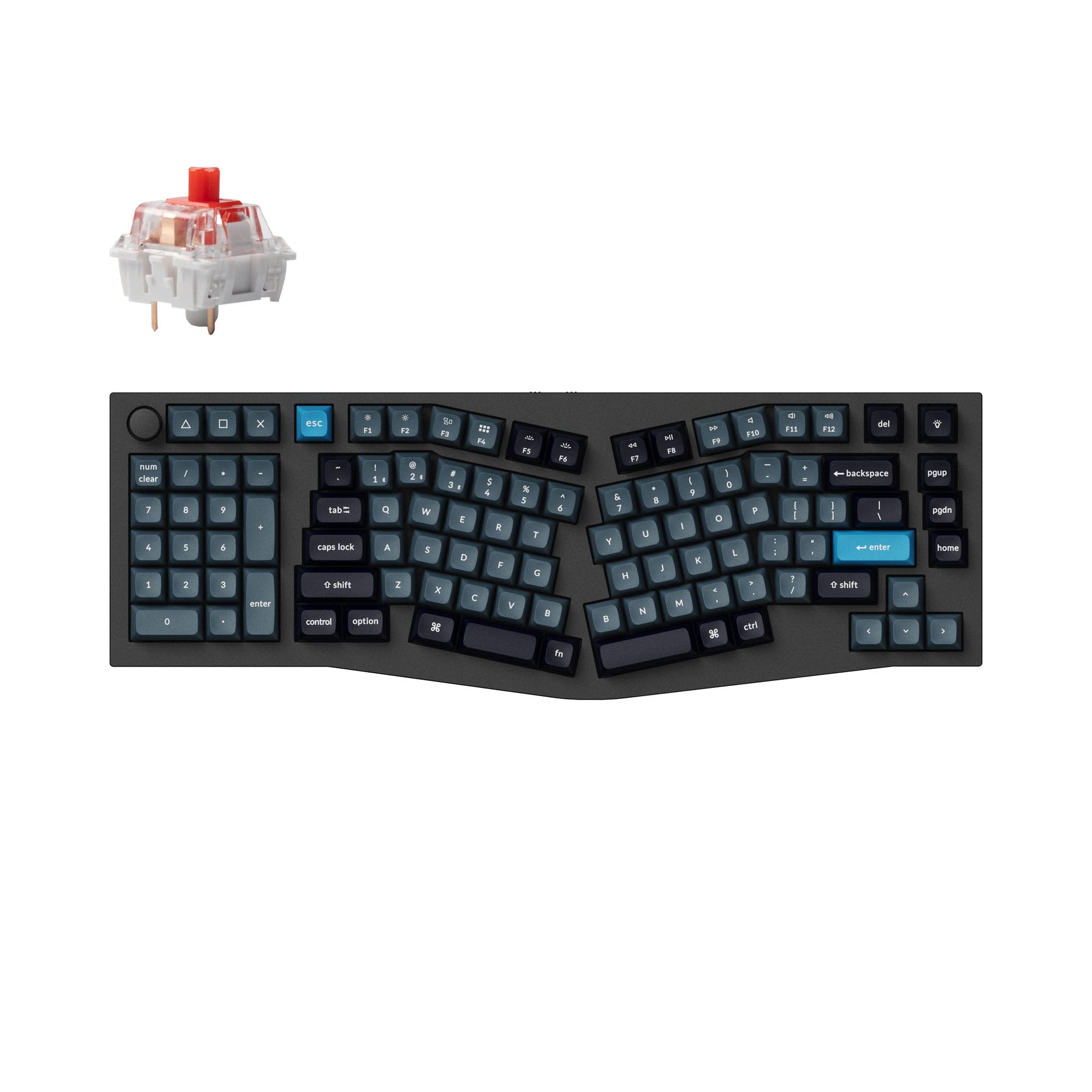
4.9 (10)4.9 · 10 reviews
from$229at Keychron
Which one should you get?
Get the
Keychron Q11
- True split design allows each half to be positioned independently for ergonomic flexibility.
- Supports a wide range of layout standards including ISO, ISO-DE, and JIS.
- Lighter weight (1186g) makes it more portable than the Q13 Max.
- South-facing LEDs. Shine-through legends stay dark, and some sculpted keycaps can clip the LED.
Get the
Keychron Q13 Max
Build quality in the top 15% of 96% boards under $300.
- Wireless connectivity includes 2.4 GHz and Bluetooth 5.1 for versatile setup options.
- Double-gasket design with acoustic foams (IXPE, PET, Latex) enhances typing sound and feel.
- 4000mAh battery provides up to 300 hours of use with backlight off.
- South-facing LEDs. Shine-through legends stay dark, and some sculpted keycaps can clip the LED.
- No ISO layout. ISO-DE, UK, and other ISO variants are not offered.
- Compact full-size layout. The numpad is present, the gaps of a full-size board are not.
Choose the Keychron Q11 if you want a true split keyboard for ergonomic positioning, especially for programming or if you need a lighter wired board. Choose the Keychron Q13 Max if you prefer a wireless Alice layout with a number pad, double-gasket construction, and enhanced acoustic foams for a premium typing experience out of the box.
The differences that matter
Skip the 40-row spec sheet. These are the specs that change how each board feels, sounds, and fits your desk.
Keychron Q11
Keychron Q13 Max
Connection
Wired
Bluetooth, 2.4 GHz, Wired
Wireless for several devices and wired for lower latency
Ergonomics
Split
Alice, Split Spacebar
Mount style
Plate Mount, Tray Mount
Gasket Mount
Weight
1,186 g
2,405 g
Heavier boards stay planted and lighter ones travel
Layout standard
ANSI, ISO, ISO-DE, ISO-Nordic, ISO-UK, JIS
ANSI
ISO and JIS exist so regional layouts fit
- Keychron Q11
- Keychron Q13 Max
- Performance
- 6881
- Build quality
- 8887
- Productivity
- 9795
- Customizability
- 9896
- Portability
- 7350
- Hot-swappable
- Max polling rate: 1,000 Hz
- Case material: Aluminum
- Switch options: Clicky, Linear, Tactile
- Knob
- QMK
What will you mostly use it for?
The Q13 Max wins in gaming, office, modding, and content creation due to its wireless flexibility, additional features like N-Key Rollover and acoustic foams, and a more compact layout with a number pad. The Q11 wins in programming and travel because of its lighter weight and true split design, which offers independent half positioning. The decision largely depends on whether you need the ergonomic freedom of a true split or the convenience of a wireless Alice board.
Pick the Keychron Q13 Max
- Q13 Max offers 2.4 GHz and wired modes with a 1000 Hz polling rate, suitable for low-latency gaming.
- Q13 Max includes N-Key Rollover (NKRO) in both wired and wireless modes.
- Q11 is wired-only with a 1000 Hz polling rate, but lacks the wireless flexibility of the Q13 Max.
What owners say
Ratings and quotes collected from verified store reviews, including the critical ones.
Keychron Q11
13 owner reviews
“I wish that the "launcher" app had more layer options and more layer options for the RGB, but that's ok. I have a Moonlander as well and I recommend the Q11 to almost everyone, the ortholinear boards take a lot of relearning for most people to type on.”
Keychron Q13 Max
10 owner reviews
“Feels very solid and looks great. Tactile and functional”
Keychron Q11 vs Q13 Max specs
Every tracked spec, side by side. Rows marked with a dot differ between the boards.
13 of 27 specs differ
Keychron Q11
Keychron Q13 Max
Switch options
Hot-swappable
Mount style
Sound dampening
Screw-in stabilizers
Layout size
Layout standard
Ergonomics
Knob
Display
Media keys
Connection
Max polling rate
Battery
USB-C
Case material
Plate material
Keycaps
Weight
Dimensions
Typing angle
Backlight
QMK
VIA
N-key rollover
Mac & Windows
Released
ISO layouts by store
Which stores sell ISO-DE, UK, and the other regional layouts.
Keychron Q11
Keychron
ISO-DE, ISO-UK, ISO-Nordic
Out of stockShips to you
Keychron (DE)
ISO-DE, ISO-UK
Out of stockDoes not ship to you
Keychron Q13 Max
No ISO layout at the stores we track.
Compare prices
Live prices from the stores we track, cheapest in-stock offer first.
Prices in USD are converted to your currency and can change at any time. KeebFinder may earn a commission when you buy through these links, at no extra cost to you.
Lowest price across stores, Amazon excluded.




Keychron Q11 vs Q13 Max: your questions
The Keychron Q11 has a true split layout that lets you place each half independently, which can be more ergonomic for shoulder alignment. The Q13 Max uses an Alice layout with a split spacebar and angled columns, which also reduces wrist strain but keeps the two halves connected. For the most adjustability, the Q11 is the better choice.
No, the Keychron Q11 is a wired-only keyboard. It connects via a Type-C cable and does not support Bluetooth or 2.4 GHz wireless. If wireless connectivity is important, the Keychron Q13 Max offers both 2.4 GHz and Bluetooth options.
Yes, the Keychron Q13 Max has a 96% layout that includes a condensed number pad, making it suitable for data entry and office work. The Q11 does not have a number pad due to its 75% split layout.
Yes, both the Keychron Q11 and Q13 Max support hot-swappable sockets for 3-pin and 5-pin MX mechanical switches. This allows you to change switches without soldering.
The Keychron Q13 Max is heavier at 2405 grams compared to the Q11 at 1186 grams. The Q13 Max's extra weight comes from its larger aluminum case and larger battery.
Yes, both keyboards support QMK and VIA firmware for full key remapping, macros, and shortcuts. You can customize them using the Keychron Launcher web app or local VIA software.
Yes, the Keychron Q13 Max supports N-Key Rollover (NKRO) in both wireless and wired modes, ensuring that every key press is registered during gaming. The Q11 does not list NKRO in its specifications.
Both keyboards use screw-in PCB stabilizers for the larger keys like space bar, shift, and enter. The Q11's stabilizers are described as all new screw-in PCB stabilizers, while the Q13 Max uses PCB-mounted screw-in stabilizers. Both are designed for stability and smoother typing.
The Q13 Max is generally better for modding due to its double-gasket design and multiple layers of acoustic foam (IXPE, PET, Latex) that can be swapped or adjusted. The Q11 has an integrated plate in the case, which may limit certain modifications. However, both boards have hot-swappable switches and screw-in stabilizers.
Yes, the Keychron Q13 Max includes a rotary encoder knob that can be customized via VIA software for functions like volume control, zooming, or brush size. The Q11 also has a programmable knob for similar customization.
The Keychron Q11 uses double-shot PBT keycaps in an OSA profile. The Keychron Q13 Max uses KSA profile double-shot PBT keycaps. Both are non-shine-through and designed for durability and oil resistance.
Yes, the Keychron Q13 Max comes with a system toggle and included keycaps for both macOS and Windows, allowing you to save separate layouts for each system. The Q11 also supports both operating systems with the same toggle and keycaps.
Not sold on either?




Still torn?
Answer a few quick questions and the keyboard finder ranks 2,000+ boards by how you will actually use yours.