Vortex Multix vs WOBKEY Rainy75 ProABS vs Aluminum Build
Choose the Rainy75 Pro for a premium typing experience and long battery life, or the Multix for a more portable, budget-friendly TKL with replaceable batteries.


Which one should you get?
Get the
Vortex Multix
ABS
- Uses standard AAA batteries for easy replacement and no charging downtime.
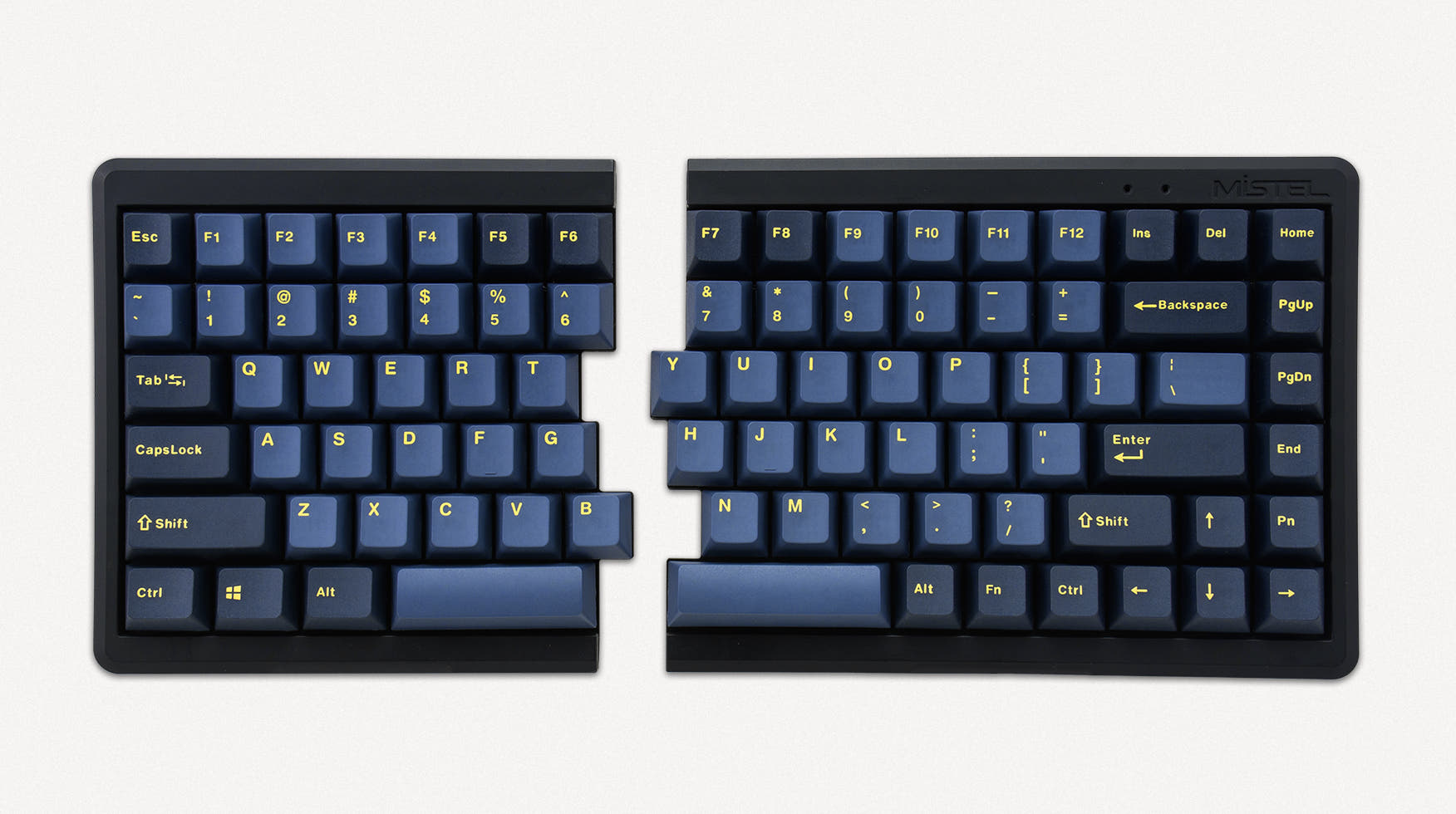
- TKL layout retains the function row and navigation cluster in a familiar format.
- PCB supports multiple layout options including ISO, Tsangan, and different spacebar sizes.
- Case is constructed from ABS plastic, which feels less premium than aluminum.
- Uses a plate mount design instead of a gasket mount.
- North-facing RGB LEDs may cause interference with certain Cherry-profile keycaps.
Get the
WOBKEY Rainy75 Pro
Aluminum Build
- CNC aluminum case with a gasket mount design for a premium, flexy typing feel.
- Large 7000mAh rechargeable battery for extended wireless use.
- Includes multiple sound absorption layers: poron, EPMD, and PET insulation sheet.
- Heavy 1800g weight due to aluminum case and steel weight, making it less portable.
- 75% layout lacks dedicated function keys, requiring a layer for F1-F12.
- Higher price point compared to the Vortex Multix.
The WOBKEY Rainy75 Pro is the clear upgrade for users prioritizing build quality, acoustic performance, and a premium typing experience. Its aluminum gasket-mount construction, extensive sound-dampening, and large battery justify its higher cost. The Vortex Multix is the pragmatic choice for those who value the TKL layout, ultimate portability with AAA batteries, and a lower price, accepting its plastic build and simpler mounting system.
The differences that matter
Skip the 40-row spec sheet. These are the specs that change how each board feels, sounds, and fits your desk.
Vortex Multix
WOBKEY Rainy75 Pro
Layout size
80%
75%
Case material
ABS
Aluminum, Steel
Switch options
Clicky, Linear, Silent, Tactile
Linear, Silent
Mount style
Plate Mount
Gasket Mount
QMK
No
Yes
- Vortex Multix
- WOBKEY Rainy75 Pro
- Performance
- 7180
- Build quality
- 6488
- Productivity
- 8594
- Customizability
- 7189
- Portability
- 7492
- Connection: Bluetooth, 2.4 GHz, Wired
- Hot-swappable
- VIA
- Sound dampening
- Keycaps: PBT
What will you mostly use it for?
The WOBKEY Rainy75 Pro is the stronger choice for gaming, modding, and content creation, thanks to its high-polling rate, premium build, and extensive sound-dampening. The Vortex Multix wins for office use and travel due to its TKL layout, Linux compatibility, and lightweight, AAA-battery-powered design. For programming, it's a tie, as both offer excellent programmability, leaving the decision to layout preference.
Pick the WOBKEY Rainy75 Pro
- The Rainy75 Pro has a specified 1000 Hz polling rate, which the Multix's listing does not mention.
- Its south-facing RGB LEDs avoid interference with Cherry-profile keycaps, a common preference.
- The aluminum case and gasket mount may provide a more stable typing platform.
Vortex Multix vs WOBKEY Rainy75 Pro specs
Every tracked spec, side by side. Rows marked with a dot differ between the boards.
10 of 25 specs differ
Vortex Multix
WOBKEY Rainy75 Pro
Switch options
Hot-swappable
Mount style
Sound dampening
Screw-in stabilizers
Layout size
Layout standard
Ergonomics
Display
Connection
Max polling rate
Battery
USB-C
Case material
Plate material
Keycaps
Weight
Dimensions
Typing angle
Backlight
QMK
VIA
N-key rollover
Mac & Windows
Released
Compare prices
Live prices from the stores we track, cheapest in-stock offer first.
Lowest price across stores, Amazon excluded.




Prices in USD are converted to your currency and can change at any time. KeebFinder may earn a commission when you buy through these links, at no extra cost to you.
Vortex Multix vs WOBKEY Rainy75 Pro: your questions
The WOBKEY Rainy75 Pro has a superior build. It uses a CNC aluminum case with a gasket mount and a steel weight, while the Vortex Multix uses an ABS plastic case with a plate mount. The Rainy75 Pro's construction is typically associated with a more premium feel and sound.
Yes, the Vortex Multix is powered by two AAA batteries in wireless mode. This means you never need to charge it via cable, you simply replace the batteries when they run out. The vendor description confirms it has no internal lithium battery.
Yes, according to the vendor description, the WOBKEY Rainy75 Pro connects wirelessly using Bluetooth 5.0 in addition to a 2.4 GHz dongle. The Vortex Multix listing mentions Bluetooth but does not specify a version.
The WOBKEY Rainy75 Pro is more mod-friendly. It features a gasket mount design, an FR4 plate with flex cuts, a flex cut PCB, and comes with multiple sound-dampening foam layers (poron, EPMD, PET). It also includes screw-in stabilizers, which are preferred for modding over the plate-mount style.
Both keyboards use double-shot PBT keycaps, which are durable and resist shine. However, they differ in profile and RGB compatibility. The Vortex Multix uses Cherry-profile keycaps with north-facing LEDs, while the Rainy75 Pro uses keycaps with south-facing RGB.
The WOBKEY Rainy75 Pro lists a 1000 Hz polling rate, which is a standard spec for low-latency gaming. The Vortex Multix product data does not specify a polling rate, so a direct comparison on this metric cannot be made from the available information.
Yes, both keyboards are programmable. Both support VIA software for easy key remapping. Additionally, the WOBKEY Rainy75 Pro listing also mentions QMK support, which allows for even deeper firmware-level customization.
The WOBKEY Rainy75 Pro has a 7000mAh battery, which is quite large for a mechanical keyboard. While exact duration depends on usage and RGB settings, one user review mentioned getting about two weeks of use with lights on. The vendor does not provide an official battery life estimate.
Yes. The Vortex Multix's PCB supports an ISO layout according to the vendor description. However, it notes that the keyboard may not include all the necessary keycaps for every layout option in the box.
The WOBKEY Rainy75 Pro likely has more sound dampening pre-installed. Its vendor description lists several layers of sound absorption material (poron, EPMD, PET). The Vortex Multix includes a silicone dampening pad under the plate, which is a simpler solution.
The Vortex Multix is a TKL (Tenkeyless) with 87 keys, keeping the function row, navigation cluster, and arrow keys in a spaced-out design. The WOBKEY Rainy75 Pro is a 75% with 81 keys, compacting the function row and navigation keys right next to the main alphas to save space.
Yes, both the Vortex Multix and the WOBKEY Rainy75 Pro list Mac support in their extra features. The Vortex vendor page explicitly states 'Mac Compatible: Yes' in its characteristics table.
Not sold on either?




Still torn?
Answer a few quick questions and the keyboard finder ranks 2,000+ boards by how you will actually use yours.