Yunzii RT68 vs RT80Wired 65% vs Wireless 80% Hall Effect
Choose the RT80 for its larger layout, tri-mode wireless connectivity, and higher 8000 Hz polling rate, or the RT68 for a more compact, wired-only setup.
KeebFinder may earn a commission when you buy through these links, at no extra cost to you.

from$59at Yunzii
90-day lowLowest price in 90 days

from$135at Yunzii
90-day lowLowest price in 90 days
Which one should you get?
Get the
Yunzii RT68
Wired 65%
Build quality in the bottom 35% of 65% boards under $100.
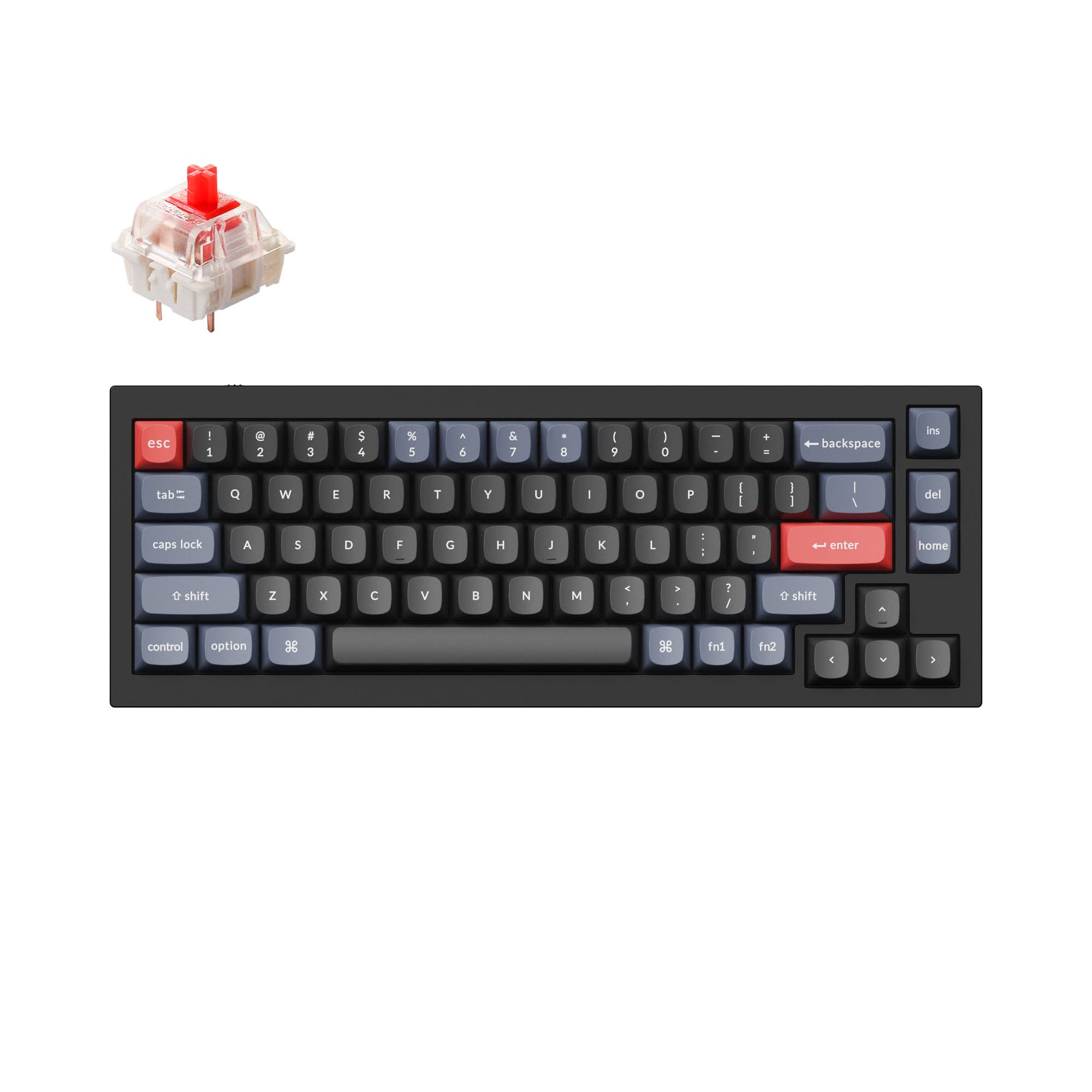
- More compact 65% layout (335 x 114 mm) for space savings.
- Lighter weight at 745 grams.
- Wired connection ensures consistent latency with no need to charge.
- Magnetic switches only. Standard MX switches will not fit.
- South-facing LEDs. Shine-through legends stay dark, and some sculpted keycaps can clip the LED.
- 65% layout. No function row and no numpad.
Get the
Yunzii RT80
Wireless 80% Hall Effect
Build quality in the top 40% of 80% boards under $150.
- Tri-mode connectivity with Bluetooth, 2.4 GHz, and wired USB-C.
- Higher 8000 Hz polling rate in wired mode for reduced latency.
- Hot-swappable design for easy magnetic switch replacement.
- Magnetic switches only. Standard MX switches will not fit.
- South-facing LEDs. Shine-through legends stay dark, and some sculpted keycaps can clip the LED.
- No numpad.
Your primary need dictates the choice. If you require a simple, compact keyboard for a dedicated gaming station or travel, the wired Yunzii RT68 is sufficient. For nearly every other scenario, especially if you value wireless freedom, a larger layout for productivity, or the highest possible wired polling rate, the Yunzii RT80 is the more capable and flexible investment.
The differences that matter
Skip the 40-row spec sheet. These are the specs that change how each board feels, sounds, and fits your desk.
Yunzii RT68
Yunzii RT80
Layout size
65%
80%
Connection
Wired
Bluetooth, 2.4 GHz, Wired
Wireless for several devices and wired for lower latency
Hot-swappable
No
Yes
Switch changes without soldering
Max polling rate
1,000 Hz
8,000 Hz
Higher polling helps competitive FPS and does nothing for typing
Switch options
Magnetic
Clicky, Magnetic
- Yunzii RT68
- Yunzii RT80
- Performance
- 8798
- Build quality
- 5561
- Productivity
- 5477
- Customizability
- 4962
- Portability
- 6577
- Hall effect (magnetic)
- Rapid trigger
- Mount style: Gasket Mount
- Sound dampening
- Keycaps: PBT
What will you mostly use it for?
The RT80 is the more versatile choice, winning in Gaming, Office, Programming, Modding, and Content Creation due to its superior connectivity, larger layout, and higher polling rate. The RT68 only takes the lead for Travel, where its smaller size and lower weight are decisive advantages. For most multi-purpose or productivity-focused users, the RT80's expanded feature set is compelling.
Pick the Yunzii RT80
- The RT80 offers an 8000 Hz polling rate for lower latency, compared to the RT68's 1000 Hz.
- Its tri-mode connectivity includes a stable 2.4 GHz wireless option for a cleaner desk setup.
- The 80% layout retains dedicated arrow and navigation keys for in-game controls.
Yunzii RT68 vs RT80 specs
Every tracked spec, side by side. Rows marked with a dot differ between the boards.
8 of 22 specs differ
Yunzii RT68
Yunzii RT80
Switch options
Hall effect (magnetic)
Rapid trigger
Hot-swappable
Mount style
Sound dampening
Layout size
Layout standard
Ergonomics
Display
Connection
Max polling rate
Battery
USB-C
Case material
Keycaps
Weight
Dimensions
Backlight
N-key rollover
Mac & Windows
Released
Compare prices
Live prices from the stores we track, cheapest in-stock offer first.
Prices in USD are converted to your currency and can change at any time. KeebFinder may earn a commission when you buy through these links, at no extra cost to you.
Lowest price across stores, Amazon excluded.


Yunzii RT68 vs RT80: your questions
The core differences are layout and connectivity. The RT68 is a 65% wired-only keyboard, while the RT80 is an 80% keyboard with tri-mode wireless (Bluetooth, 2.4GHz, USB-C) and a much higher 8000 Hz wired polling rate.
The RT80 has a technical advantage for wired gaming with its 8000 Hz polling rate, offering lower latency than the RT68's 1000 Hz. Its 2.4 GHz wireless mode also provides a clean desk setup with stable performance for gaming sessions.
The product listing for the Yunzii RT68 does not mention hot-swappable sockets. In contrast, the RT80 is explicitly described as a hot-swappable keyboard compatible with other 3-pin or 5-pin hall effect switches.
Yes, the RT80 is well-suited for office work. Its 80% layout includes arrow and navigation keys, and its tri-mode wireless connectivity allows easy switching between multiple devices like a desktop, laptop, or tablet.
The Yunzii RT80 is equipped with a 5000mAh battery. The manufacturer does not provide an estimated runtime, but this capacity is common for supporting extended wireless use between charges.
The RT68 is more portable. It is significantly smaller (335 x 114 mm vs. 330 x 135 mm) and lighter (745g vs. 940g) than the RT80. Its wired-only nature also means you don't need to worry about charging it while traveling.
Yes, both the Yunzii RT68 and RT80 feature rapid trigger technology and hall effect magnetic switches with adjustable actuation points, which can be customized via their respective web-based software.
Both keyboards use double-shot PBT keycaps with a Cherry profile, as stated in their vendor descriptions. This material is known for its durability and resistance to shine over time.
Both the RT68 and RT80 utilize a gasket mount structure. The RT68's description mentions four layers of soundproof pads, while the RT80 mentions 4-layer sound-absorbing fillings, both aimed at providing a softer typing feel and dampening sound.
The RT80 is listed as compatible with Windows and macOS. Its Bluetooth capability suggests it could pair with other devices, but console compatibility like PlayStation is not explicitly stated in the provided specifications.
Yes. According to the RT80's specifications, the polling rate is 8000 Hz in wired mode, but drops to 1000 Hz when using either Bluetooth or the 2.4 GHz wireless connection.
Not sold on either?



Still torn?
Answer a few quick questions and the keyboard finder ranks 2,000+ boards by how you will actually use yours.