Out of stock
Add to comparison
79
Overall/ Value
78.8Build Quality
71.7Customizability
83.3Performance
71.5Productivity
89.5Portability
46.6$149

Browse USB-C mechanical keyboards with fast data transfer, reversible connectors, and universal compatibility. Compare wired and tri-mode boards with USB-C connectivity across gaming, custom, and office categories on KeebFinder.




![[Pre-Order] @40 40% Low Profile Keyboard Kit by Niuniu](https://cdn.shopify.com/s/files/1/1674/0405/files/DSC_1222_1.jpg?v=1749523764&width=3840&quality=75)


![[In Stock]Zoom64 Glacier Startrail](https://cdn.shopify.com/s/files/1/0607/2474/0287/files/DSC02401_d729ac8e-0fe8-42d5-865b-a94fe36edc36.jpg?v=1768459857&width=3840&quality=75)



![[In Stock] PK x BIOI Command 65 R2 Vintage Custom Mechanical Keyboard Kit](https://cdn.shopify.com/s/files/1/1674/0405/files/561A1328.jpg?v=1737618363&width=3840&quality=75)


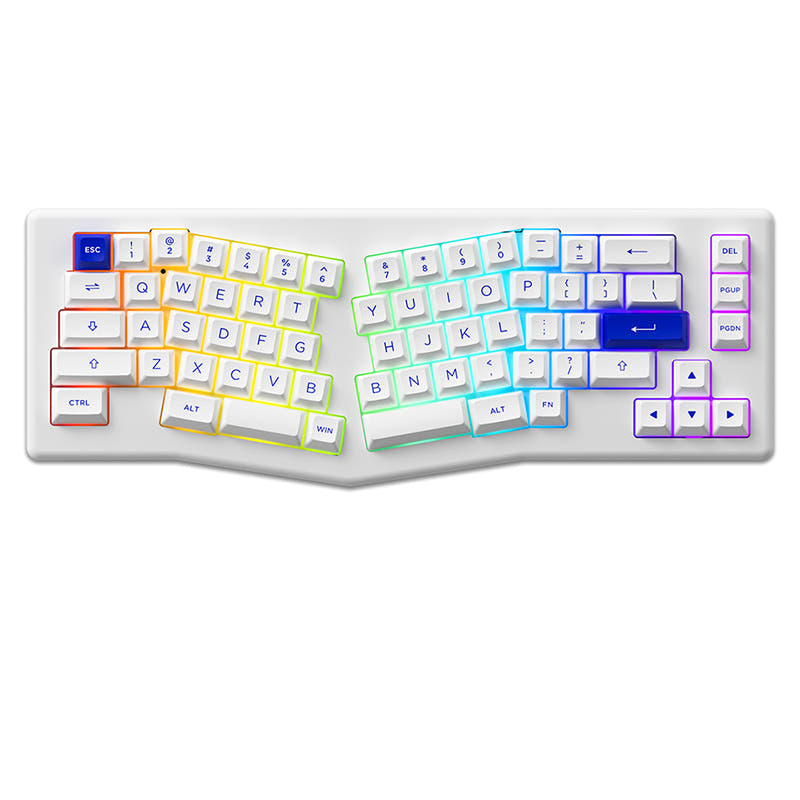


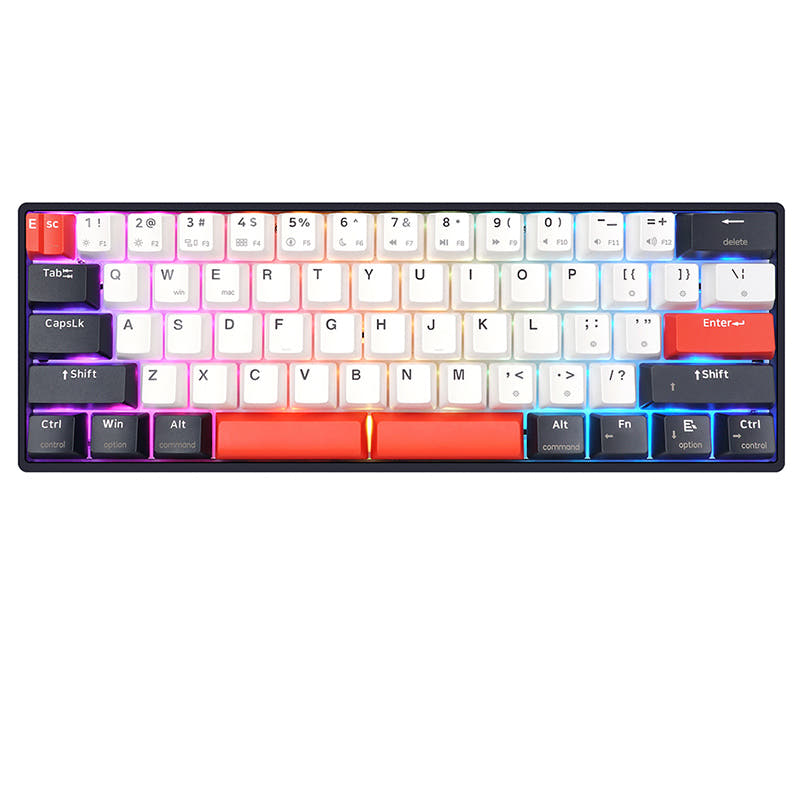
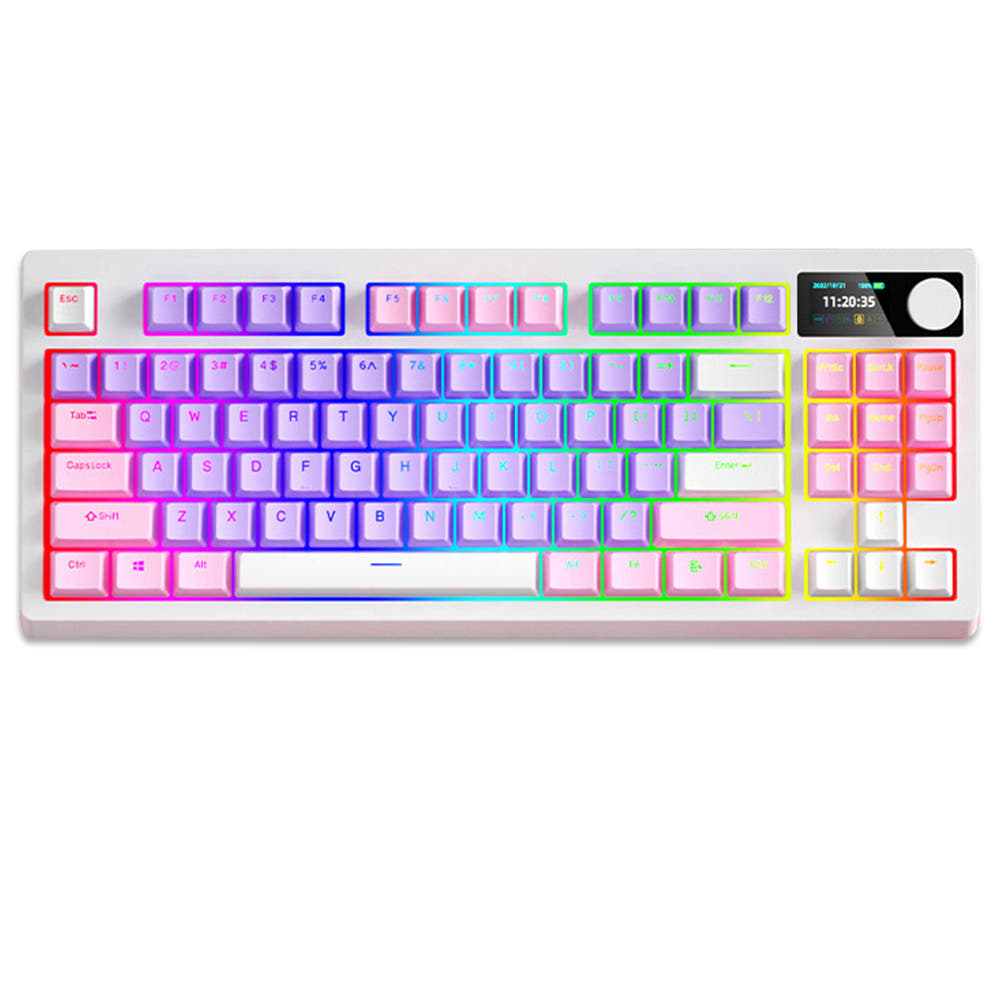
USB-C has become the standard connector for mechanical keyboards, replacing Micro-USB and Mini-USB with a reversible, high-speed port that works across every major operating system. Browse boards from budget to premium — nearly all ship with USB-C in 2026.
Micro-USB connectors were fragile, one-directional, and limited in power delivery. USB-C is reversible, supports faster data transfer, delivers more power for RGB lighting, and is far more durable after thousands of plug cycles. Every modern keyboard PCB now defaults to USB-C, and the connector is required by regulation in many markets. If your board still uses Micro-USB, it's time for an upgrade.
Even on wireless keyboards, the USB-C port matters. It's how you charge the battery, update firmware, and switch to wired mode for zero-latency gaming. Tri-mode boards use USB-C as the wired connection alongside 2.4 GHz and Bluetooth. A good USB-C port with a secure fit ensures your keyboard doesn't disconnect mid-game or mid-document when the cable shifts.
The USB-C standard opened up a thriving custom cable market. Coiled cables, aviator connectors, and braided sleeves in every color let you match your keyboard to your desk setup. Because USB-C is universal, one custom cable works with every board you own. Quality cables use shielded conductors and gold-plated connectors for reliable data transfer alongside the aesthetic upgrade.
Some keyboards include a USB-C passthrough port that lets you plug in a mouse, USB drive, or headset directly into the board. This reduces cable runs to your PC and keeps your desk tidy. Passthrough requires a USB-C port with enough bandwidth for both the keyboard and the attached device — check the product specs on KeebFinder to confirm passthrough support before buying.
USB-C is natively supported across macOS, Windows, and Linux without drivers. Keyboards with QMK or VIA firmware let you remap modifier keys (Cmd/Ctrl swap) per OS, and many boards include a physical Mac/Win toggle. If you switch between platforms daily, a USB-C keyboard with multi-OS support and programmable layers simplifies the transition.
Every keyboard in the sub-$80 tier ships with USB-C in 2026. Brands like Keychron, Royal Kludge, and Epomaker offer hot-swap boards with Bluetooth, PBT keycaps, and solid stabilizers at this price. The USB-C connector itself is never a differentiator at budget level — focus on switch options, build quality, and firmware support when comparing boards in this range.