AULA EA75 Max vs Apos Kono 67°Screen vs Compactness
Choose the EA75 Max for a feature-packed 75% layout with a screen, or the Kono 67° for maximum portability in a 65% form factor.
KeebFinder may earn a commission when you buy through these links, at no extra cost to you.

4.8 (16)4.8 · 16 reviews
from$67at Epomaker
90-day lowLowest price in 90 days

No reviews
from$62at Apos
Which one should you get?
Get the
AULA EA75 Max
Screen
Build quality in the top 45% of 75% boards under $100.
- Includes a customizable TFT screen for displaying system info or media.
- Features a 5-layer gasket mount with multiple foam pads for sound dampening.
- Larger 5000mAh battery capacity for extended wireless use.
- South-facing LEDs. Shine-through legends stay dark, and some sculpted keycaps can clip the LED.
- No numpad.
Get the
Apos Kono 67°
Compactness
Build quality in the bottom 50% of 65% boards under $100.
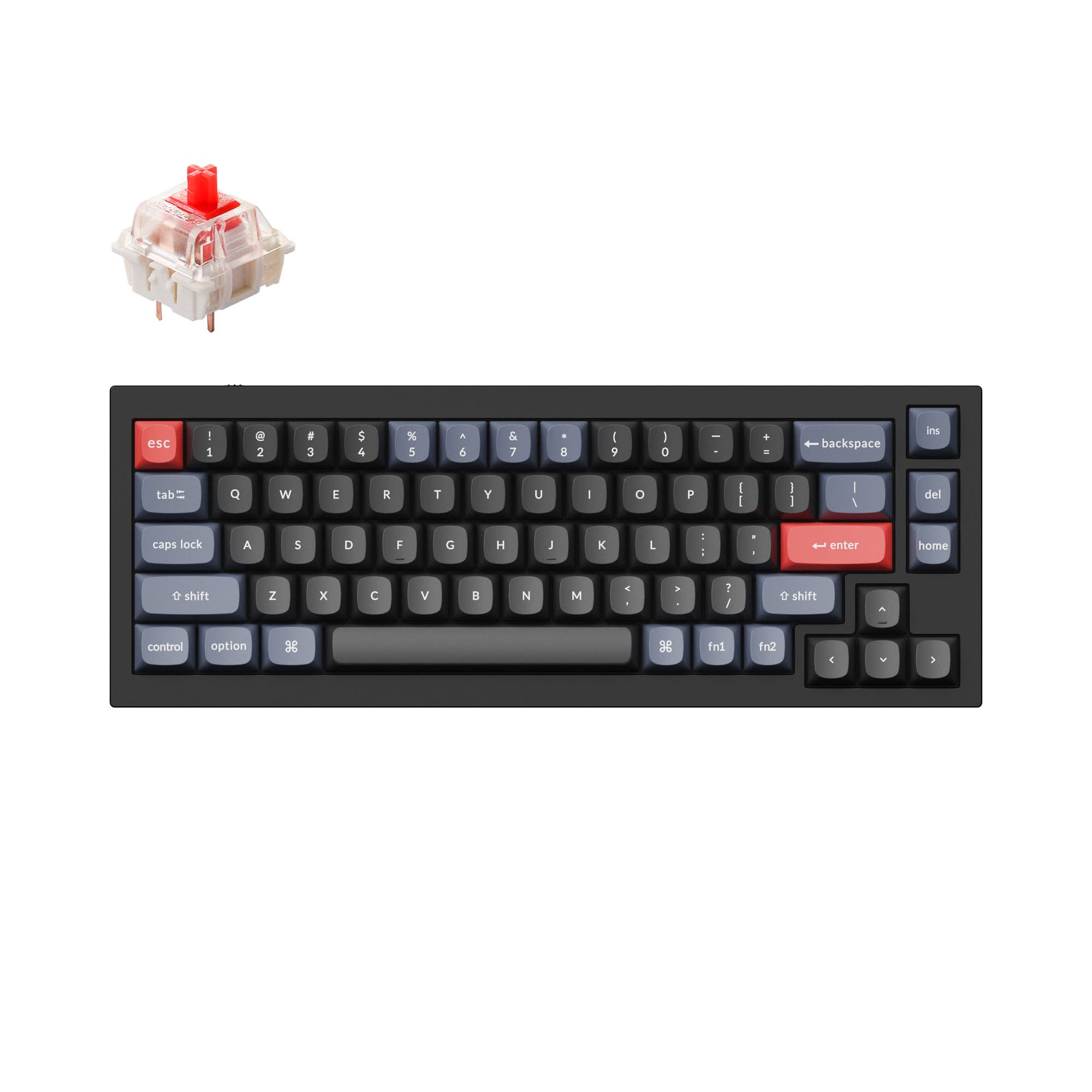
- More compact 65% layout for superior desk space savings and portability.
- North-facing RGB LEDs provide uniform backlighting with shine-through keycaps.
- Includes dedicated software for key remapping and lighting customization.
- North-facing LEDs. Cherry-profile keycaps can hit the switch housing.
- 65% layout. No function row and no numpad.
Your primary need dictates the choice. If you want maximum features, a premium typing feel, and don't mind a larger board, the Epomaker EA75 Max is the clear winner. If your top priority is a minimal, portable keyboard for travel or a tiny desk, and you can live without a screen and some keys, the Apos Kono 67° is the better fit. Consider current availability, as the Kono 67° was listed with no vendors in stock.
The differences that matter
Skip the 40-row spec sheet. These are the specs that change how each board feels, sounds, and fits your desk.
AULA EA75 Max
Apos Kono 67°
Layout size
75%
65%
Battery
5,000 mAh
2,400 mAh
A larger battery means fewer cables during the day
Case material
ABS
Plastic, Steel
Switch options
Linear, Silent
Linear, Tactile
Mount style
Gasket Mount
Plate Mount
- AULA EA75 Max
- Apos Kono 67°
- Performance
- 7872
- Build quality
- 6864
- Productivity
- 8363
- Customizability
- 7362
- Portability
- 7984
- Connection: Bluetooth, 2.4 GHz, Wired
- Hot-swappable
- Knob
- Sound dampening
- Keycaps: PBT
What will you mostly use it for?
The Epomaker EA75 Max is the more versatile choice, winning in gaming, office, programming, modding, and content creation due to its extra keys, screen, knob, and advanced mounting. Its primary trade-off is size and weight. The Apos Kono 67° claims the travel category decisively, benefiting from its smaller 65% footprint and likely lighter construction, making it the better pick for frequent mobility.
Pick the AULA EA75 Max
- The EA75 Max has a specified 1000Hz polling rate for wired and 2.4GHz modes.
- Its 75% layout retains dedicated arrow keys and some function keys for game macros.
- The manufacturer states it supports N-Key Rollover for simultaneous key presses.
AULA EA75 Max vs Apos Kono 67° specs
Every tracked spec, side by side. Rows marked with a dot differ between the boards.
10 of 23 specs differ
AULA EA75 Max
Apos Kono 67°
Switch options
Hot-swappable
Mount style
Sound dampening
Layout size
Layout standard
Ergonomics
Knob
Display
Connection
Max polling rate
Battery
USB-C
Case material
Plate material
Keycaps
Weight
Dimensions
Typing angle
Backlight
N-key rollover
Mac & Windows
Released
Compare prices
Live prices from the stores we track, cheapest in-stock offer first.
Prices in USD are converted to your currency and can change at any time. KeebFinder may earn a commission when you buy through these links, at no extra cost to you.
Lowest price across stores, Amazon excluded.



AULA EA75 Max vs Apos Kono 67°: your questions
The Epomaker EA75 Max has an advantage for gaming. It specifies a 1000Hz polling rate for responsive input, and its 75% layout provides dedicated arrow keys that some gamers prefer. The Apos Kono 67° does not list a polling rate in its provided specifications.
The EA75 Max is listed as compatible with Mac, but the manufacturer notes that Mac modifier keycaps are not included in the box. You would need to source keycaps with Mac legends separately if you require them.
Yes, according to the Apos product page, the Kono 67° uses the 'Kono67 Keyboard Utility Software' for customizing key layouts, macros, and per-key RGB lighting. The settings are saved to the keyboard's onboard memory.
The Epomaker EA75 Max has a larger 5000mAh battery compared to the 2400mAh battery in the Apos Kono 67°. While actual runtime depends on usage and lighting, the EA75 Max has the potential for significantly longer use between charges.
Yes, both the Epomaker EA75 Max and the Apos Kono 67° feature hot-swappable sockets. The EA75 Max supports 3-pin and 5-pin switches, while the Kono 67° also supports both 5-pin (PCB mount) and 3-pin (plate mount) switches.
The EA75 Max uses a gasket mount, where the plate is suspended by rubber or silicone gaskets for a softer, more cushioned typing feel. The Kono 67° uses a plate mount, where the plate is screwed directly into the case for a firmer, more direct feedback.
The Epomaker EA75 Max is likely quieter out of the box. It offers a silent linear switch option (Cotton Candy) and features five layers of sound dampening foam inside its gasket-mounted structure. The Kono 67° includes sound-absorbing foam but does not list a silent switch option.
Yes, the Epomaker vendor description states the TFT screen on the EA75 Max can display custom GIFs or images, in addition to system information like time, battery level, and connection status. This is done through its companion software.
Yes. The Epomaker EA75 Max includes a 2-in-1 keycap-and-switch puller. The Apos Kono 67° also includes a keycap puller in the box, according to its 'What’s included' list.
Both keyboards use PBT plastic keycaps. The EA75 Max uses double-shot Cherry profile keycaps. The Apos Kono 67° uses double-shot, shine-through keycaps designed to work with its north-facing RGB LEDs.
The Apos Kono 67° is more portable. Its 65% layout is significantly smaller than the 75% EA75 Max, and its 2400mAh battery suggests a lighter overall weight. The simpler plate-mount construction may also contribute to a lighter build.
Not sold on either?




Still torn?
Answer a few quick questions and the keyboard finder ranks 2,000+ boards by how you will actually use yours.