Jamesdonkey A3 3.0 vs R3 TMR HEWireless Flexibility vs Gaming Performance
Choose the A3 3.0 for wireless versatility and a larger layout, or the R3 TMR HE for its cutting-edge gaming performance and aluminum build.


Which one should you get?
Get the
Jamesdonkey A3 3.0
Wireless Flexibility
- Tri-mode connectivity (Bluetooth, 2.4GHz, wired) for maximum flexibility.
- QMK support enables deep, open-source firmware customization.
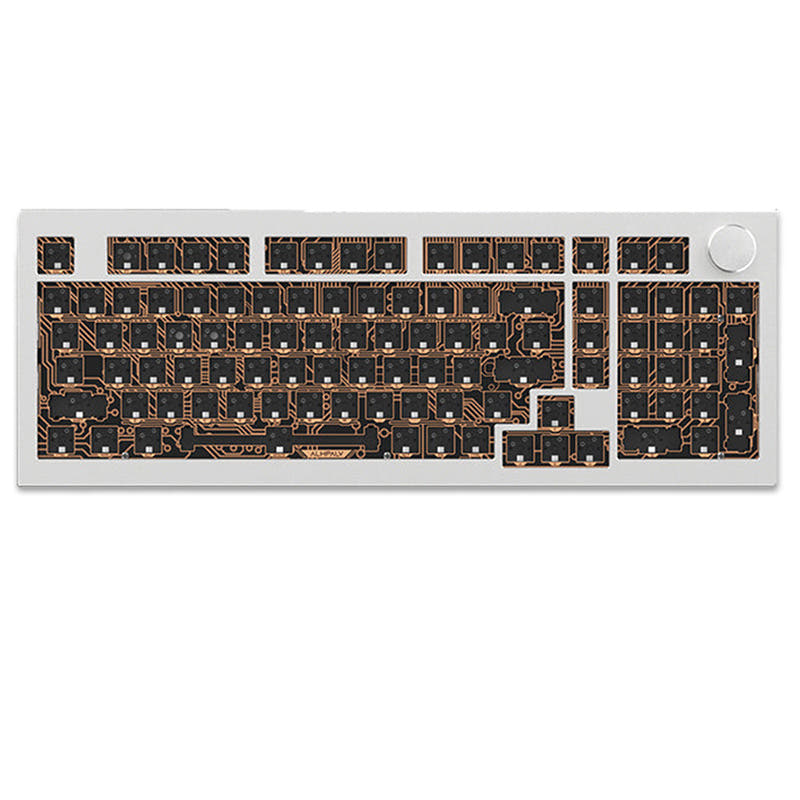
- Includes a multimedia knob for quick volume or media control.
- Lacks the high-end gaming specs like an 8000 Hz polling rate.
- Does not have an aluminum case construction.
- Switch options are limited to standard mechanical types, not Hall Effect.
Get the
Jamesdonkey R3 TMR HE
Gaming Performance
- Equipped with Hall Effect magnetic switches supporting rapid trigger and adjustable actuation.
- Explicitly supports an 8000 Hz polling rate for minimal input latency.
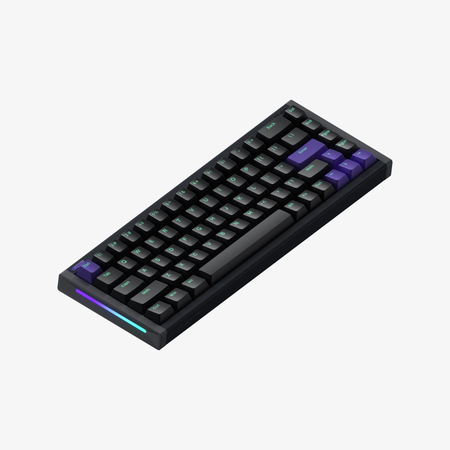
- Constructed with a CNC-machined aluminum alloy case for a premium feel.
- Wired-only connectivity, with no wireless option.
- More expensive than the A3 3.0.
- 65% layout lacks dedicated function keys and some navigation keys.
Your primary need dictates the choice. If you require a single keyboard for work, play, and moving between devices, the Jamesdonkey A3 3.0 is the versatile all-rounder. If your focus is purely on achieving the highest performance for competitive gaming and you prefer a dense, premium-feeling board, the Jamesdonkey R3 TMR HE is the specialized tool. Consider the layout difference carefully, as the 75% vs. 65% size affects key availability.
The differences that matter
Skip the 40-row spec sheet. These are the specs that change how each board feels, sounds, and fits your desk.
Jamesdonkey A3 3.0
Jamesdonkey R3 TMR HE
Layout size
75%
65%
Hall effect (magnetic)
No
Yes
Rapid trigger
No
Yes
Connection
Bluetooth, 2.4 GHz, Wired
Wired
Knob
Yes
No
- Jamesdonkey A3 3.0
- Jamesdonkey R3 TMR HE
- Performance
- 5491
- Build quality
- 6059
- Productivity
- 8054
- Customizability
- 8257
- Portability
- 7667
- Hot-swappable
- Mount style: Gasket Mount
- Sound dampening
What will you mostly use it for?
The A3 3.0 wins in scenarios demanding connectivity and a practical layout, such as office work, programming, and travel. Its wireless options and QMK support also make it the stronger choice for modders. The R3 TMR HE is the definitive pick for competitive gaming, leveraging its high polling rate and Hall Effect switches. For content creation, the tools are different but equally potent, making it a tie.
Pick the Jamesdonkey R3 TMR HE
- The R3 TMR HE has an explicitly stated 8000 Hz polling rate.
- It features Hall Effect magnetic switches with a listed rapid trigger function and 0.01mm accuracy.
- Its vendor description highlights a 0.125ms response time and technologies like 'Zero Aggregation Delay' for competitive play.
Jamesdonkey A3 3.0 vs R3 TMR HE specs
Every tracked spec, side by side. Rows marked with a dot differ between the boards.
12 of 24 specs differ
Jamesdonkey A3 3.0
Jamesdonkey R3 TMR HE
Switch options
Hall effect (magnetic)
Rapid trigger
Hot-swappable
Mount style
Sound dampening
Layout size
Layout standard
Ergonomics
Knob
Display
Media keys
Connection
Max polling rate
Battery
Case material
Keycaps
Weight
Dimensions
Backlight
QMK
N-key rollover
Mac & Windows
Released
Compare prices
Live prices from the stores we track, cheapest in-stock offer first.
Lowest price across stores, Amazon excluded.


Prices in USD are converted to your currency and can change at any time. KeebFinder may earn a commission when you buy through these links, at no extra cost to you.
Jamesdonkey A3 3.0 vs R3 TMR HE: your questions
The Jamesdonkey A3 3.0 offers wireless connectivity. It supports Bluetooth, 2.4 GHz, and wired USB connections, and includes a 3750mAh battery. The R3 TMR HE is a wired-only keyboard.
Yes, the Jamesdonkey R3 TMR HE features hot-swappable sockets. However, it is designed for its specific Gateron Golden Dragon magnetic (Hall Effect) switches, which may limit compatibility with standard mechanical switches.
The vendor description for the Jamesdonkey A3 3.0 mentions an 'ultra-low latency performance' and 'delay-free response,' but does not specify a numeric polling rate. The R3 TMR HE explicitly lists an 8000 Hz polling rate.
Yes. The Jamesdonkey A3 3.0 supports QMK, which is an open-source firmware that allows for extensive key remapping, layer creation, and macro programming through a web-based driver.
Hall Effect switches, like the Gateron Golden Dragon magnetic switches in the R3 TMR HE, use a magnetic field and sensor to register keystrokes. This allows for features like rapid trigger, adjustable actuation points, and theoretically longer durability as there is no physical contact for actuation.
This depends on preference. The A3 3.0 comes with TTC Iron V2 switches and a five-layer padding for a dampened sound. The R3 TMR HE has customizable magnetic switches and a four-layer filling. The A3's 75% layout may be more comfortable for some due to its dedicated navigation keys.
Yes, both the Jamesdonkey A3 3.0 and the R3 TMR HE feature RGB backlighting. The A3 3.0's listing mentions 22 different light effects.
The Jamesdonkey R3 TMR HE has a case made from CNC-machined aluminum alloy. The Jamesdonkey A3 3.0's case material is not specified in the provided metadata, but it is not listed as aluminum.
The Jamesdonkey A3 3.0 includes a multimedia knob, which by default controls volume and mute. The vendor description states this knob can be customized via its QMK software. The R3 TMR HE does not mention having a knob.
Yes, the Jamesdonkey R3 TMR HE is designed for fast-paced gaming. Its listed 8000 Hz polling rate, 0.125ms response time, Hall Effect switches with rapid trigger, and technologies to reduce input delay are all features targeted at competitive gaming performance.
The Jamesdonkey A3 3.0 listing includes 'Mac/Win Support' as a feature, and its QMK driver description states support for systems including Windows, Mac, and Linux. The R3 TMR HE's compatibility specifics are not detailed beyond its web-based driver.
Not sold on either?




Still torn?
Answer a few quick questions and the keyboard finder ranks 2,000+ boards by how you will actually use yours.