Keychron K1 Pro vs K3 Max80% vs 75% Low-Profile
Choose the K1 Pro for its spacious 80% TKL layout or the K3 Max for its added 2.4 GHz connectivity and denser 75% form factor.


Which one should you get?
Get the
Keychron K1 Pro
80%
- 80% TKL layout with 87 keys and dedicated navigation cluster.
- 2000mAh battery offers a higher capacity than the rival.
- Hot-swappable with support for Gateron low-profile mechanical switches.
- No 2.4 GHz wireless mode, only Bluetooth and wired connections.
- Uses tray mount construction, which provides less flex and sound customization than a plate mount.
- Does not include factory-installed acoustic foam or screw-in stabilizers.
Get the
Keychron K3 Max
75% Low-Profile
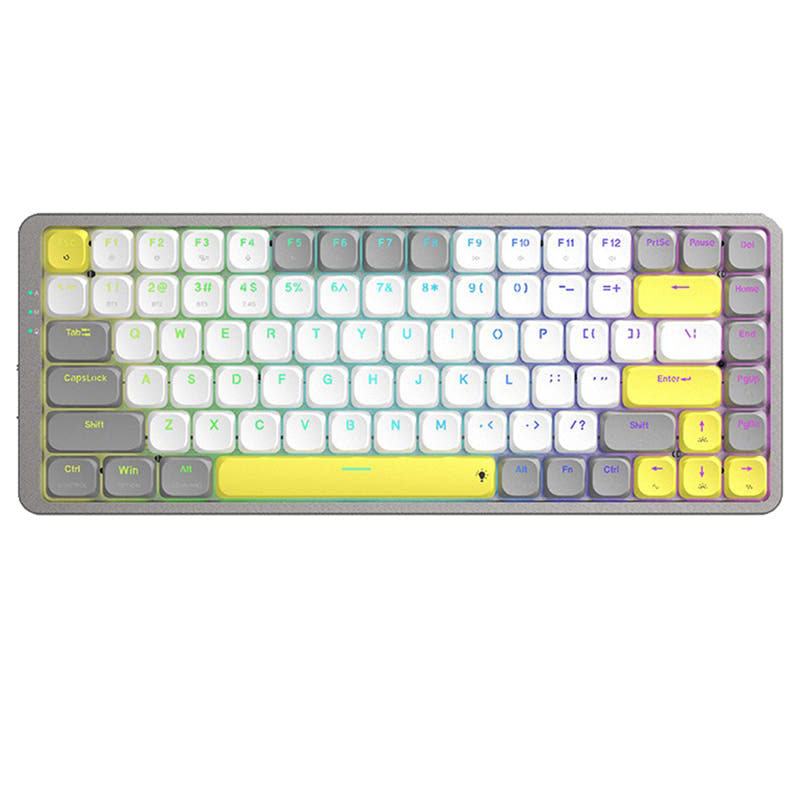
- 75% compact layout paired with 2.4 GHz wireless at a 1000 Hz polling rate for gaming.
- Factory-installed IXPE acoustic foam and latex foam for dampened typing acoustics.
- Screw-in stabilizers reduce key wobble on larger keys out of the box.
- Smaller 1550mAh battery may require more frequent charging.
- Narrower 75% layout reduces dedicated space for navigation keys compared to the K1 Pro.
- Proprietary stabilizer design on caps lock and right shift, as noted in customer reviews, may complicate keycap swaps.
If you prioritize desk space and wireless gaming performance, the K3 Max with its 2.4 GHz connection and acoustic foam is the better fit. If you need a spacious layout for productivity and prefer a larger battery, the K1 Pro's 80% TKL design is the smarter choice. Both offer QMK/VIA programmability and low-profile switches, so your decision ultimately hinges on connectivity and layout density.
The differences that matter
Skip the 40-row spec sheet. These are the specs that change how each board feels, sounds, and fits your desk.
Keychron K1 Pro
Keychron K3 Max
Layout size
80%
75%
Connection
Bluetooth, Wired
Bluetooth, 2.4 GHz, Wired
Battery
2,000 mAh
1,550 mAh
Case material
ABS, Aluminum, Plastic
ABS, Aluminum, Plastic, Wood
Mount style
Tray Mount
Plate Mount
- Keychron K1 Pro
- Keychron K3 Max
- Performance
- 8181
- Build quality
- 8086
- Productivity
- 8094
- Customizability
- 8891
- Portability
- 7377
- Hot-swappable
- Low profile
- Max polling rate: 1,000 Hz
- Switch options: Clicky, Linear, Tactile
- Weight: 580 g
- QMK
What will you mostly use it for?
The K3 Max edges ahead in gaming and modding due to its 2.4 GHz connectivity and acoustic dampening features, while the K1 Pro wins in office and programming use cases where dedicated navigation keys and a TKL layout add convenience. For travel, the K3 Max's compact 75% footprint is the clear choice, and for content creation, the K1 Pro's larger layout and battery offer practical advantages. Both boards are highly customizable via QMK/VIA, making them strong contenders for users who value programmability.
Pick the Keychron K3 Max
- The K3 Max offers a 2.4 GHz wireless connection with a 1000 Hz polling rate, which the vendor describes as providing peak gaming performance on the fly.
- The K1 Pro only offers 1000 Hz polling in wired mode, with a 90 Hz polling rate over Bluetooth.
- The K3 Max includes interior IXPE acoustic foam and latex foam, which can dampen case ping and improve the auditory gaming experience.
What owners say
Ratings and quotes collected from verified store reviews, including the critical ones.
Keychron K1 Pro
5 owner reviews
“I realy like this keyboard. I feel is harder to make typos compared to the K3 v2. I decided to go with the K1 Pro instead of the K3 Pro and it's going to to take time to adjust to the new layout, but the feeling and shape of the keys is definitely better.”
Keychron K3 Max
16 owner reviews
“Noce keyboard, i appreciate the level of customization QMK provides. One thing was little disappointing - the tactile feeling comparing to K3. Other than that its very good kb!”
“I sold my k3 pro and got this. The one I got drops connection intermittently or doesn't type or respond right away. It sounds nice, but stiff reds are not as pleasant to type on as previous keyboards reds. I really thought I ordered hotswap RGB max but seems…”
Keychron K1 Pro vs K3 Max specs
Every tracked spec, side by side. Rows marked with a dot differ between the boards.
10 of 27 specs differ
Keychron K1 Pro
Keychron K3 Max
Switch options
Hot-swappable
Mount style
Low profile
Sound dampening
Screw-in stabilizers
Layout size
Layout standard
Ergonomics
Display
Media keys
Connection
Max polling rate
Battery
USB-C
Case material
Plate material
Keycaps
Weight
Dimensions
Typing angle
Backlight
QMK
VIA
N-key rollover
Mac & Windows
Released
Compare prices
Live prices from the stores we track, cheapest in-stock offer first.
Lowest price across stores, Amazon excluded.




Prices in USD are converted to your currency and can change at any time. KeebFinder may earn a commission when you buy through these links, at no extra cost to you.
Keychron K1 Pro vs K3 Max: your questions
The Keychron K1 Pro uses an 80% layout with 87 keys, including a dedicated navigation cluster with Home, End, PgUp, and PgDn keys that programmers often prefer. The K3 Max has a more compact 75% layout with 84 keys, which may require using function layers for navigation tasks.
No, the K1 Pro only supports Bluetooth 5.1 and USB-C wired connections. If you need a 2.4 GHz wireless mode for lower latency, the K3 Max is the better choice as it offers 2.4 GHz connectivity with a 1000 Hz polling rate.
Yes, both keyboards offer hot-swappable versions that support Gateron low-profile mechanical switches without soldering. The K3 Max also supports Keychron low-profile mechanical switches. Note that neither keyboard supports low-profile optical switches due to QMK limitations.
The K3 Max includes interior IXPE acoustic foam and resilient latex foam from the factory, which aim to reduce key travel noise and provide a quieter typing experience. The K1 Pro does not include such acoustic foam, so it will have a less dampened sound profile out of the box.
The K1 Pro has a 2000mAh battery, while the K3 Max has a smaller 1550mAh battery. Both are used with low-power ARM MCUs, but the K1 Pro's larger capacity may offer longer runtime between charges, especially when using Bluetooth which has a 90 Hz polling rate.
Yes, both the K1 Pro and K3 Max come with Mac and Windows keycaps and support operating system-specific keymaps that can be configured via the Keychron Launcher web app. The K1 Pro is noted as offering the same multimedia and function key functions as Apple keyboards for Mac users.
The K3 Max has a narrower width at 306 mm compared to the K1 Pro's 346 mm, making it easier to pack in a bag. Both weigh the same at 580g and are low-profile, but the K3 Max's compact 75% layout and smaller footprint give it an edge for travel.
Yes, both the K1 Pro and K3 Max offer three levels of adjustable typing angle for ergonomic wrist support. The K1 Pro's default angle is 3 degrees, while the K3 Max offers both 3-degree and 7-degree options according to its specifications.
Both keyboards offer RGB and white backlight options with more than 22 RGB backlight settings. The K3 Max additionally supports per-key RGB and Mix RGB features, allowing individual key color customization or splitting the keyboard into two custom lighting zones.
Yes, both the K1 Pro and K3 Max support QMK open-source firmware and VIA compatibility, allowing full key remapping, macro creation, and shortcut customization through the Keychron Launcher web app. No software download is required.
The K3 Max is generally better for competitive gaming because it offers a 2.4 GHz wireless connection with a 1000 Hz polling rate, which the vendor describes as delivering peak gaming performance. The K1 Pro only achieves 1000 Hz polling in wired mode, with Bluetooth limited to 90 Hz.
Both the K1 Pro and K3 Max come equipped with low-profile double-shot PBT keycaps, which are described as durable with excellent oil resistance. The K3 Max specifically mentions LSA (low profile spherical-angled) profile keycaps for a different finger feel.
Not sold on either?




Still torn?
Answer a few quick questions and the keyboard finder ranks 2,000+ boards by how you will actually use yours.