Keychron K3 V3 vs Leopold FC750R PDWireless Custom vs Wired Classic
Choose the Keychron K3 V3 for wireless flexibility and customization, or the Leopold FC750R PD for a straightforward, wired typing experience.
KeebFinder may earn a commission when you buy through these links, at no extra cost to you.

from$84at MK

from$119at MK
90-day lowLowest price in 90 days
Which one should you get?
Get the
Keychron K3 V3
Wireless Custom
Build quality in the top 10% of 75% boards under $100.
- Triple-mode connectivity with Bluetooth and wired options.
- Hot-swappable PCB for easy switch customization.
- Extensive firmware support via QMK and VIA for key remapping.
- Low-profile switches and keycaps only. Standard MX keycaps will not fit.
- North-facing LEDs. Cherry-profile keycaps can hit the switch housing.
- No numpad.
Get the
Leopold FC750R PD
Wired Classic
Build quality in the bottom 25% of 80% boards under $150.
- Features thick 1.5mm PBT double-shot keycaps for durability.
- Includes a sound-absorbing pad inside the case.
- Simple, wired plug-and-play operation with no software required.
- Switches are soldered. Swapping them means soldering.
- No ISO layout. ISO-DE, UK, and other ISO variants are not offered.
- No numpad.
For most users, the Keychron K3 V3 is the recommended choice due to its modern feature set, including wireless operation, hot-swap sockets, and deep programmability. Choose the Leopold FC750R PD if you specifically want a traditional, wired TKL with renowned PBT keycaps and have no intention of modifying your keyboard. Your need for wireless freedom and customization is the primary deciding factor.
The differences that matter
Skip the 40-row spec sheet. These are the specs that change how each board feels, sounds, and fits your desk.
Keychron K3 V3
Leopold FC750R PD
Layout size
75%
80%
Connection
Bluetooth, Wired
Wired
Wireless for several devices and wired for lower latency
Hot-swappable
Yes
No
Switch changes without soldering
Low profile
Yes
No
Case material
ABS, Aluminum
Plastic
- Keychron K3 V3
- Leopold FC750R PD
- Performance
- 8259
- Build quality
- 8349
- Productivity
- 8061
- Customizability
- 8948
- Portability
- 7754
What will you mostly use it for?
The Keychron K3 V3 is the more versatile choice, winning in most categories due to its wireless connectivity, programmability, and modding potential. It is particularly strong for gaming, travel, and programming. The Leopold FC750R PD serves users who need a reliable, wired TKL with high-quality PBT keycaps and no desire to modify their keyboard. For content creation, the choice depends on whether you value macro programmability or a standard TKL layout.
Pick the Keychron K3 V3
- The Keychron K3 V3 has a specified 1000 Hz polling rate in wired mode for lower latency.
- Its hot-swappable design allows for switch changes to optimize actuation.
- The vendor description notes its latency is 'hardly noticeable even in competitive games'.
Keychron K3 V3 vs Leopold FC750R PD specs
Every tracked spec, side by side. Rows marked with a dot differ between the boards.
16 of 26 specs differ
Keychron K3 V3
Leopold FC750R PD
Switch options
Hot-swappable
Mount style
Low profile
Sound dampening
Layout size
Layout standard
Ergonomics
Display
Media keys
Connection
Max polling rate
Battery
USB-C
Case material
Plate material
Keycaps
Weight
Dimensions
Typing angle
Backlight
QMK
VIA
N-key rollover
Mac & Windows
Released
ISO layouts by store
Which stores sell ISO-DE, UK, and the other regional layouts.
Keychron K3 V3
Keychron
ISO-DE, ISO-UK, ISO-Nordic, ISO-SW
In stockShips to you
Keychron (DE)
ISO-DE, ISO-UK, ISO-SW
In stockDoes not ship to you
Leopold FC750R PD
No ISO layout at the stores we track.
Compare prices
Live prices from the stores we track, cheapest in-stock offer first.
Prices in USD are converted to your currency and can change at any time. KeebFinder may earn a commission when you buy through these links, at no extra cost to you.
Lowest price across stores, Amazon excluded.



Keychron K3 V3 vs Leopold FC750R PD: your questions
Yes, the Keychron K3 V3 is suitable for gaming. Its manufacturer states it has a 1000 Hz polling rate in wired mode for low latency, and the hot-swappable design allows you to install fast, linear switches. The vendor page claims the latency is 'hardly noticeable even in competitive games'.
No, you cannot change the switches on the Leopold FC750R PD without soldering. The product listing confirms it is not hot-swappable. It is a pre-built keyboard where switches are soldered to the plate-mounted PCB.
Yes, the Keychron K3 V3 is compatible with both Mac and Windows. According to the vendor, it includes keycaps for both operating systems and allows you to configure different keymaps for each. DIP switches or software can be used to switch between OS layouts.
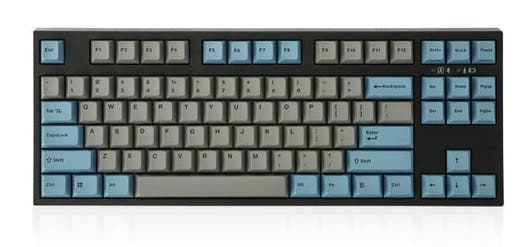
The Leopold FC750R PD comes with 1.5mm thick PBT double-shot keycaps. The vendor listing specifies these keycaps are in a grey and blue color scheme with top-printed legends, which are highly durable and resistant to shine.
The Keychron K3 V3 is designed to be relatively quiet. Its vendor description highlights it contains multiple foam layers, including IXPE acoustic foam and EPDM foam, to dampen sound. Choosing a tactile or linear switch option over a clicky one will also reduce noise.
The Keychron K3 V3 is more portable. It has a smaller 75% layout, a lower profile, and weighs 540g. Crucially, it offers Bluetooth wireless connectivity, allowing you to use it without a cable, unlike the wired-only Leopold FC750R PD.
The Leopold FC750R PD has limited reprogramming via DIP switches on the underside of the board, as noted in its product description. It does not support advanced, per-key reprogramming software like QMK or VIA, which the Keychron K3 V3 offers.
The Keychron K3 V3 hot-swappable version is compatible with Keychron Milk POM switches or Gateron and Keychron low-profile mechanical switches. The vendor explicitly states it is not compatible with low-profile optical switches due to QMK firmware requirements.
The product metadata does not specify if the Leopold FC750R PD has a removable USB cable. The vendor listing only mentions a 60-inch cord length, so it should be assumed the cable is fixed unless stated otherwise by the manufacturer.
The Keychron K3 V3's RGB backlighting can be customized. According to the vendor, the RGB version offers over 22 dynamic backlight settings. You can adjust the hue, saturation, brightness, and effect speed, likely through onboard shortcuts or the Keychron Launcher web app.
Build quality differs in philosophy. The Keychron K3 V3 uses an ABS and aluminum frame with internal foams and offers hot-swap sockets. The Leopold FC750R PD uses a plastic case and plate but is renowned for its thick PBT keycaps and internal sound-dampening pad. 'Better' depends on whether you value modern materials and features or traditional, durable keycaps.
Not sold on either?




Still torn?
Answer a few quick questions and the keyboard finder ranks 2,000+ boards by how you will actually use yours.