Keychron Q12 vs Leopold FC900RBTSouthpaw Custom vs Wireless Full-Size
Choose the Keychron Q12 for deep customization and a unique southpaw layout, or the Leopold FC900RBT for wireless convenience and a traditional, pre-built experience.
KeebFinder may earn a commission when you buy through these links, at no extra cost to you.

4.5 (12)4.5 · 12 reviews
from$129at MK

Which one should you get?
Get the
Keychron Q12
Southpaw Custom
Build quality in the top 5% of 96% boards under $150.
- Full CNC machined aluminum case for a premium, solid feel.
- Extensive customizability with hot-swap sockets, QMK/VIA firmware, and a programmable knob.
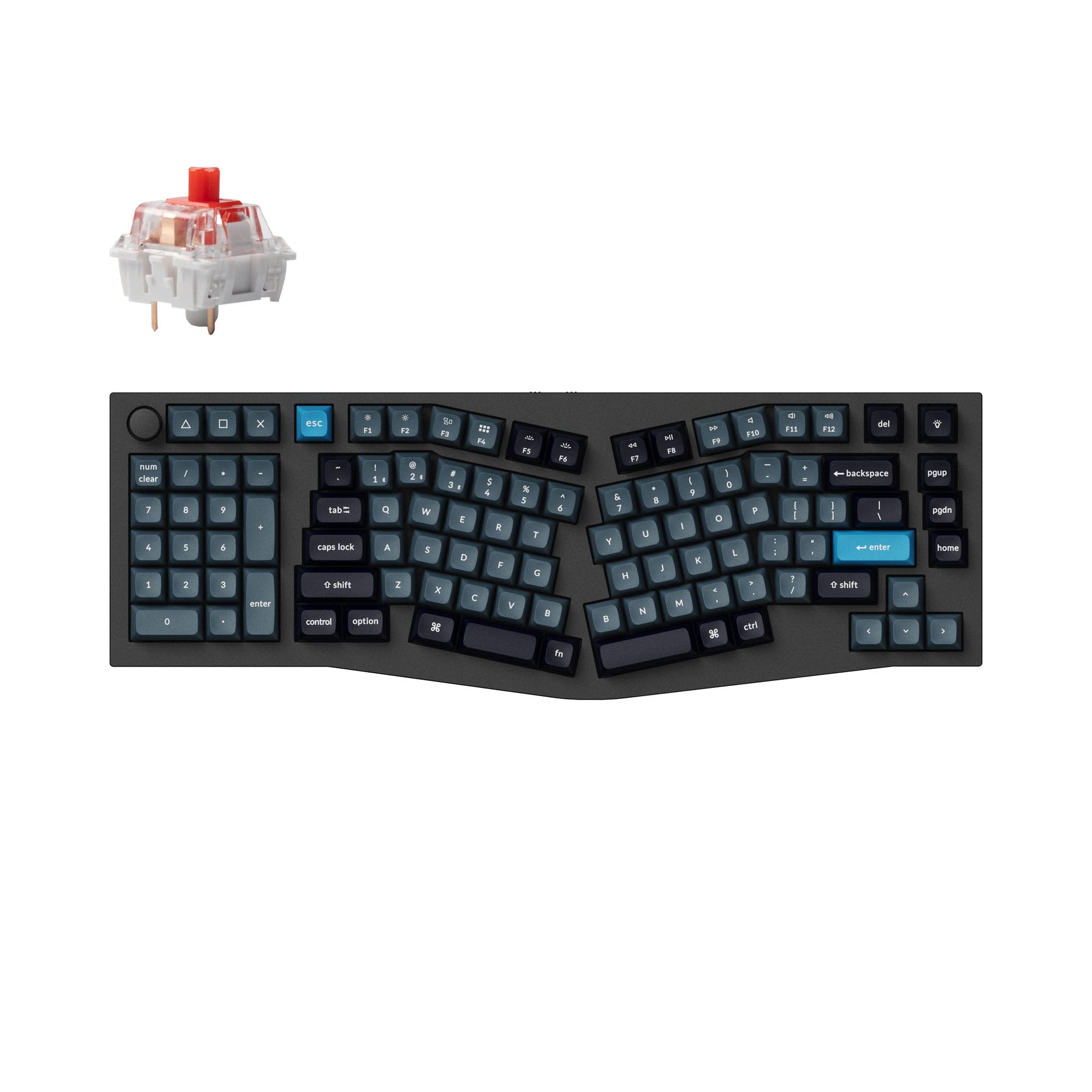
- Unique southpaw (left-side numpad) 96% layout saves right-side desk space.
- South-facing LEDs. Shine-through legends stay dark, and some sculpted keycaps can clip the LED.
- Compact full-size layout. The numpad is present, the gaps of a full-size board are not.
Get the
Leopold FC900RBT
Wireless Full-Size
Build quality in the bottom 30% of 100% boards under $150.
- Dual connectivity with Bluetooth 5.1 and wired USB-C for flexibility.
- Lightweight plastic build at 1kg and uses standard AAA batteries.
- Pre-built with genuine Cherry MX switches and thick PBT double-shot keycaps.
- Switches are soldered. Swapping them means soldering.
- No ISO layout. ISO-DE, UK, and other ISO variants are not offered.
Your primary need dictates the choice. For a project-oriented keyboard where you control every aspect of the sound, feel, and layout, the Keychron Q12 is the clear candidate. If you need a reliable, wireless-ready keyboard for daily use without any tinkering, the Leopold FC900RBT is the straightforward option. Consider the southpaw layout a major bonus if you want more mouse space or use a numpad with your left hand.
The differences that matter
Skip the 40-row spec sheet. These are the specs that change how each board feels, sounds, and fits your desk.
Keychron Q12
Leopold FC900RBT
Layout size
96%
100%
Connection
Wired
Bluetooth, Wired
Wireless for several devices and wired for lower latency
Hot-swappable
Yes
No
Switch changes without soldering
Ergonomics
Southpaw
Standard
Case material
Aluminum
Plastic
- Keychron Q12
- Leopold FC900RBT
- Performance
- 7357
- Build quality
- 9047
- Productivity
- 9869
- Customizability
- 9945
- Portability
- 4650
- Sound dampening
What will you mostly use it for?
The Keychron Q12 dominates for users who value customization, whether for gaming latency, programming macros, or creative workflow shortcuts. Its unique southpaw layout is a defining feature for desk space management. The Leopold FC900RBT wins in scenarios where wireless operation and portability are paramount, such as in a shared office or for travel, offering a reliable, pre-built experience with multi-media controls.
Pick the Keychron Q12
- The Keychron Q12 has a specified 1000 Hz polling rate for lower latency.
- Its southpaw layout frees up desk space on the right for mouse movement.
- The aluminum case and gasket mount may provide a more stable typing platform.
Keychron Q12 vs Leopold FC900RBT specs
Every tracked spec, side by side. Rows marked with a dot differ between the boards.
17 of 26 specs differ
Keychron Q12
Leopold FC900RBT
Switch options
Hot-swappable
Mount style
Sound dampening
Screw-in stabilizers
Layout size
Layout standard
Ergonomics
Knob
Display
Media keys
Connection
Max polling rate
USB-C
Case material
Plate material
Keycaps
Weight
Dimensions
Typing angle
Backlight
QMK
VIA
N-key rollover
Mac & Windows
Released
ISO layouts by store
Which stores sell ISO-DE, UK, and the other regional layouts.
Keychron Q12
Keychron
ISO
Out of stockShips to you
Keychron (DE)
ISO
Out of stockDoes not ship to you
Leopold FC900RBT
No ISO layout at the stores we track.
Compare prices
Live prices from the stores we track, cheapest in-stock offer first.
Prices in USD are converted to your currency and can change at any time. KeebFinder may earn a commission when you buy through these links, at no extra cost to you.
Lowest price across stores, Amazon excluded.



Keychron Q12 vs Leopold FC900RBT: your questions
The Keychron Q12 is specifically designed with a southpaw layout, placing the numpad on the left side. This can be more ergonomic for left-handed users who operate the numpad with their dominant hand. The Leopold FC900RBT has a traditional right-side numpad layout.
No, the Leopold FC900RBT is not hot-swappable. Its genuine Cherry MX switches are soldered onto the PCB. To change switches, you would need to desolder the existing ones and solder in new ones, which requires technical skill.
No, the Keychron Q12 is a wired-only keyboard, connecting via a USB-C cable. The Leopold FC900RBT is the model that offers both wired USB-C and Bluetooth 5.1 wireless connectivity.
A gasket mount uses rubber or silicone gaskets to suspend the plate and PCB inside the case, aiming to provide a softer, more consistent typing feel and reduce sound resonance. The Keychron Q12 uses a double-gasket design. The Leopold FC900RBT uses a traditional plate mount system.
The Leopold FC900RBT is more portable. It weighs less than half as much as the Keychron Q12 (1000g vs 2491g) and offers Bluetooth wireless, eliminating the need for a cable. The Keychron Q12 is a heavy, wired-only board designed for a stationary setup.
Yes, but to vastly different degrees. The Keychron Q12 supports full, layer-based reprogramming, macros, and knob customization via open-source QMK and VIA software. The Leopold FC900RBT offers limited hardware-based customization via DIP switches for specific key functions like swapping Ctrl and Caps Lock.
The Keychron Q12 comes with OSA profile double-shot PBT keycaps, which the manufacturer describes as having OEM height with an SA-like shape. The Leopold FC900RBT comes with 1.5mm thick PBT double-shot keycaps, though the specific profile name is not stated in its listing.
Yes, both keyboards list Mac support. The Keychron Q12 includes a system toggle and an extra set of keycaps for Mac and Windows. The Leopold FC900RBT's product listing also confirms Mac compatibility.
South-facing RGB means the LEDs on the PCB are positioned on the south side (bottom) of the switch socket. The Keychron Q12 has this feature, which prevents interference with the stems of Cherry-profile aftermarket keycaps and can provide better backlighting from the typist's angle with non-shine-through caps.
Both have sound-dampening features. The Leopold FC900RBT includes a sound-absorbing pad and offers Cherry MX Silent Red switches. The Keychron Q12 has a double-gasket design and foam, and you can install silent switches. The Leopold's wireless capability also reduces cable clutter on a shared desk.
According to Keychron, the fully assembled version includes the aluminum case, steel plate, hot-swappable PCB, pre-lubed Gateron G Pro switches, double-shot OSA PBT keycaps (with Mac/Windows extras), screw-in stabilizers, and a USB-C cable with an adapter. A barebones kit version is also available without switches and keycaps.
The Leopold FC900RBT is powered by two included AAA batteries when used in Bluetooth wireless mode. It does not have an internal rechargeable lithium battery, which some users prefer for long-term maintenance.
Not sold on either?




Still torn?
Answer a few quick questions and the keyboard finder ranks 2,000+ boards by how you will actually use yours.