Keychron Q15 Max Ortholinear vs Q16 HEOrtho vs Speed
Choose the Q15 Max for its ortholinear layout and wireless flexibility, or the Q16 HE for its magnetic switches and ultra-fast 8K polling rate.
KeebFinder may earn a commission when you buy through these links, at no extra cost to you.

No reviews
from$179at MK

3.7 (7)3.7 · 7 reviews
from$199at Keychron
Which one should you get?
Get the
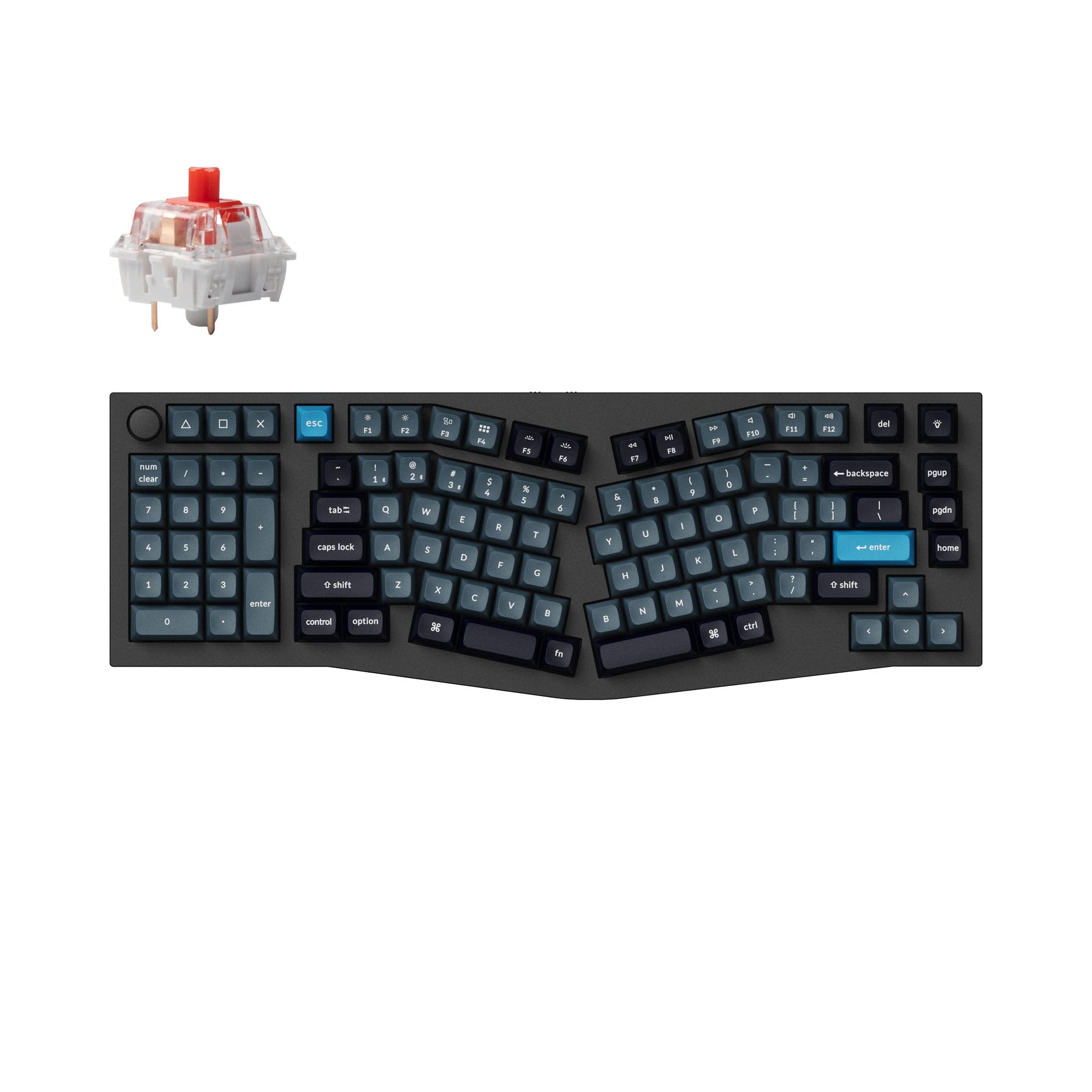
Keychron Q15 Max Ortholinear
Ortho
Build quality in the top 20% of 65% boards under $200.
- Ortholinear layout reduces finger travel and may improve typing efficiency.
- Tri-mode wireless connectivity (Bluetooth 5.1, 2.4 GHz, USB-C) with a large 4000 mAh battery.
- Double gasket design with polycarbonate plate and multiple foam layers (IXPE, PET, latex) for a softer, quieter typing experience.
- South-facing LEDs. Shine-through legends stay dark, and some sculpted keycaps can clip the LED.
- No ISO layout. ISO-DE, UK, and other ISO variants are not offered.
Get the
Keychron Q16 HE
Speed
Build quality in the top 5% of 65% boards under $200.
- Magnetic switches (Keychron Ultra-fast Lime) with adjustable actuation from 0.1 to 3.35 mm and Rapid Trigger support.
- 8000 Hz polling rate provides industry-leading low input lag for competitive gaming.
- Ceramic case and Cherry-profile ceramic keycaps offer a unique look, feel, and sound profile.
- Magnetic switches only. Standard MX switches will not fit.
- North-facing LEDs. Cherry-profile keycaps can hit the switch housing.
The Keychron Q15 Max Ortholinear is the right choice if you prioritize an ergonomic column-staggered layout, wireless convenience, and a quieter typing experience. The Keychron Q16 HE is built for gamers and speed enthusiasts who want the lowest possible latency and the flexibility of magnetic switch features like adjustable actuation and Rapid Trigger. Your decision ultimately hinges on whether you need an ortholinear wireless workhorse or a wired, ultra-responsive gaming machine.
The differences that matter
Skip the 40-row spec sheet. These are the specs that change how each board feels, sounds, and fits your desk.
Keychron Q15 Max Ortholinear
Keychron Q16 HE
Hall effect (magnetic)
No
Yes
Adjustable actuation helps in games and not in normal typing
Rapid trigger
No
Yes
Faster resets help in games and not in normal typing
Ergonomics
Ortholinear
Standard
Max polling rate
1,000 Hz
8,000 Hz
Higher polling helps competitive FPS and does nothing for typing
Case material
Aluminum
Ceramic, Metal, Wood
- Keychron Q15 Max Ortholinear
- Keychron Q16 HE
- Performance
- 7594
- Build quality
- 7987
- Productivity
- 9484
- Customizability
- 8591
- Portability
- 8987
- Layout size: 65%
- Connection: Bluetooth, 2.4 GHz, Wired
- Hot-swappable
- QMK
- Sound dampening
What will you mostly use it for?
The Keychron Q16 HE dominates gaming use cases thanks to its magnetic switches and high 8000 Hz polling rate, while the Q15 Max Ortholinear wins for office, programming, and content creation due to its wireless capabilities and ergonomic layout. For travel, the Q15 Max's battery and wireless freedom make it a clear choice. In modding, both are hot-swappable but cater to different switch ecosystems, so the outcome depends on whether you prefer standard mechanical switches or Hall Effect magnetic switches.
Pick the Keychron Q16 HE
- The Q16 HE features 8000 Hz polling rate for lower input lag compared to the Q15 Max's 1000 Hz.
- Magnetic switches with adjustable actuation points (0.1 to 3.35 mm) and Rapid Trigger support allow precise, fast keystrokes.
- Features like Last Key Priority (LKP), Snap Click, and Analog Mode are tailored for competitive gaming.
- The Q15 Max uses standard mechanical switches and lacks these gaming-specific magnetic switch features.
Keychron Q15 Max Ortholinear vs Q16 HE specs
Every tracked spec, side by side. Rows marked with a dot differ between the boards.
16 of 29 specs differ
Keychron Q15 Max Ortholinear
Keychron Q16 HE
Switch options
Hall effect (magnetic)
Rapid trigger
Hot-swappable
Mount style
Sound dampening
Screw-in stabilizers
Layout size
Layout standard
Ergonomics
Knob
Display
Media keys
Connection
Max polling rate
Battery
USB-C
Case material
Plate material
Keycaps
Weight
Dimensions
Typing angle
Backlight
QMK
VIA
N-key rollover
Mac & Windows
Released
ISO layouts by store
Which stores sell ISO-DE, UK, and the other regional layouts.
Keychron Q15 Max Ortholinear
No ISO layout at the stores we track.
Keychron Q16 HE
Keychron
ISO-DE, ISO-ES
In stockShips to you
Keychron (DE)
ISO-DE, ISO-ES
In stockDoes not ship to you
Compare prices
Live prices from the stores we track, cheapest in-stock offer first.
Prices in USD are converted to your currency and can change at any time. KeebFinder may earn a commission when you buy through these links, at no extra cost to you.
Lowest price across stores, Amazon excluded.




Keychron Q15 Max Ortholinear vs Q16 HE: your questions
The Keychron Q15 Max Ortholinear supports Bluetooth 5.1, 2.4 GHz, and wired USB-C connections, giving you full wireless freedom. The Keychron Q16 HE only offers Type-C wired connectivity, so it cannot be used wirelessly at all.
Yes, both the Q15 Max and Q16 HE are hot-swappable. The Q15 Max accepts standard 3-pin or 5-pin mechanical switches. The Q16 HE uses magnetic switches, but compatibility is limited to Keychron Ultra-fast Lime magnetic switches and does not support Gateron or other magnetic switch brands.
The Keychron Q16 HE is built for competitive gaming with an 8000 Hz polling rate, magnetic switches with adjustable actuation points (0.1 to 3.35 mm), Rapid Trigger, Last Key Priority, and Snap Click. The Q15 Max has a 1000 Hz polling rate and standard mechanical switches, making it less suited for high-speed play.
Ortholinear layouts align keys in a grid rather than the traditional staggered columns. Proponents say this can reduce unnecessary finger travel and potentially lessen wrist strain during prolonged typing. The Q15 Max features this layout, while the Q16 HE uses a standard normal staggered layout.
The Q16 HE does not have a battery as it is a wired-only keyboard. The Q15 Max includes a 4000 mAh rechargeable li-polymer battery that supports extended wireless use.
The Q15 Max includes premium acoustic foam insulation with layers of IXPE, PET, and latex, along with a double gasket design and polycarbonate plate for a softer sound. The Q16 HE has sound absorbing foam and a latex bottom pad, but its ceramic case and aluminum plate produce a different, more resonant acoustic profile.
Yes, both keyboards support QMK and use Keychron's Launcher web app for remapping keys, creating macros, and adjusting settings. The Q15 Max also works with the Web Launcher, while the Q16 HE adds specific magnetic switch controls like actuation point and Rapid Trigger configuration through the same app.
The Q16 HE weighs approximately 1060g due to its full ceramic body and aluminum plate, making it quite hefty. The Q15 Max is likely lighter thanks to its aluminum 6063 case, though its exact weight is not stated. The Q15 Max's lighter weight combined with wireless connectivity makes it more portable.
The Q15 Max can be configured with Gateron Jupiter Red, Brown, or Banana switches (linear or tactile). The Q16 HE ships with pre-lubed Keychron Ultra-fast Lime magnetic switches, which are linear and designed for Hall Effect operation. Both are hot-swappable.
Both keyboards have a system toggle switch for Windows and macOS and include a set of customized keycaps for each OS. The Q15 Max's wireless freedom and ortholinear layout may appeal to Mac users who work in ergonomic setups, while the Q16 HE works wired but supports both platforms equally.
Yes, the Q15 Max uses south-facing RGB LEDs with 22 backlight settings, which offer better compatibility with Cherry-profile keycaps and reduce switch interference. The Q16 HE uses north-facing RGB LEDs, which the manufacturer says better illuminates the non-shine-through ceramic keycaps from the typist's angle.
Not sold on either?



Still torn?
Answer a few quick questions and the keyboard finder ranks 2,000+ boards by how you will actually use yours.