Keychron V2 vs Ducky Tinker 65 ProjectDKnob or Gasket
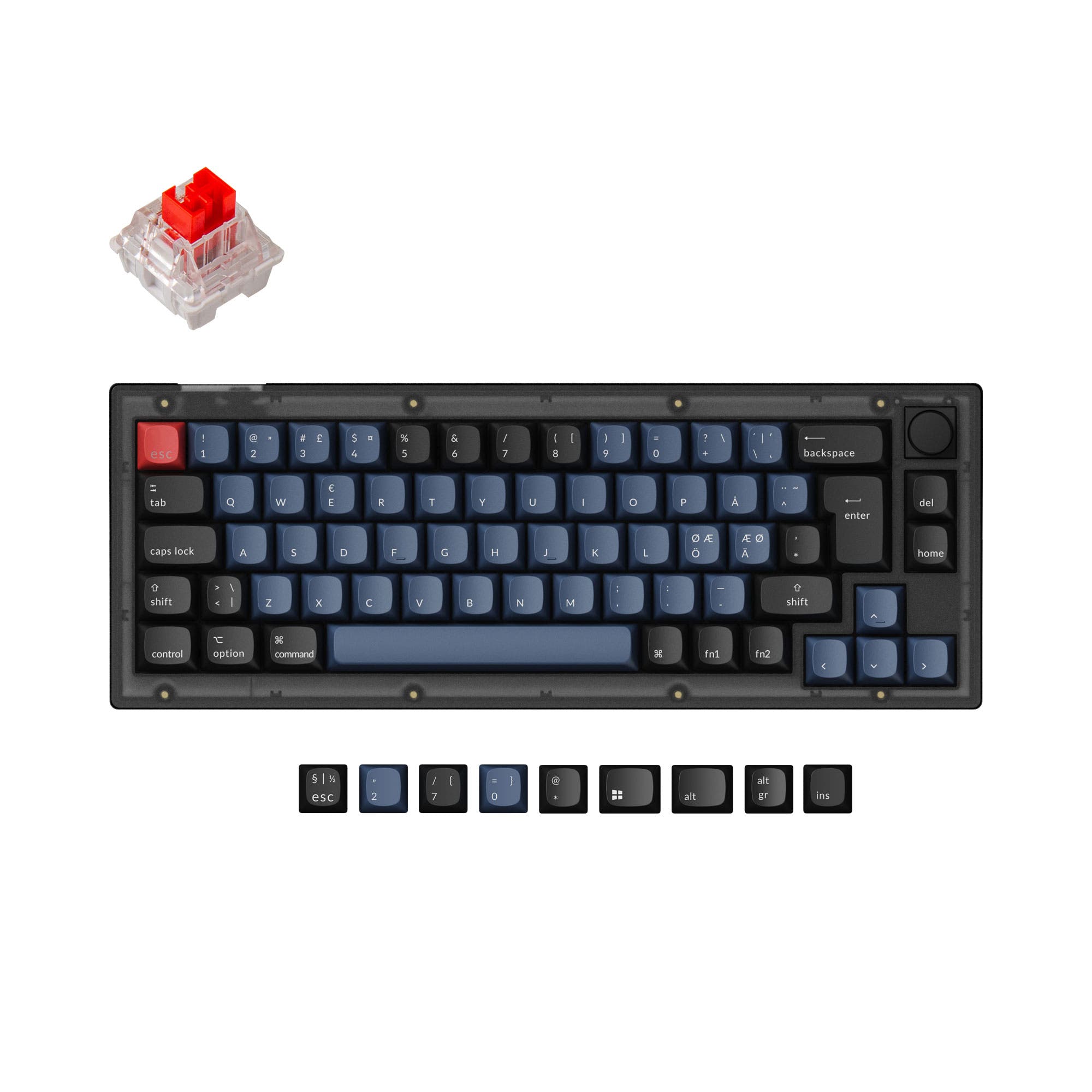
Choose the Keychron V2 for its programmable knob, stated 1000 Hz polling rate, and ISO layout options; get the Ducky Tinker 65 ProjectD for its gasket mount, layered foam, and detachable braided cable.
KeebFinder may earn a commission when you buy through these links, at no extra cost to you.
4.9 (17)4.9 · 17 reviews
from$44at Keychron

No reviews
from$42at MK
Which one should you get?
Get the
Keychron V2
Knob
Build quality in the top 5% of 65% boards under $50.
- Programmable aluminum rotary encoder for assigning keys and macros.
- ANSI and ISO layout options, including ISO-DE, ISO-UK, ISO-FR, and ISO-ES.
- Stated 1000 Hz polling rate.
- South-facing LEDs. Shine-through legends stay dark, and some sculpted keycaps can clip the LED.
Get the
Ducky Tinker 65 ProjectD
Build quality in the top 15% of 65% boards under $50.
- Gasket mount design with an FR4 plate.
- IXPE switch dampeners plus Poron plate and bottom foam.
- Detachable braided USB-C cable and a 3-stage keyboard stand.
- South-facing LEDs. Shine-through legends stay dark, and some sculpted keycaps can clip the LED.
- No ISO layout. ISO-DE, UK, and other ISO variants are not offered.
Get the Keychron V2 for its programmable knob, 1000 Hz polling specification, and ISO options that the Ducky does not offer. Choose the Ducky Tinker 65 ProjectD for its gasket mount, FR4 plate, and specified IXPE and Poron foam layers, which the V2 does not list. If an ISO layout is essential, the Ducky's ANSI-only layout rules it out.
The differences that matter
Skip the 40-row spec sheet. These are the specs that change how each board feels, sounds, and fits your desk.
Keychron V2
Ducky Tinker 65 ProjectD
Mount style
Plate Mount, Tray Mount
Plate Mount
Knob
Yes
No
Layout standard
ANSI, ISO, ISO-DE, ISO-ES, ISO-FR, ISO-UK
ANSI
ISO and JIS exist so regional layouts fit
Plate material
Steel
FR4, POM
Keycaps
ABS, PBT
PBT
- Keychron V2
- Ducky Tinker 65 ProjectD
- Performance
- 6863
- Build quality
- 8782
- Productivity
- 9693
- Customizability
- 9993
- Portability
- 7575
- Layout size: 65%
- Connection: Wired
- Hot-swappable
- Case material: ABS, Plastic
- Switch options: Clicky, Linear, Tactile
- QMK
What will you mostly use it for?
The V2 is the more relevant pick for gaming, office work, programming, and content workflows when its polling specification, layout choices, or knob are useful. The Ducky takes the modding category on the strength of its gasket construction and specified foam layers. Travel is a tie based on the shared compact layout and wired connection, with too little weight information to make a stronger portability comparison. Both boards use south-facing RGB, which matters to buyers choosing shine-through or sculpted keycaps.
Pick the Keychron V2
- The V2 specifies a 1000 Hz polling rate.
- The V2 offers a 65% layout with arrow keys, as described by Keychron.
Keychron V2 vs Ducky Tinker 65 ProjectD specs
Every tracked spec, side by side. Rows marked with a dot differ between the boards.
6 of 25 specs differ
Keychron V2
Ducky Tinker 65 ProjectD
Switch options
Hot-swappable
Mount style
Sound dampening
Screw-in stabilizers
Layout size
Layout standard
Ergonomics
Knob
Display
Media keys
Connection
Max polling rate
USB-C
Case material
Plate material
Keycaps
Weight
Dimensions
Typing angle
Backlight
QMK
VIA
Mac & Windows
Released
Compare prices
Live prices from the stores we track, cheapest in-stock offer first.
Prices in USD are converted to your currency and can change at any time. KeebFinder may earn a commission when you buy through these links, at no extra cost to you.
Lowest price across stores, Amazon excluded.




ISO layouts by store
Which stores sell ISO-DE, UK, and the other regional layouts.
Keychron V2
- Go to Input Gear
Input Gear
ISO-DE
In stockShips to you
- Go to Keychron
Keychron
ISO-DE, ISO-UK, ISO-FR, ISO-ES
In stockShips to you
- Go to Keychron (DE)
Keychron (DE)
ISO-DE, ISO-UK, ISO-FR, ISO-ES
In stockDoes not ship to you
Ducky Tinker 65 ProjectD
No ISO layout at the stores we track.
Keychron V2 vs Ducky Tinker 65 ProjectD: your questions
The Keychron V2 stands out for its programmable knob, 1000 Hz polling specification, and ISO layout options. The Ducky Tinker 65 ProjectD instead specifies a gasket mount, an FR4 plate, and IXPE and Poron foam layers.
No. Its listed physical layout is ANSI, and ISO-DE, UK, and other ISO variants are not offered.
Yes, the V2 has an aluminum rotary encoder that can be assigned keys or macros. Keychron lists examples including volume, screen brightness, brush size, and selecting video clips.
The Keychron V2 lists a 1000 Hz polling rate. No polling rate is specified for the Ducky Tinker 65 ProjectD in its product details here.
Both are listed as hot-swappable. Keychron says the V2 supports 3-pin and 5-pin MX mechanical switches, while the Ducky vendor describes a 5-pin PCB with Kailh yellow hot-swap sockets.
The Ducky Tinker 65 ProjectD is described as having a gasket mount design. The Keychron V2 is listed with a tray mount design.
Its product description specifies IXPE switch dampeners, Poron plate foam, and Poron bottom foam. The V2 vendor description mentions an acoustic silicone pad instead.
Both keyboards have south-facing LEDs, and their compatibility notes warn that shine-through legends stay dark. The notes also caution that some sculpted keycaps can clip the LED.
The Keychron V2 is the suitable choice based on its listed ANSI and ISO options, including ISO-DE, ISO-UK, ISO-FR, and ISO-ES. The Ducky Tinker 65 ProjectD is ANSI only.
Yes, both are listed with QMK and VIA support. The Keychron V2 vendor description also says its Launcher web app can be used to customize keys while the keyboard is connected in wired mode.
The Ducky Tinker 65 ProjectD vendor description specifies a detachable braided USB-C cable. The Keychron V2 is listed with USB-C connectivity, but its supplied cable is not described as braided or detachable in the product details here.
Both keyboards list QMK and VIA support. The Keychron V2 also has a programmable knob for assigning keys or macros, while the Ducky's listed differentiators include its gasket mount and foam construction.
Not sold on either?


Still torn?
Answer a few quick questions and the keyboard finder ranks 2,000+ boards by how you will actually use yours.