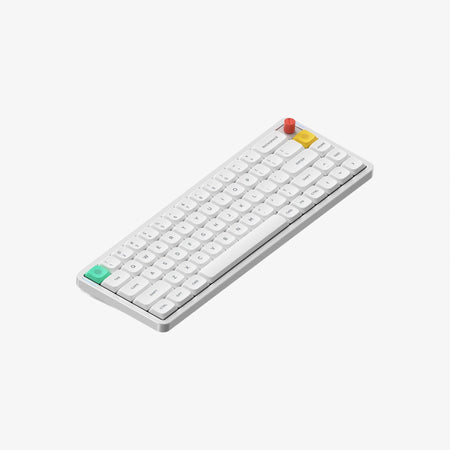
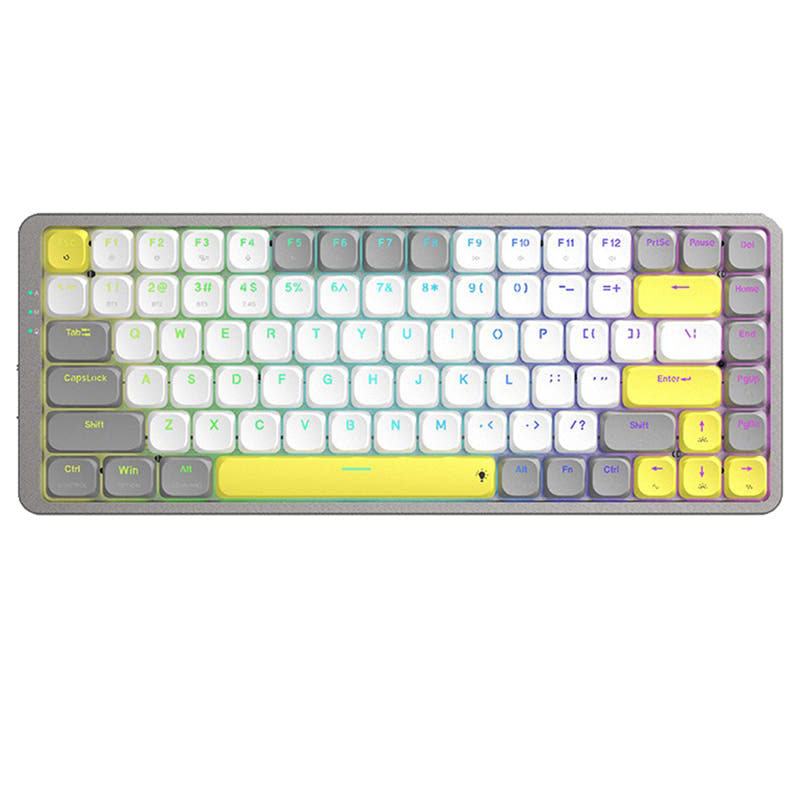
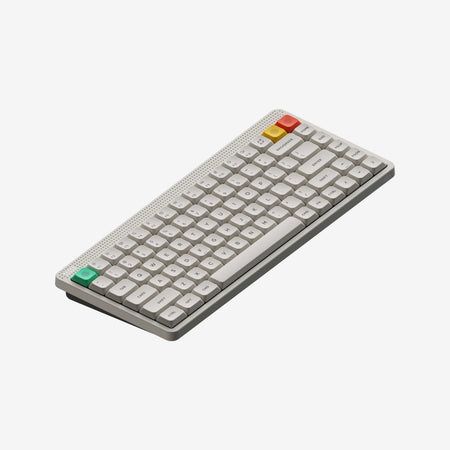
Find the best portable mechanical keyboards for travel and remote work. Compare compact 60%, 65%, and low-profile layouts with wireless connectivity, long battery life, and lightweight construction across 40+ vendors on KeebFinder.


A travel keyboard needs to be light enough to toss in a bag, compact enough for airline tray tables, and wireless enough to pair with any device on the go. Browse the most portable mechanical keyboards with Bluetooth, 2.4 GHz, and USB-C connectivity.
A 60% layout drops the function row and navigation cluster, fitting easily into a laptop sleeve. A 65% adds arrow keys and a few nav keys without much size increase — the sweet spot for most travelers. Enthusiasts who rely on layers can go even smaller with a 40%, which is barely wider than a smartphone. The right size depends on how comfortable you are remapping keys via QMK or VIA.
Low-profile keyboards use shorter switches and slimmer cases, shaving millimeters and grams off the total package. They slide into laptop bags without creating bulk and sit flatter on uneven surfaces like café tables. Brands like Nuphy, Keychron, and Lofree lead the low-profile space with wireless boards that weigh under 500 grams and still deliver satisfying mechanical feedback.
Bluetooth lets you pair with laptops, tablets, and phones without a dongle, which matters when USB ports are limited. A 2.4 GHz receiver offers lower latency if you game on the road. Tri-mode boards that support USB-C, 2.4 GHz, and Bluetooth give you maximum flexibility. Look for multi-device switching — connecting to three devices and toggling between them with a keystroke saves constant re-pairing.
Most wireless mechanical keyboards last one to four weeks on a full charge with backlighting off. Turning off RGB can double or triple battery life — a worthwhile trade-off when you're away from a charger. Low-profile boards tend to have better battery efficiency due to shorter key travel requiring less power. Always check the quoted battery life on KeebFinder before buying a board meant for extended trips.
A hard-shell keyboard case or padded sleeve protects switches and keycaps from luggage impacts. Some manufacturers sell matched carrying cases, while third-party options fit most 60% and 65% boards. A simple neoprene sleeve is often enough for backpack travel, but frequent flyers may want a rigid case with interior foam. Either way, a case extends the lifespan of a board that lives in a bag.
Affordable travel boards from Keychron, Royal Kludge, and Epomaker offer Bluetooth, USB-C, and hot-swap sockets for under $100. These boards weigh around 500–700 grams and come with decent stock switches and PBT keycaps. At this price, you get a fully functional portable mechanical keyboard that won't devastate your budget if it gets lost or damaged in transit.